Showing posts with label mitsubishi. Show all posts

14 Oct 2014

Five Alternatives To A VW Transporter

The Volkswagen Transporter is massively popular, but what alternatives are there? Mike Armstrong investigates


Petrol heads and ordinary civilians alike cannot deny their admiration and love for the Volkswagen Camper. Particularly the T2, which has seemingly managed to cross genres and win the hearts of everyone on the planet. Even later T25 and T4 models are appreciating in value at a rate which will exclude the majority of those seeking a budget camper.

Many specialists exist across Britain who will convert just about any form of commercial-ish vehicle into a dayvan or fully blown camper conversion. Let's set ourselves a budget of £10,000 and see which vehicles would be a better alternative for the average lover of the great outdoors. Hopefully we can encourage a few readers to begin projects for next spring/summer!

1 - Mitsubishi Delica


A rather overlooked potential conversion in the UK. The Delica is a robust Japanese van/people carrier with attitude. Firstly, it will go just about anywhere thanks to the world renowned four-wheel drive system, which will be equally as effective in sub-Saharan Africa as a muddy field in Cornwall. £3,000 will buy a MK3 Japanese import with around 100,000 miles and a diesel engine. Sources suggest that a firm in Wigan provides the basic conversion starting from £4,000. In total, this reliable and indestructible Delica will cost as little as £7,000.

2 - Mazda Bongo Friendee/Ford Freda


Another dayvan/camper from Japan joins the list. The Bongo has been a grey import hit in many countries, including: the UK, New Zealand and Russia. Not many vans of the late 90's offered electric sliding doors and air conditioning as standard. Some were even specified with cooking units as an option from the factory, making one of these earlier examples preferable for a budget conversion. Furthermore, they came available in either rear-wheel drive or four-wheel drive formats, with the engine situated in the middle. A mid-engine sports car it is not, however with prices around the £4,000 mark, you would be foolish not to consider a Bongo.

3 - Vauxhall Vivaro/Renault Trafic


Surprisingly overlooked amongst the camper scene. Rather unfortunate that is as these vans drive very well, are plentiful and are fairly modern for the price you pay. Conversion specialists are plentiful too, offering various different types of flatpack and custom designs. Due to their modern credentials, spare parts are cheap and specialists common. Furthermore, the diesel engines will return better MPG on a long run than the Delica or Bongo. Not bad for a van which can be obtained from around £3,000 plus conversion costs.

4 - Chrysler Grand Voyager


No, we haven't gone crazy! The Grand Voyager would make a superb camper, and this is why. Unlike most other conversions, the roofline is lower, meaning that campers can park their Voyager in regular sized car parks or travel with regular vehicles on the Eurotunnel. Also, the width and length of the interior is nigh on identical to a T4 VW Transporter, only costing a fraction of the price. Early examples can be had for under £1,000. We'd obviously recommend spending around £2,000 for peace of mind. Conversion costs may be less too, as the Grand Voyager already has windows, therefore the law does not require any extras fitted for re-classification. Similar projects could feasibly be done with the Renault Grand Espace and Kia Sedona to the same effect.

5 - Ford Transit


Britain's best loved work horse certainly makes the list. Price conscious members of the camper conversion society forever rant about how much better the Transit is than the Transporter. Indeed, with a lower starting price, the argument appears to have weight to it. Not to mention, Transits are far more common, cost less to repair and drive pretty well. With prices starting from £1,000 and rising as to your requirements, the Transit will offer a lot of camper space for your money.

So if building your own camper this winter is the ideal project for you. Take these five vehicles into account, and sleep on it to decide which you'd prefer to sleep in. Also feel free to suggest any other vehicles or feedback on your experiences via Twitter or in the comments section below.


11 Sept 2014

2014 Mitsubishi L200 Barbarian Review

Matt Hubbard reviews the Mitsubishi L200 Barbarian twin-cab pick-up

2014 Mitsubishi L200 Barbarian
The Mitsubishi L200 Barbarian is essentially a work-horse.  Underneath the stylish bodywork is a ladder chassis with leaf-spring suspension at the rear, in order to accommodate a 1,100kg payload in the load-bay.

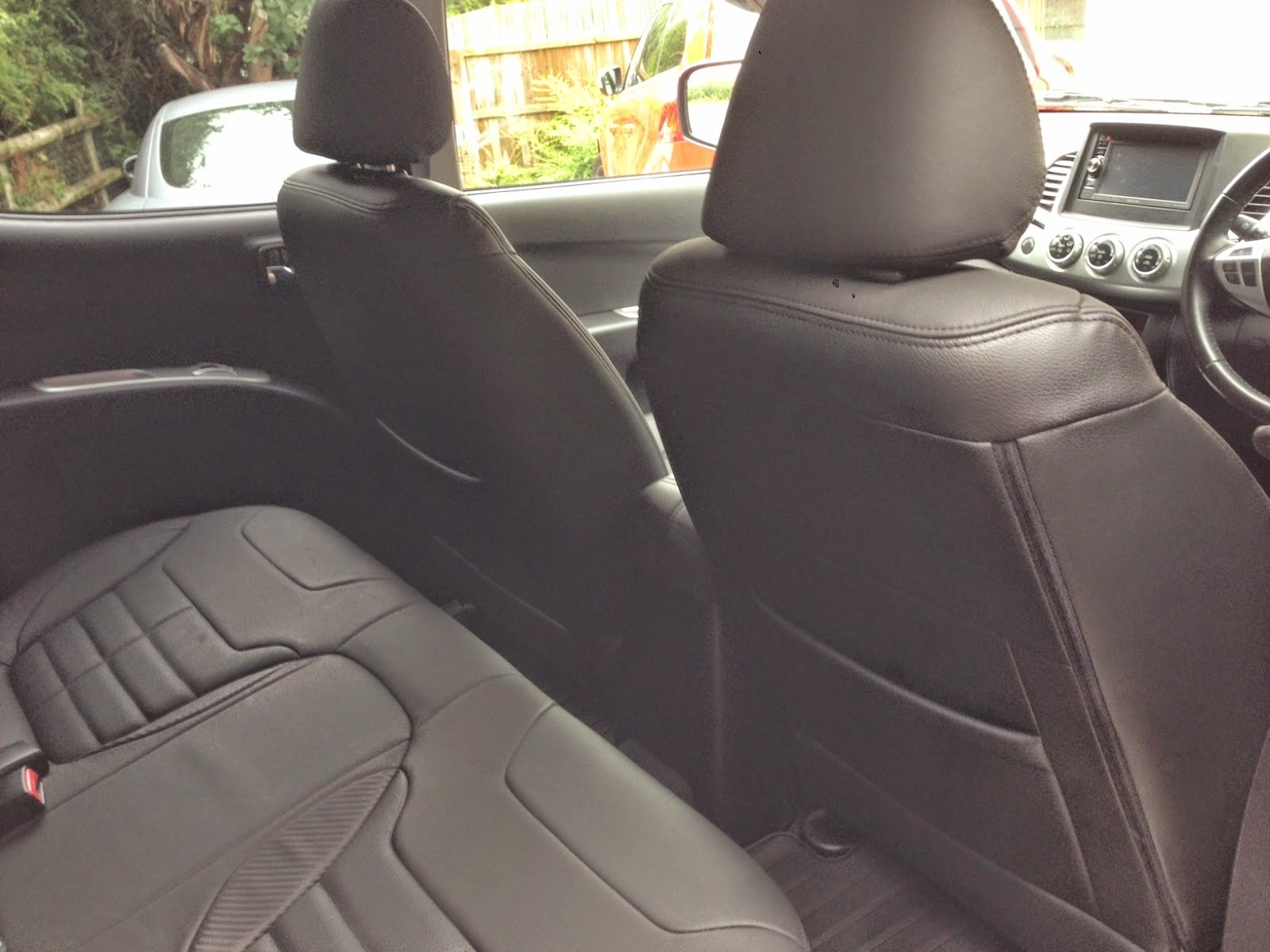
But step into the cabin and you're in a leather clad, gizmo laden car with heated seats, cruise control, infotainment system, automatic lights and wipers and electric windows.

It's this trade-off between utilitarianism and luxury that has seen the L200, and other pick-ups, move from the building site to the school car park.

And it's easy to see why.  In my week with the L200 Barbarian I used it to move several items around that most cars wouldn't have accommodated - a ton of junk to the tip prior to a house move, a bed, a lawnmower.  When you have the capacity to move these things you do.  Instead of wondering how you're going to get that old sofa to the tip you just chuck it in the back of the L200 and take it yourself.

And this with a car that has an interior that's as good as any other SUV.

There are down sides though.

Whilst the interior is on the surface as good as it is in, say, a Toyota RAV4 it's less well thought out and has several flaws.  The seats look nice but they're hard and not very supportive.  The driving position is odd.  The floor is quite high and the chairs quite low but the pedals aren't deep as they are in a sports car.  Add in that the steering wheel doesn't adjust for reach and you need short legs and long arms to get really comfortable.

The infotainment unit is an aftermarket Kenwood affair.  It covers all the bases (USB, Bluetooth, DAB, satnav etc) but is fiddly to use and the sound quality from the speakers is terrible.

The heated seats and rear window button are hidden away under the dash so you have to lean down to see them.

The ride and handling are poor, as a result of the L200's height and leaf spring suspension.  It's bouncy and leans in corners.
2014 Mitsubishi L200 Barbarian

The engine and gearbox are pretty good.  Only one engine is offered in the L200.  In the Barbarian it has 175bhp (in lesser models it has 134bhp) and 258lb ft of torque.  The gearbox in the test car was a 5-speed automatic.  5 speeds may be considered too few nowadays but the combination of engine and gearbox works fine and makes for surprisingly spritely performance.

Economy is not as good in mid-size SUVs.  The official figure is 32.1mpg but I saw 24mpg over the course of a week, although that was based mainly on shorter trips on local roads rather than long motorway miles.

The car's off-road capabilities are good.  It can run in rear wheel drive or four wheel drive with or without locking differentials.  That and the massive suspension travel and grippy tyres make it capable of going as far off road as even the most capable SUVs. The fact it is lighter, at 1,865kg, than bigger SUVs helps too.

On paper and on the road the Mitsubishi L200 Barbarian doesn't really stack up against similarly priced SUVs.  Having said that I liked it enormously.  It has a character that can only be experienced by spending time with it.

The more I drove it the more I forgave its flaws and the more I appreciated its abilities.

Bear in mind the L200 range starts at £17,400 (after tax, it's 20% cheaper for businesses), and the Barbarian is almost at the top of the range, it's not unreasonably priced.

If you're not a builder but fancy running a twin cab pick-up in lieu of an SUV for its load-lugging and off-roading capabilities and the fact it looks good and stands out from the crowd then you won't be dissapointed in the Barbarian.

Just don't forget that underneath it is quite agricultural.

Stats


Price - £28,798
Engine - 2.5 litre, 4-cylinder, turbocharged, diesel
Transmission - 5-speed automatic
0-60mph - 12.1 seconds
Top speed - 111 mph
Power - 175 bhp
Torque - 258 lb ft/400 Nm
Economy - 32.1 mpg
CO2 - 208 g/km
Kerb weight - 1,865 kg


2014 Mitsubishi L200 Barbarian

2014 Mitsubishi L200 Barbarian

2014 Mitsubishi L200 Barbarian

2014 Mitsubishi L200 Barbarian

2014 Mitsubishi L200 Barbarian

2014 Mitsubishi L200 Barbarian

2014 Mitsubishi L200 Barbarian


28 Aug 2014

2014 Mitsubishi L200 Barbarian First Drive Impressions

I'm driving this Mitsubishi L200 Barbarian for the next week.  Here's a short review

2014 Mitsubishi L200 Barbarian
Why did I book a Mitsubishi L200 press car?  Well, because it's different, and because I've always liked the look of pick-ups, and thought I'd see if it would make an off the wall alternative to an SUV.

The first thing you notice is how big it is. At 5,185mm it's as long as a Mercedes S-Class, although this, the Barbarian, does have an extended load platform.  The Barbarian is almost the top of the range and comes with all the usual gizmos you'd expect in any car.

It's a damn fine looking thing with lots of character and a commanding presence.  Open the driver's door and the interior looks pretty good too.

Climb in and you'll see it's got electric windows, cruise control, satnav, DAB, Bluetooth, leather seats and, strangely for a car like this, an automatic gearbox.

You also notice that the driving position is ideal for those with short legs and long arms - perhaps designed for those who might buy one - but not so much for those of more normal proportions. I found the steering wheel too far away, and it only adjusts up and down.

The seats look good but have no lumbar support, or even much in the way of support generally. They feel like leather-clad church pews.

The infotainment system is a touchscreen Kenwood unit and has too much of an aftermarket feel, although to be fair it's not much different to those found in many other low volume Japanese cars such as the Subaru BRZ.  The sound quality from the speakers is dire.

The engine is a 2.5 litre turbo-diesel with 175bhp and 258lb ft of torque. It has plenty of grunt and pulls the L200 along well.  The auto gearbox might only have 5-speeds but it doesn't feel like it needs more and the time taken to change gear, and the frequency it changes is better than in some road cars I've driven.  Despite a bit of gruffness the engine and gearbox work well and make the car feel quicker than it is. 0-60 takes 12.1 seconds but it feels faster.

The L200 has a payload capacity of 1,120kg and a towing capacity of 2,700kg.  Because of this it has leaf spring rear suspension which makes for a bouncy ride. The impressively long suspension travel is designed for practicality rather than handling and as such the Barbarian leans in corners like Land Rovers of old.

Mind you it does off-road well. I took it down a local green lane with some seriously big ruts and bumps and the L200 took them all in its stride.

It strives to present an image of a fun, interesting car that's also a practical pick up.  It is very practical but you'd be disappointed if you bought one as an alternative to an SUV.

Having said that I like it. It has so much character I can forgive its shortcomings.

Stats


Price - £28,798
Engine - 2.5 litre, 4-cylinder, turbocharged, diesel 
Transmission - 5-speed automatic
0-60mph - 12.1 seconds 
Top speed - 111 mph 
Power - 175 bhp 
Torque - 258 lb ft/400 Nm 
Economy - 32.1 mpg 
CO2 - 208 g/km 
Kerb weight - 1,865 kg
2014 Mitsubishi L200 Barbarian

2014 Mitsubishi L200 Barbarian

2014 Mitsubishi L200 Barbarian

2014 Mitsubishi L200 Barbarian

2014 Mitsubishi L200 Barbarian

2014 Mitsubishi L200 Barbarian

2014 Mitsubishi L200 Barbarian

2014 Mitsubishi L200 Barbarian

By Matt Hubbard


27 Mar 2014

The Legends Are Back - The New Subaru WRX STI And Mitsubishi Evo X

Mitsubishi and Subaru. Two colossuses of world rallying who dominated the stages for years (a long time ago) are both back with top flight cars that are surely made for rallying.


First it was Subaru.  The Impreza, synonymous with Richard Burns, Colin McRae and Carlos Sainz, slowly turned from a screaming nutter-mobile into a rather boring hatchback.  Its most recent incarnation has a 1.6 litre engine and does 0-60mph in 12.3 seconds.

But at some point the Impreza we love and cherish became the WRX and even that got a bit staid and so-so and for a while wasn't available in the UK.

Then Subaru announced the WRX STI and said it would be available from 1 May and it'd cost £29k. The world rejoiced (probably).  The new WRX STI looks like a fast Subaru should and has a 2.5 litre boxer engine that punts out 296bhp, allied to a 6-speed manual gearbox.
Subaru WRX STI
Subaru WRX STI

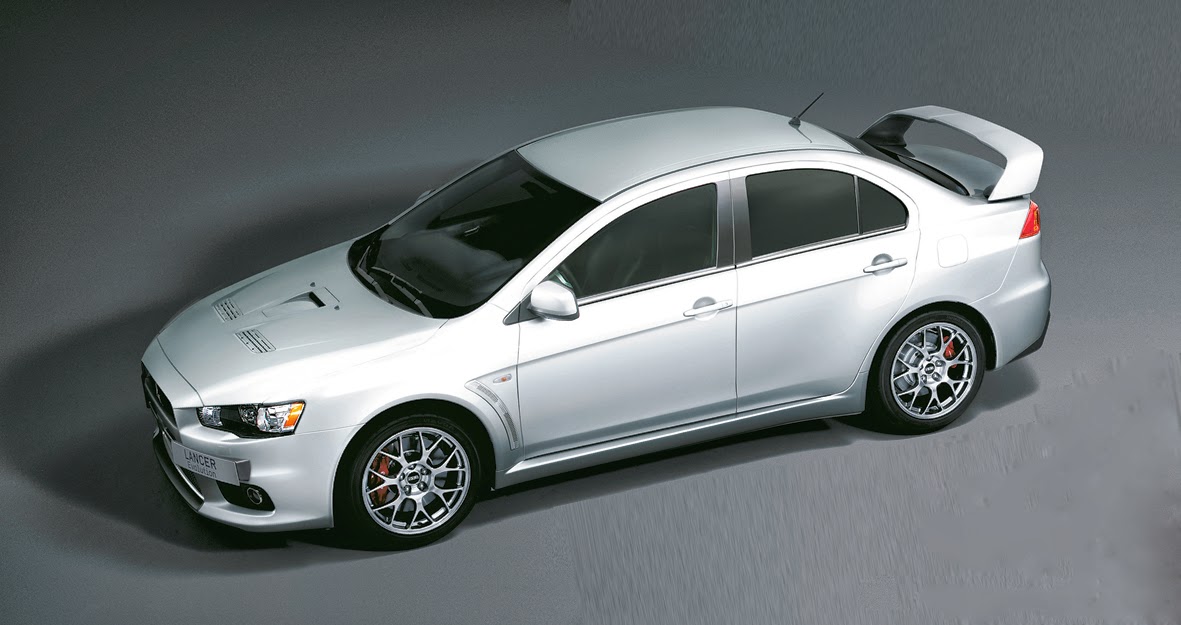
Then it was Mitsubishi, who announced yesterday that it would be launching a 40th anniversary special edition Lancer Evolution X FQ-440 MR which produces 440bhp from its turbocharged inline-4.  It'll cost £50k, has a suitably daft name and will only be available in Frost White.
Mitsubishi Lancer Evolution X FQ-440 MR

For a generation of petrolheads Subaru and Mitsubishi entered the coolest cars in the coolest form of competition and had the coolest drivers.  Then as world rally went in decline so too did the car buying public's appetite for mental Japanese saloons.

Nowadays WRC comprises Ford, Hyundai, Citroen and Volkswagen - all very admirable efforts but none has the kudos of Subaru or Mitsubishi.

So what plans do these two ex-giants of world rally have for their new nutter-bastard motors?

Subaru has announced it will take the WRX saloon car racing. On race tracks. Mitsubishi has announced...nothing.

No, no, no, no, no, no, no.  This is not good enough. We the petrolheads and race fans of the world want, need to see the new Evo and WRX on the stages in the world rally championship.

We want to see these twin Japanese titans take on the Polo, Fiesta, DS3 and i20, spewing mud, ice and gravel and sliding sideways around tarmac hairpins on tiny roads on the edge of some sheer cliff face with a big name driver at the wheel.

This is what the Evolution X FQ-440 MR and WRX STI deserve. And, frankly, so do we.  Please see to it Mitsubishi and Subaru.

By Matt Hubbard


26 Feb 2014

Five Cars You Probably Didn't Realise Are Still On Sale

Graham King takes a look at some cars that cling on to life, despite selling in penny numbers and/or being way past their sell-by-date


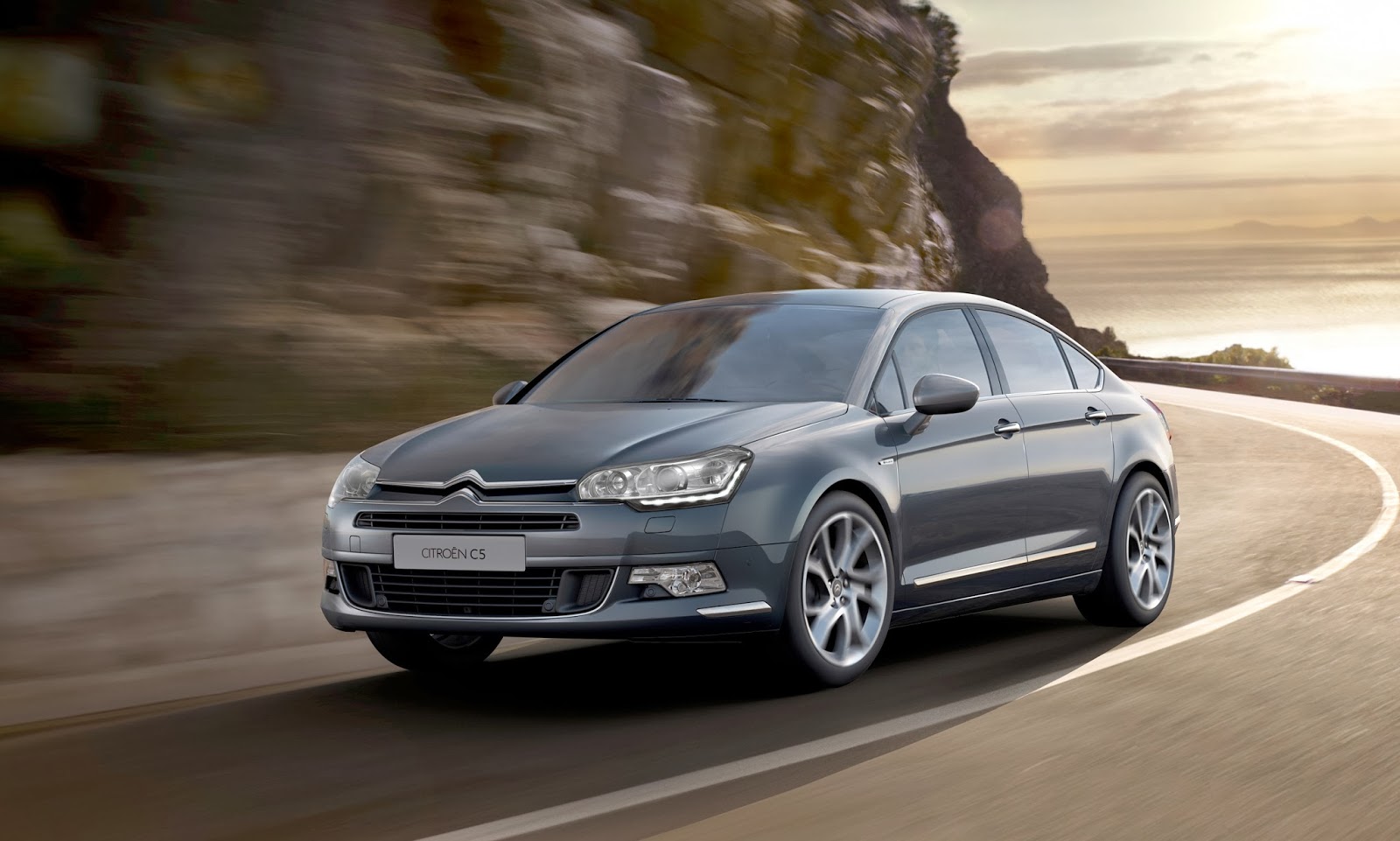
CITROEN C5


When it was launched in 2008 the new C5 was a huge leap forward over its ungainly, badly built predecessor. It was stylish, drove well enough and the build quality could just about give the Germans a run for their money. Every model came generously equipped and was extremely comfortable, either with the standard steel suspension or the hydropneumatic system fitted to top-spec versions and automatics. Unlike the idiosyncratic first-generation model, it was a genuine alternative to the Mondeo and Insignia. And probably just about the most soothing way of doing 50,000 miles a year.

It proved fairly popular for a few years, but in recent times sales have dropped off a cliff. The range was facelifted in 2011 but that didn't really help matters. I dare say most of the thousand or so that are sold every year go to Citroen loyalists and taxi firms (it is very spacious).

The C5 is still everything it ever was and still makes a lot of sense, even if it is getting on a bit. Unfortunately, you will probably walk straight past your local Citroen dealer and buy an Insignia instead.

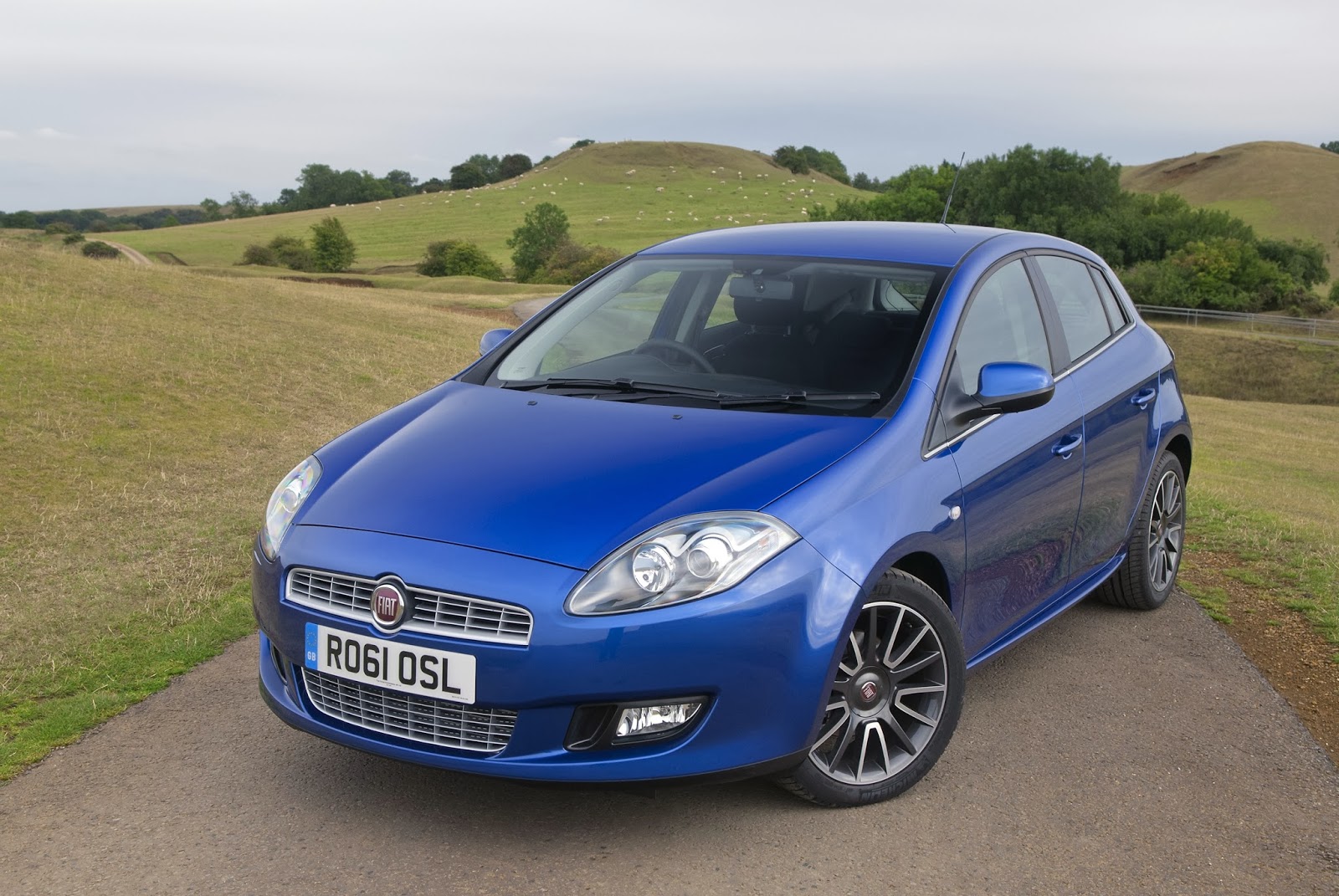
FIAT BRAVO


In 2007 Fiat wanted to distance itself from its previous attempt at a mid-size hatchback, the decidedly stodgy Stilo, so revived an old name with the Bravo. Like the original Bravo from the mid-90's, the new car was very stylish, in fact by far the prettiest Focus rival available. It still is, come to think of it.

As you would expect from a Fiat, the rest of the Bravo was a bit of a mixed bag. The turbocharged petrol engines were very keen as were the diesels, even if they were rather harsh. But the handling wasn't as involving as the Focus's. Typically some of the interior plastics were a bit cheap and the build quality questionable. There wasn't much space either, but it was at least very good value. And very pretty. But now its been overtaken by the Kia Cee'd and Hyundai i30, which are much better and cost about the same.

The Bravo has never been a big seller in the UK and a 2011 facelift didn't change that. The range has been cut back to three models, and with sales in the low hundreds and Fiat's attention increasingly focused on the 500 family, the Bravo must be due for the chop soon.

HONDA ACCORD


While it was built in the UK, the Accord was everywhere. The fact the current generation hasn't sold in anything like the same quantities is probably less to do with the fact it is built in Japan and more to do with it being pitched at low-end Audi A4/BMW 3-Series territory, rather than the highish-spec Mondeo area it occupied before.

There's absolutely nothing wrong with the Accord per se. Indeed when SpeedMonkey tested one recently we found it perfectly acceptable; it drives well, the diesel engine is brilliant if held back by the thing's bulk, the interior's pleasant, the build quality is excellent, its good value, etc etc.

On paper, the Accord does everything a biggish family car should. But it doesn't have the image to compete with the Germans, the saloon isn't all that practical and the estate is outclassed by the Skoda Superb. Actually, thinking about it, I wonder how many people part-exed old Accords for new Skodas? I'm betting a fair few.

But I digress. The point is, the Accord is a good car, but it's hard to come up with a reason to actually buy one. Which is probably why there aren't that many about.

MITSUBISHI SHOGUN


There's no getting away from the fact the Shogun is pretty ancient now. The current Mk.4 version was launched in 2007, though it was, in effect, a reskin and revamp of the Mk.3, introduced all the way back in 2000.

Its always been a bit crude to drive, and the ginormous 3.2-litre, 4-cylinder diesel engine is old hat now. But it comes with loads of kit and space, it's conspicuously good value, it's the only full-size SUV that you can still get in short wheelbase form, and it's pretty much unstoppable off-road.

Mitsubishi still sell a few hundred a year, probably to rural types who appreciate its ruggedness, value, and 3.5 ton towing capacity. Style-conscious urbanites who used to buy them for their seven seats have long since switched to the Volvo XC90 and Land Rover Discovery.

SMART FORTWO


The ForTwo will be back in the news soon as the third-generation version and its Renault Twingo twin will be unveiled at the Geneva Motor Show in a few weeks. But you'd be forgiven for forgetting about the current one.

The Smart has always been billed as the ultimate city car, ultra frugal and so short you can park end-on to the pavement, although that never seemed to catch on. For a while it was even quite fashionable, but since it looked like a commercial ice maker I was never sure why. Then it was comprehensively out-fashioned by the Fiat 500 and people realised it wasn't very pleasant to drive, had a terrible gearbox and was generally fairly pointless.

It seems a couple of thousand ForTwos still find homes every year, most the tax-free hybrid. Presumably most live in London, not that I've seen one recently.


5 Feb 2014

The Incident Involving The Outlander And The Mud

I had finished a meeting early and it was 2.30pm.  It would be daylight for another 2 and a half hours.  My day job means I sometimes need to go and check out rural sites for suitability for solar panel installations.  A member of the team had a site he wanted me to see, so I called him up and said I'd see him on site in half an hour.
The Mitsubishi Outlander parked up after 'the incident' in the mud

At 3pm I was driving round tiny roads in rural Somerset hunting for one particular field, amongst thousands of acres of fields.  The satnav had sent me to a location one mile west of where the field was.

I was in a Mitsubishi Outlander.  It's built to be a spacious road car but does have four wheel drive, locking diffs and a few inches of ground clearance.

Ignoring the useless in-car Satnav I stuck my TomTom to the windscreen and checked the map I'd saved on my phone and used the TomTom's map function to pinpoint the field by hand.

I was taken down a couple of miles of single lane road, then came across 20 metres of submerged track.  The Somerset levels are currently underwater.  This wasn't quite on the levels but it was still seriously wet.

I could see that the water wasn't too deep and set through it.  I was right, it was only abound 8 inches deep - easy for the Outlander.

Half a mile later I met my colleague, who I shall call H.  He was in a normal car but had braved the flooded road and parked up in a tiny track which, it turned out, lead down to the field.

It was then I remembered that I had left my wellies and coat in my own car, at home.  I was wearing  trainers.  H was dressed as I should have been - to walk a mile or so around the field in order to check out its suitability.

I couldn't do that in my trainers.  The field was 200 yards down the track, which was extremely wet and muddy.

"Hop in," I called to H.  "I'll drive it."

So he did and I did.  The track, as they usually are, was rough but had been peppered with hardcore (stones, bits of brick).  The Outlander rode across the bumpy surface with aplomb.

At the end of the track H jumped out to open the gate and I drove through.  The edge of the field had some hardcore laid under it and I parked up.  H closed the gate and we observed the field.

It looked suitable for our needs but in order to assess it properly we would need to walk to the other end.  I took and few steps and realised my trainers wouldn't fare too well in the grass and general oomska.

"Let's drive it," I said.  The ground looked pretty stony and the field surface itself looked quite firm, despite being very wet.

"You sure?" said H.

I was.  He jumped in again, I locked the diffs and turned the wheel to the right and set off along the eastern hedge to get to the northern edge of the field.

It started well.  We covered the first ten yards at about 10mph and everything seemed OK.  I duly observed what I needed to observe.

The Outlander had a manual gearbox but it didn't have a low ratio gearbox and was fitted with road tyres, but first gear had a lower than normal ratio and the turbo-diesel engine had a decent amount of grunt.

I nearly stalled it.  I dipped the clutch, revved it some more, found the bite point and increased the speed.  The pace increased slightly, but less than it should have done.  The wheels were spinning.

We carried on.  H was laughing nervously.  I was starting to fret slightly.  The car was continuing but I got the feeling we were sinking as well as moving forwards.  It nearly stalled again.  I increased the pace and soldiered on.

Have you ever walked across a muddy field in wellies and felt your feet get heavier as the more mud attaches itself to said galoshes?  If not I'm sure you can imagine.  You have to heave your legs more in order to walk.
The Mitsubishi Outlander in a bit of a state, but back on solid ground

This felt the same.  I was having to use more and more throttle in order to move forwards.  We were almost half way across the field.

It stalled.

H was increasingly concerned, and so was I.  I opened the door and looked down.  The car had sunk almost to its axles.  I looked behind to see two huge ruts where the wheels had cut through the sodden  ground, which was much more mushy than I had anticipated.

We were in trouble.

I reversed.  We went down instead of backwards.  A big chod of mud splattered on the passenger wing mirror.  Oops.  I opened the door again.  We were in serious trouble.

I'd never done proper off-roading - only playing about on concrete courses where manufacturers like to show off their SUV's approach, lean angle and wading depth.  Any SUV on road tyres will get stuck on a sodden field.

As far as I know the best approach in such situations is to take it slow, but this is difficult in an Outlander with no low ratio gearbox, and a modern turbo diesel with no torque below 1,250 rpm and tons after that.  Not so much smoothly does it, more like a switch.

Slow wasn't working.  It either stalled or spun the wheels.  I had visions of being stuck there for hours, in the dark, in that wet field, waiting for a farmer to come and tow us out, to our shame.

I thought I'd take it fast.  Reversing wasn't working, despite the field sloping very gently that way.  We just bogged down even more.  I stuck it in first, gave it revs and brought the clutch up.

The wheels spun, sending plumes of brown gunk all down the flanks of the Outlander, then, after a few seconds, we found some traction.

"Yes!"

We carried on for a while at walking pace and then I brought it to a very gentle halt, aiming to sink into the mud as little as possible.  Selected reverse and went for it.  The car moved a bit, mainly sideways and towards the hedge.

"Shit!"

Then we got some rearwards movement and I kept the throttle pinned.  We were moving.

"Yes!"

I couldn't get the car out of the ruts we'd created on the way up, it just wouldn't escape.  I didn't want to jerk sideways and end up in the hedge so, looking over my shoulder, I kept it going in the ruts.  The car was sinking deeper with every yard of movement but at least it was still moving.

"Come on!"

It nearly stalled a couple of times but I just gave it more revs and ploughed on.

Finally we got back to the edge of the field and the hardcore track.  "Phew!"  I reversed the Outlander on to the track so we were facing back the way we had come in.  I didn't want to have to do a 3-point turn and get stuck again.
Afterwards

H and I were relieved.

"That was close."

"Very!"

I still had to 'observe' the field so had no choice but to walk it in my trainers.  Half an hour later I was back at the car with wet feet, bade goodbye to H and set off for home, a 2 hour drive.

The Outlander was caked in mud but had survived the ordeal unscratched.  It had done a good job in conditions that would have outwitted a heavier SUV.

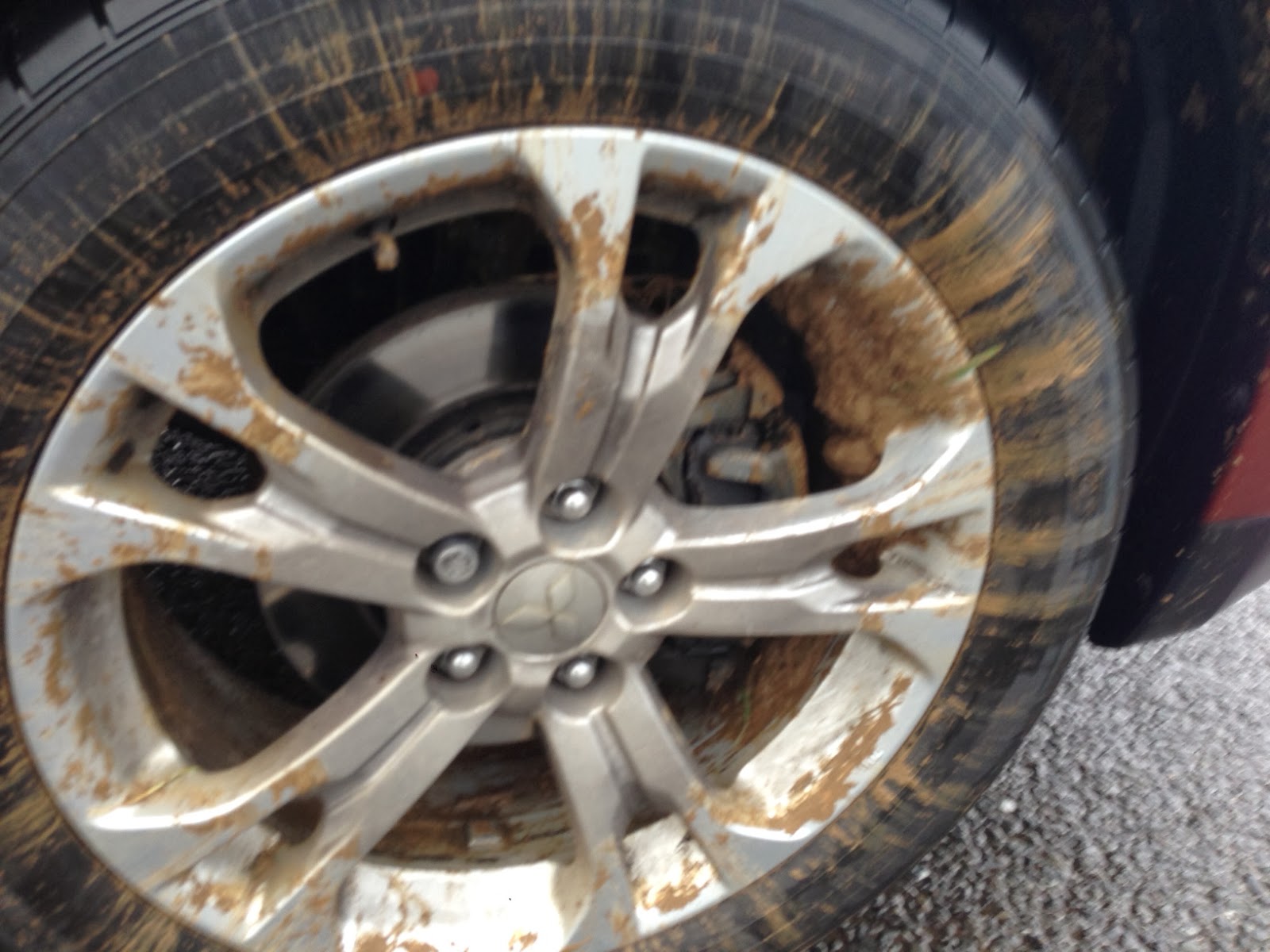
I washed it off in the same deep puddle and found a 60mph road.  Over 40mph the car was wobbling like crazy.  "Hmmm."  I dipped the clutch and it was still wobbling so it wasn't drive-train related.  I thought it must be mud on the wheels causing an imbalance.

I found a place to park up and checked around.  The nearside front wheel had a huge chunk of wet clay-like mud attached to it.  I found a stick and scraped as much of the mud as I could from it and set off again.

It was still vibrating but at 50mph this time.  I stopped a total of four times, scraping more and more mud from the wheel.  It was hellishly sticky, and by the time I had finished my hands and arms were covered in it.

2 hours later I pulled into a jet wash half a mile from home and gave the Outlander a damn good blast of clean water, in the dark, cold and rain of a winter's evening.  I must have looked mad.

But I was happy.  The afternoon could have turned out a lot worse.  The Outlander did well.  I had eventually done the right thing, after a fairly disastrous initial decision.  The car wasn't damaged.  In hindsight I had enjoyed the situation.

"Put it down to experience."
The mud on the wheels causing the imbalance

By Matt Hubbard


31 Jan 2014

2014 Mitsubishi Outlander 2.2 DI-D GX4 Review

Matt Hubbard reviews the 2014 Mitsubishi Outlander in GX4 trim and with a manual gearbox

2014 Mitsubishi Outlander

This, the third generation Outlander, was launched in February 2013.  It's based on the Evo X chassis (unlike the previous model which was a shared Peugeot/Citroen effort) and has a Mitsubishi built 2.2 litre turbo diesel engine.

It's also 150kg lighter than the second generation and has much smoother bodywork in order to reduce drag.  Add in a host of Eco measures and you get a class leading drag coefficient of 0.33Cd and an average 52.3mpg and 140 g/km of CO2.

In theory.  I drove hundreds of miles in varying conditions and averaged 37mpg.  On the motorway at a steady 70mph it'll do getting on for 40mpg but on country or urban roads expect 30mpg.

The test car had a 6-speed manual gearbox.  I've previously driven an automatic Outlander and the gearbox in that was dementedly attuned to economy.  The throttle had to be pressed hard to use any of  its 147bhp.  In a manual you can let rip and get the most out of the engine.

This makes for a more satisfying driving experience, albeit a more expensive one.

The whole point of the Mitsubishi Outlander is that it fills what was once a niche but that is now a huge market segment, that of the mid-sized, economical, spacious SUV.  With its limited model range Mitsubishi kind of stumbled into the segment with the original Outlander, realised it was on to a good thing and continued to refine the car.

Largely it is a refined package, with a few grumbles to hinder the ownership experience.
2014 Mitsubishi Outlander

It looks fine.  Smooth flanks and a crease along the top of the doors.  Foglights just fore of the front wheels give it a Tuscan Raider look.  The rear end is resolutely SUV so you get the practicality that entails, good access to the rear and boot and decent visibility all round.

The boot has plenty of space, and a pair of seats under the floor for occasional, rather than permanent, use.  You do have to open the boot yourself though without the luxury of automatic boot opening.

The driver and passenger get lots of space and storage.  There are a total of ten cupholders in the Outlander plus deep door pockets, a space for a smartphone and a cubby hole under the armrest (which is too low and far back to actually use as an armrest).

The seats are supportive but not overly comfortable.  I could vaguely feel the seat frame somewhere under me.  They are electrically adjustable in this GX4 version but only for back and forward and rake.  There's no lumbar support.

Distance to the pedals is ideal for most people and the steering wheel sits quite low for an SUV.  In fact the passengers sit low in the car, with the window line at shoulder height.

The layout of the instrument binnacle and the various buttons and knobs is well thought out and at night the colours are generally a uniform red.  It all looks very nice if you ignore the sea of black plastic.  Any leather trim used is so close to looking and feeling like plastic it hardly seems worth the effort.

Black is the order of the day if you want an Outlander.  You can't choose any other interior colour scheme.

The controls all feel as though they were tested a million times for reliability but no-one thought to improve them from an aesthetic point of view.  Unlike an old Land Rover Freelander everything will still work in a 20 year old Outlander, but it will never look pretty inside.

The rear seats are not exactly comfortable (they could do with more padding) but offer a vast amount of legroom.  There are yet more cupholders in the back but not much else aside from electric windows and an armrest (with cupholders in it).

The entertainment system is touted as being a 'Premium Nav/Audio system' but has no DAB digital radio and the smartphone functionality is immensely frustrating.  It's very slow witted and takes an age to integrate with your phone via Bluetooth or cable.  If you do hook your phone up to the cable it takes about three minutes to realise every single time you turn the ignition on.

So stop for fuel, then pull away, endure three minutes of silence and then the music comes back on.

The satnav is functional but not pretty looking.  A small screen between the rev counter and speedo gives turn by turn directions.  Postcode entry is frustrated by the fact you have to also enter the country and road name every time.  A postcode covers a very small area so there should be no need for this extra info.

So far the Outlander looks quite nice and is spacious and practical with not much in the way of flair.

The driving experience is almost entirely positive.  At 1,590kg and with 147bhp the Outlander can be a hoot to drive, for an SUV.  The chassis is set up for road driving so the suspension smooths out lumps in the road whilst giving it a decent amount of road holding and cornering ability.

The steering is light and feedback not half bad.  Even if you buy an Outlander for entirely economic and functional reasons you can still have some fun in it.  Below 1300rpm there seems to be zero torque but keep the turbo spinning and it feels like all 280 lb ft of torque is available.

Spec a manual gearbox and you'll have much more fun than the frustratingly eco-orientated automatic version.

There is, however, a fly in the ointment.  Getting it into third gear can be an almighty pain.  Sometimes gearboxes are described as notchy, which can be a vague description.  The Outlander's third gear actually has a notch.  You simply cannot change from second to third quickly.  If you try you will find yourself making two or three attempts to get it in gear.

The key is patience.  From second allow the gear lever to find its natural position below third and then pop it up into gear.  You kind of get used to it after a while but it still frustrates because the lower gears are very close.  Second runs out of puff at about 50mph.

You find yourself taking traffic free roundabouts and tight corners in third gear and keeping the speed above 25mph or else the engine bogs down below the turbo threshold.

If you can live with this then the manual gearbox makes for a better drive than the automatic.

The GX4 trim as tested gets cruise control (although adaptive is only available on the GX5), xenon lights, a reversing camera, keyless entry, the 'premium' audio nav system and heated electric seats.

The four wheel drive system is flexible.  You can choose front wheel drive for day to day use or 50:50 distributed four wheel drive for off-roading action - or an automatic selection which chooses how to utilise the system based on wheel slip.

On the road the Outlander is a pretty smooth cruiser with not much road or tyre noise and a pleasant driving position.  I drove for 3 hours at night in the rain one evening and it transformed from a functional machine into a warm, safe cocoon with brilliant lights and easy to read instruments.

That's the key to the Outlander.  It is quite big, it is quite economical, it is basically quite a functional, sensible car and, if you can put up with its foibles, you will enjoy owning it.

If I were to buy an Outlander I'd go for a GX3 which costs £27k and still has Bluetooth, auto lights and rain sensing wipers or a £34k GX5 which adds digital radio, adaptive cruise control and a powered boot lid.

Forget the Kias and Hyundais which Mitsubishi reckons is the Outlander's competition.  Its most dangerous competitors are the Volvo XC60 which is much more comfortable but much less spacious and the BMW X3, which has a better image but is smaller.  I'd also consider a Land Rover Freelander.

Stats:


Price: £29,999
Engine: 2.2 litre, 4-cylinder turbocharged, diesel 
Transmission: 6-speed manual 
0-60 mph: 10.2 seconds 
Top speed: 124 mph 
Power: 147bhp 
Torque: 280 lb ft
Economy: 52.3mpg 
CO2: 140 g/km 
Kerb weight: 1590kg
2014 Mitsubishi Outlander

2014 Mitsubishi Outlander

2014 Mitsubishi Outlander

2014 Mitsubishi Outlander

2014 Mitsubishi Outlander

Review by Matt Hubbard


24 Jan 2014

Mitsubishi Outlander 2.2 DI-D GX4 - First Impressions

I'm running a Mitsubishi Outlander for a week.  It's a third generation model, which weighs 150kg less than the previous Outlander, and costs £29,999 in GX4 trim.

Mitsubishi Outlander 2.2 DI-D GX4

The second generation Outlander was pretty handsome for an SUV.  This, the third gen, is less so.  The body has been smoothed out in order to reduce drag, which Mitsubishi says is the lowest in its class.

It's not ugly though.  The Outlander has a pleasing outline and the 18" wheels fill the arches well.

When I first jumped inside I assumed it had been specced by a doom metal band.  Black plastic is the order of the day.  Being Japanese, Mitsubishi concentrate more on the engineering and reliability side of things rather than tactile surfaces and interior design.

It's not a huge car but it is spacious inside, lots of legroom in the back and an extra row of seats in the boot.  There are lots of cupholders and storage spaces for everyone.

The engine is great.  It's a 2.2 litre turbo diesel unit with 147bhp that's got plenty of vim after the turbo kicks in.  You have to pull away with the engine above 2000rpm to avoid bogging down in no-turbo land.

The gearbox is less great.  The 6-speed manual is light and easy but third gear is infuriatingly difficult to select.  From second you have to let the gear-stick find it's natural place below third and then push it up.  Otherwise you end up trying to bang it in gear a few times.  0-60 takes 10.2 seconds.  With a smoother third gear it'd probably take less.
Mitsubishi Outlander 2.2 DI-D GX4

It'll off-road if need be with locking diffs and decent ground clearance, although it's best to run in two wheel drive mode in order to use less fuel.

It's reasonably economical.  The official figure is 52.3mpg.  I covered 210 miles in one journey, which took in 180 miles of motorway and 30 of country lanes and it averaged 37.5mpg.  Not spectacular but not too bad.

The Outlander has lots of toys such as heated seats, cruise control and automatic headlights and wipers.  It just presents these in a very functional manner without any effort to make the interior seem luxurious beyond some leather trim and aluminium looking strips.

So it's spacious, looks good, has a decent engine and slightly iffy gearbox and does exactly what it should.  Unfortunately the big let-down is the infotainment system.

In theory it'll connect to Bluetooth but this literally took all day to connect to my phone.  Thereafter it connects every time I get in the car.  The cable integration with my iPhone took ages too.  It analyses the phone and then controls what's playing via the on-screen system, which isn't very intuitive.  If you skip a song on the iPhone itself the system just shuts down and won't play anything.  Plus, it takes 3 minutes from starting up the car to playing any music.

On top of that it doesn't have digital radio and the menus and controls are infuriating.  The satnav works well but inputting postcodes requires selecting the road too.  Why, if you have the postcode do you also need to choose a road?  It wouldn't find one particular postcode.  It turned out that because it was in Cardiff I had to deselect England and select Wales.  Integrated TomTom software would be much more user friendly.

The huge surprise is how it handles.  For a reasonably lofty SUV it is very chuckable.  The ride is good too.  In fact the whole chassis set up is superb and one of the best of the mid-sized SUVs I've driven.  Must be all that world rally experience.

I'll report back with a full review later.
Mitsubishi Outlander 2.2 DI-D GX4

Stats:


Price:  £29,999
Engine: 2.2 litre, 4-cylinder turbocharged, diesel
Transmission:  6-speed manual
0-60 mph:  10.2 seconds
Top speed:  124 mph
Power:  147bhp
Torque:  280
Economy:  52.3mpg
CO2:  140 g/km
Kerb weight:  1590kg
Mitsubishi Outlander 2.2 DI-D GX4

By Matt Hubbard


21 Nov 2013

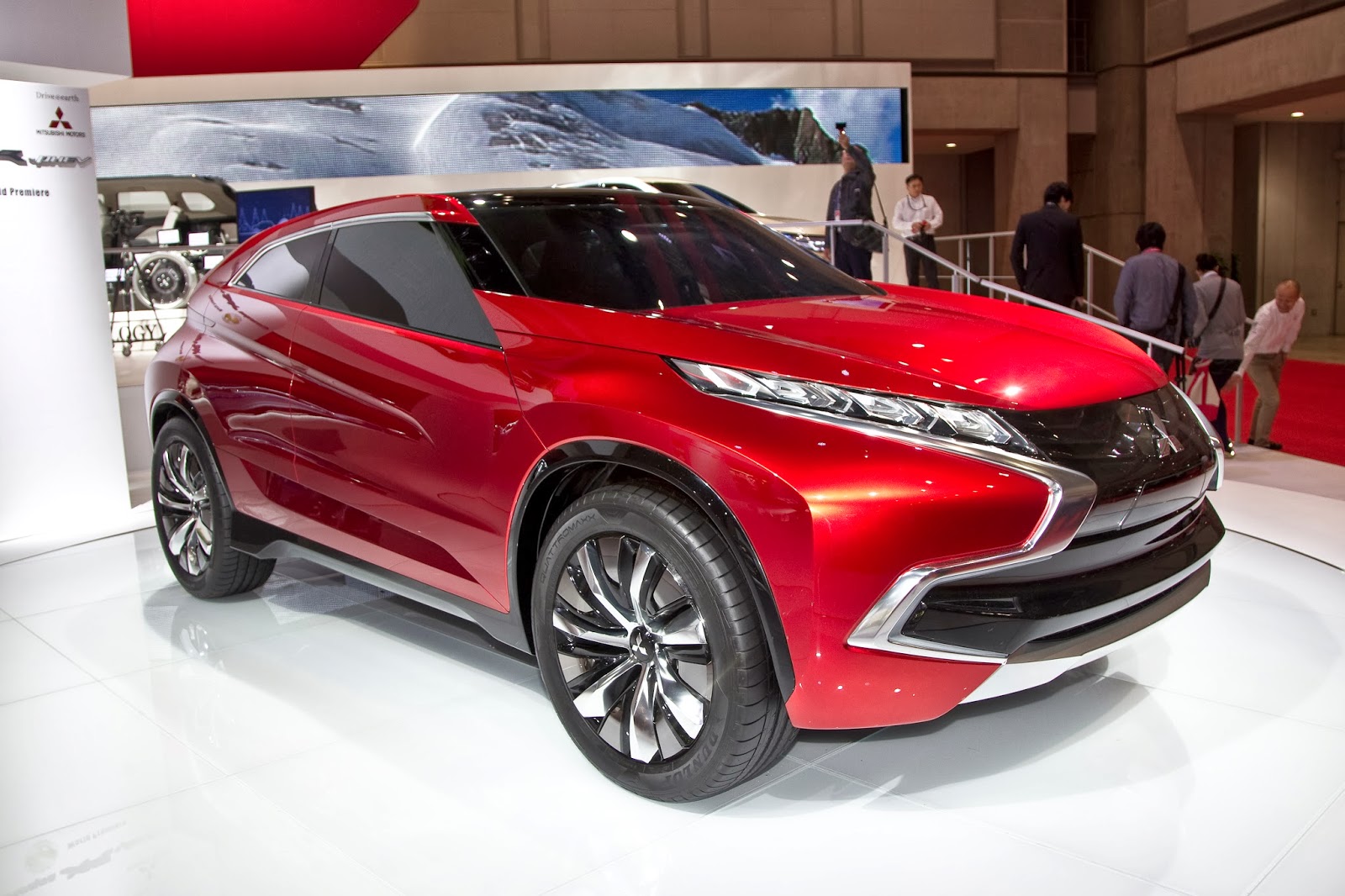
Mitsubishi at the Tokyo Motor Show

Graham King looks at what Mitsubishi has brought to the Tokyo Motor Show


You can probably take the styling of Mitsubishi’s Tokyo concepts with a grain of salt. But their next-gen drivetrains could well be on the way.

There could be bits of the next Shogun in the Concept GC-PHEV’s styling. But whenever the new Shogun does arrive, I would be surprised if it isn’t underpinned by at least of the GC’s drivetrain. It uses a 3-litre, supercharged V6 MIVEC petrol engine powering the rear wheels via an eight-speed auto ‘box. Somewhere in the middle is a plug-in hybrid system, the motors presumably powering the front wheels.

The Concept XR-PHEV and Concept AR both use 1.1-litre, turbocharged MIVEC petrol engines, coupled to hybrid systems. A compact SUV, the XR (a first look at the next ASX, perhaps) uses a plug-in system, while the AR MPV is a mild hybrid, using a similar system to the Prius.


Article by Graham King