Showing posts with label Citroen. Show all posts

9 Feb 2015

Cars For Non-Conformists

I like to think of myself as a non-conformist. I try not to fit in with the crowd or do what's expected of me. You might call this awkward behaviour but those of us who think of ourselves as non-conformists disagree - we're individuals. And to that end we don't buy what cars are expected of us.


Whilst the rest of the school-run parents used to pull into the car park in brand new monster SUVs I would drop my son at school in a 25 year old Mercedes 300TE with frilly, rusted wheel arches and gloriously gold paint.

I chose it not only because I was a bit short on budget back then but also because I thought it was brilliant, and hardly anyone else had one. I could have chosen a Ford Focus, but that would have been too sensible.

Conformists go with the flow. Non-conformists kick against the pricks, sometimes to the detriment of comfort, status and financial wellbeing.

If you want to be part of the herd the market has a car that is perfect for your needs. Middle manager in a large corporate with a pension plan, 2.5 children and a house in the 'burbs? Allow BMW to provide with a 3-Series on low rate finance and in a wide choice of colours and specifications.

But that would be conforming. Your Beemer might suit your lifestyle and your wallet but it would be largely the same car as all your colleagues and neighbours. As a statement to the world it says you are as boring as a celery sandwich.

Instead Mr Corporate could buy a Caterham, Morgan 3-Wheeler, Lotus Elise or even a Citroen C4 Cactus, Mini Cooper John Cooper Works or Ford Mustang if real world practicalities need to be taken into account - and he would stand out amongst his contemporaries as a man who does things differently in a world of worker ants. 

Similarly if you're looking to swim against the tide Infiniti, Subaru, Dacia and Alfa Romeo make cars like nobody else does. Buy one and you're already winning in the game of life. I can't promise they'll be any good though.

To really strike a blow for individuality you have to go back a few years when some car companies seemed to make cars for such small audiences it was amazing they didn't go out of business (although some did).

TVR (which did go out of business) made some of the most wonderful machines to grace the roads. Citroen (which is amazingly still in business) has made some of the most stylish, unique and plain bonkers cars ever. Buy a half decent XM, BX, DS or SM and everyone will know you do not conform to the conventional norms.  Saab made cars differently, until GM got hold of the company and blandified it.

Maserati makes rivals to Big German Three which are different for the sake of it and Mazda does the same against the rep-mobiles from Ford and Vauxhall.

If you're after a city car you could buy a boring (and crap, which is sad as the first one was different AND brilliant) Ford Ka or Citroen C1 or you could go against the flow and get a tiny, rear wheel drive (and engined) Renault Twingo.

But for those really unique and most definitely non-conformist cars we have to look to the cul-de-sacs that car companies sometimes build, and then stop building because nobody bought them. 

It might look horrible but the Mercedes-Benz R-Class was intended to create a new class of car, and failed. The R-Class is a standalone Quasimodo in a world of Esmeraldas and as such buying one is as non-conformist as it gets.

Vauxhall, purveyor of cars that are bought by the truckload, once made a kind of semi-luxury estate/hatchback with two individual rear seats that had plenty of legroom. It was called the Signum and nobody bought it, which is why it is as rare as a German comedian.

The Volkswagen Phaeton (vast, luxurious, same as a Bentley under the skin) was built to transport VW's board of directors but as you could buy the same car with an Audi badge on it no-one who didn't work for Volkswagen bought one.

I'm sure I've missed many interesting, unusual, unique and defiantly non-conformist cars. If you know of one let me know.

By Matt Hubbard


10 Nov 2014

2014 Citroën C4 Cactus Video Review And Interior Tour

I recently ran a Citroën C4 Cactus for a week - here are a couple of videos I shot


If you're a regular Speedmonkey reader you'll know my videos are zero budget affairs, but they're honest. I talk about the car in detail and run through its features, and faults.

You can read the written review of the Citroen Cactus here.

Citroen C4 Cactus video review


Citroen C4 Cactus touchscreen and interior tour


By Matt Hubbard


24 Oct 2014

2014 Citroën C4 Cactus Review

Matt Hubbard reviews the innovative new Citroën C4 Cactus

Citroën C4 Cactus
Citroën C4 Cactus

First things first, the Citroën C4 Cactus isn't based on the C4 but the C3. It's been lengthened and heightened but because it sits on the smaller car's platform it's light. Very light. You'd expect a car that counts the Nissan Juke as a rival and that feels as big as a Golf to weigh around 1,300kg but it doesn't - it weighs 965kg.

This is good.

The Cactus is innovative in several ways but the most obvious is on the outside. You can't escape them. They stand out in the photos and in the metal - well, rubber.  Those plastic panels on the flanks are called Airbumps (capital A because Airbump is patented) and they are designed to deflect erroneous doors in supermarket car parks.

Will any other manufacturer want to copy the concept? Well, they might because I've a sneaking feeling the Cactus is going to do rather well.

The looks attract as much admiration as derision. It's certainly not a beige car and tends to arouse passion in people as they comment on it. In a week with the Cactus (admittedly painted in Hello Yellow) I was asked about it by my postman, a bin man and some random bloke at the petrol station.

On social media opinions were divided and those opinions were fierce, on either side of the hate/love divide.

I'll leave it up to you to make up your own mind about its looks, suffice to say I like it. The proportions look and feel good and the design is attractive to the (well, my) naked eye.

Step inside and it feels spacious. The seats are close together but this is because they're really very comfortable sofa chairs. They're not very supportive but they do take the strain of a long journey well.
Citroën C4 Cactus

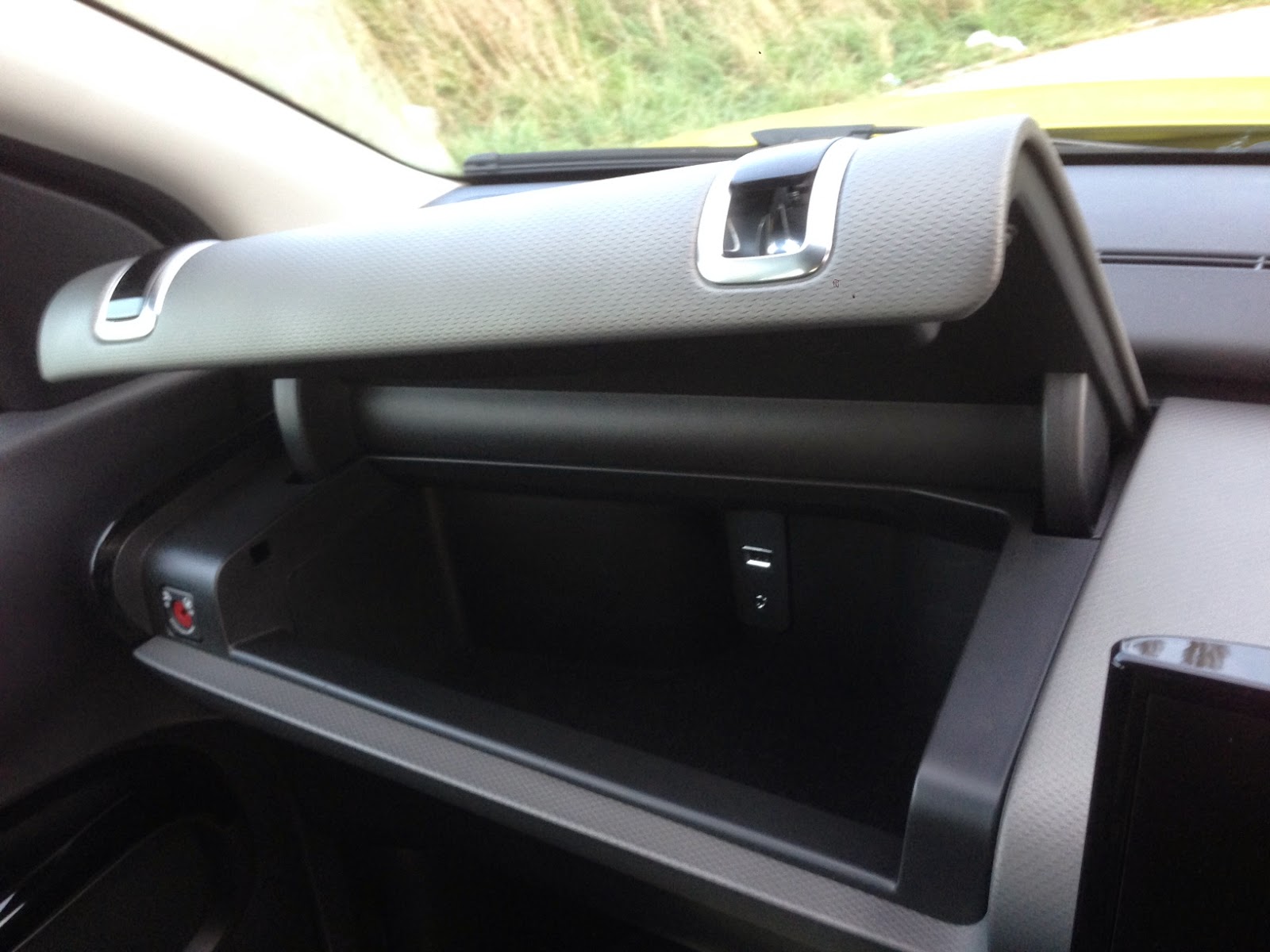
There are some very sensible storage spaces. Rather than just provide strangely shaped holes with no lip to stop things falling out the Cactus has a recessed space, just a little bigger than a large smartphone, next to the USB port, a similar one that holds a glasses case, very wide door pockets, a single cupholder and an absolutely massive glovebox.

The rear seats are similar to the front but are less comfortable - they're more of a bench than a sofa.  To save weight there's no trick folding system either. There's no 60/40 split and the rear bench doesn't fold flat. There is quite a lot of leg room though.

One weight saving measure can be found in the rear windows - they're pop out rather than wind down and I would question how sensible that is. The Cactus is a family car and your kids deserve wind down windows, even if they're manual.

The boot is large but has a high lip, presumably to preserve structural integrity in such a light chassis.  The parcel shelf is as light as the proverbial wafer thin mint.

The driving position is quite sensible. At this point I'd like to congratulate Citroën's designers for not following the trend of raising the roof height. Some cars have stupidly tall roofs which add weight, and in the wrong place - high up.

You sit in the Cactus and feel snug. Yes the cabin is airy, with sensibly designed pillars that provide good visibility, but the roofline sits low compared to other cars. You can, if you want, option a full size panoramic roof.
Citroën C4 Cactus
Citroën C4 Cactus

Back to the driving position. Everything sits to hand (and foot) except for the steering wheel which is not adjustable for reach. This is another weight saving measure that's a step too far.

The dash is digital, simple and straightforward. The speed readout is clear but the omission of a rev-counter is silly.

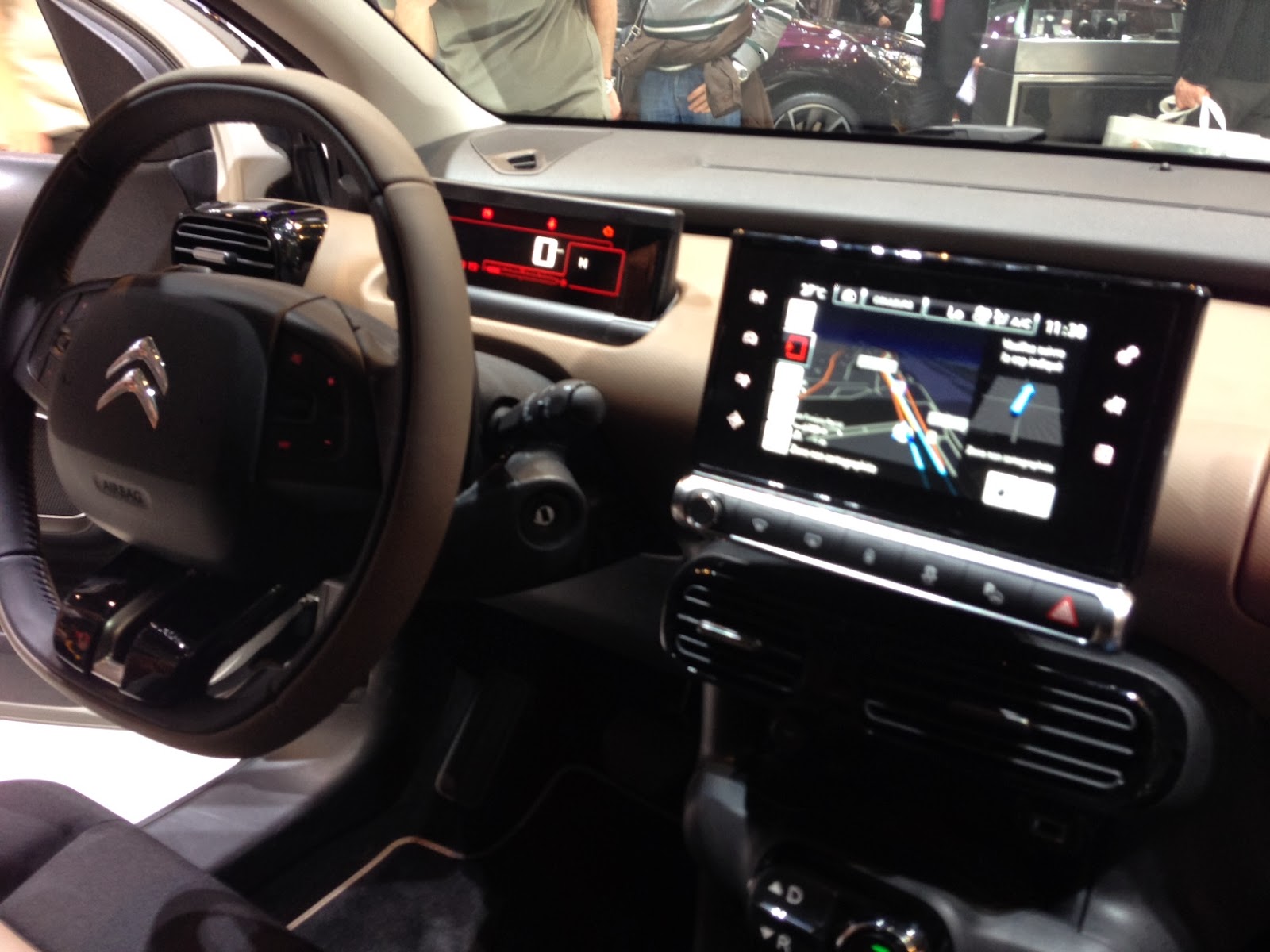
Move to the centre console and there is only one row of buttons. Almost everything is controlled by the touchscreen. Climate, sound system, satnav, trip computer - everything. And it works well. Watch this video for a full tour of the info screen.


The Cactus has three petrol and two diesel engines available. That in the test car was a 1.2 litre turbocharged petrol with 82bhp and 87lb ft of torque. This is a puny amount of power but in such a lightweight car it feels surprisingly sprightly.

The gearbox was a 5-speed manual. I hadn't driven a 5-speed since 1987, but it was a good one - nice and light, like all the other controls.  The ratios seem sensibly spaced but this was hard to fathom accurately without a rev-counter

Pulling away smoothly is tough due to the small engine and initial turbo lag but once past that the engine pulls well enough.

The ride is brilliantly smooth. Rough roads and potholes are evened out and the car, despite its light weight, feels straight and true on the road.

The handling isn't half bad either. It barrels round corners perfectly well, although with not a vast amount of precision or feedback. It is fun for a run on country roads though.

On the motorway it's comfortable and easy going, although you do need to stir the gearbox to get the most out of the little engine.

It feels like a light car when you're driving it through corners - you can sense a litheness - but it also feels quite substantial. Slam the doors and instead of a tinny bang they make a satisfying thunk. The choose of materials inside (a mix of soft and comfortable and harsh and scratchy) don't give away the lightness either.
Citroën C4 Cactus boot
Citroën C4 Cactus

It really is a clever overall design that achieves the Cactus' low weight which, aside from the aforementioned issues, does not pervade itself in any negative way - only positive.

The C4 Cactus test car cost £14,590 and had automatic lights and windscreen wipers, DAB digital radio and Bluetooth streaming, cruise control and a satnav that works very well.  Add in the comfort levels, space and genuinely innovative aspects to the design and it's good value.

As well as this the running costs will be lower than equivalent cars. CO2 and mpg figures are competitive and consumables such as brakes and tyres will last longer than in the competition due to its weight.

I enjoyed my week with the Cactus. It's a fun, attention seeking car that's practical and spacious and it'll deservedly sell by the bucket load.

Stats:


Price - £14,590 (£16,500 as tested)
Engine - 1.2 litre, 3-cylinder, petrol, turbocharged
Transmission - 5-speed manual
0-62mph - 12.9 seconds
Top Speed - 106mph
Power - 82bhp
Torque - 87lb ft
Economy - 61.4mpg
CO2 - 107g/km
Kerb Weight - 965kg
Citroën C4 Cactus
Citroën C4 Cactus

Citroën C4 Cactus

Citroën C4 Cactus

By Matt Hubbard


13 Oct 2014

2014 Citroën C4 Cactus First Drive Review

I'm running a Citroën C4 Cactus Feel PureTech 82 manual for a week. Here's my first drive review

2014 Citroën C4 Cactus

Never before has a car elicited such a large, and mixed, response to my tweets about it.  The Cactus was delivered, I took a few photos, tweeted them, drove it around, tweeted some more.  Some people hated it, others loved it.

There was no middle ground.  The Citroën C4 Cactus is, it seems, a true Marmite car. 

But that doesn't matter. It is an important car for two reasons. One, it matters to Citroën, it is a return to quirky, innovative, ground breaking form. Two, it matters to the car industry because it's the size of a Golf yet is only 50kg heavier than an Up! It is astonishingly light.

Look outside, look inside and you wouldn't know where all the weight has been saved. Look closer though and you will notice that the rear windows are pop-out rather than wind down, the dials have been replaced with a digital readout and the door handles are leather straps.

But drive it and you instantly know you're in a light car.  You can feel it in the steering, the braking, the acceleration and the way it goes round corners.

Why is this important? Because something with less mass requires less power to propel it which aids economy and reduces emissions. It also means it doesn't need large brakes or suspension and the tyres will last longer.

Cars have been getting heavier as regulations and consumer demand meant we needed safer, more sophisticated vehicles. The latest generation of most popular models has seen them shave some weight here and there (except the Mini which gets more porky with every generation) but the Cactus has taken weight saving to new extremes.

Yet it's not apparent in the crucial areas of comfort and refinement. It has cruise control, DAB, Bluetooth, auto lights and auto wipers. It has all the toys.

A quick run through of the Cactus after a couple of days and 100 miles:

The cabin is well designed with lots of sensible storage spaces, two specifically for smartphones but only one cupholder.  The materials are largely of high quality but some of the plastics, especially on the door tops, are harsh. The glovebox is vast (because the airbag is in the roof)

The driving position is compromised by the lack of reach adjustment on the steering wheel, no doubt to save weight but a step too far. 

The seats are like sofas, comfortable but not very supportive.

There are hardly any buttons, most things are controlled but the excellent infotainment touchscreen.

This is the first French car I've driven with full postcode input in the satnav.

The engine is puny but in this car is acceptable, the gearbox is fine but only has 5-speeds.

The dash and readouts are clear and give lots of good info but it doesn't have a rev-counter, which is silly.

The handling is adequate but the ride is excellent.

The looks are...well I think it's great looking and 50% of you will agree.

I'll publish a full review soon.

Stats:


2014 Citroën C4 Cactus
 
2014 Citroën C4 Cactus

2014 Citroën C4 Cactus

2014 Citroën C4 Cactus

2014 Citroën C4 Cactus
Price - £14,590 (£16,500 as tested)
Engine - 1.2 litre, 3-cylinder, petrol, turbocharged
Transmission - 5-speed manual
0-62mph - 12.9 seconds
Top Speed - 106mph
Power - 82bhp
Torque - 87lb ft
Economy - 61.4mpg
CO2 - 107g/km
Kerb Weight - 965kg

By Matt Hubbard


11 Oct 2014

Citroën Cactus - A True Marmite Car

The Citroen C4 Cactus I'm running at the moment certainly attracts attention. It is stared at more than any other car I've driven, with the exception of a Maserati GranTurismo.

Citroën C4 Cactus in Hello Yellow

On social media it generates, and splits, opinion. Here's a taste of some of the responses to my tweets.

Watch out for my First Drive Review on Monday.


For the record, I think it looks great.

By Matt Hubbard


15 May 2014

Citroen DS3 Cabrio Video Review

I had a Citroën DS3 Cabrio DSport for a week and put together this video


I liked the DS3.  The Cabrio part of its name is a bit of a con as only the actual roof part electrically rolls back, leaving the windows and frames in place. OK, the roof continues down and towards the boot but when it does this you see nothing but folded roof out of the rear view mirror.

I also recorded this, the Speedmonkey Guide To Hooning In A Citroën Cabrio which is all about taking the DS3 for an honest thrash on some decent back roads and roundabouts. It acquitted itself well.


Matt Hubbard


7 May 2014

Five Peugeots/Citroens Never Sold In The UK

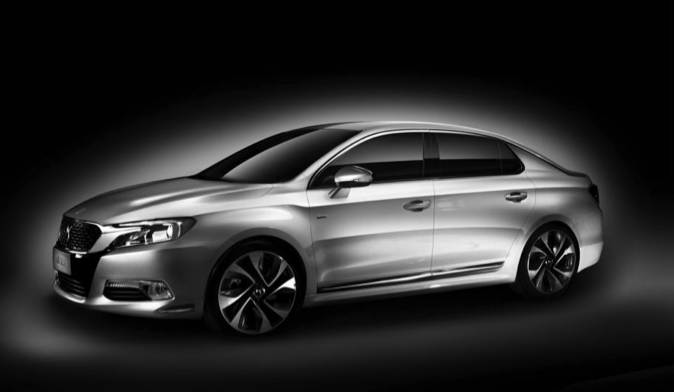
Citroen's DS range has certainly caught the imagination of the motoring public in recent years. The DS3 certainly is cute and has plenty of charisma, along with the DS4 and DS5 which boast daring and interesting lines and angles. Following the interest and success, the line continues with the DS 6WR, a compact crossover unveiled at the Beijing Motorshow.


The stylish angles and design language certainly appears more desirable than the current Mitsubishi ASX-based Citroen C4 Aircross and Peugeot 4008 siblings, which have proven ineffective in terms of European sales. Therefore the Citroen DS 6WR, equipped with one of the PSA family's infamous diesel units has the recipe for a potential sales success. Alas unfortunately not, as with the Ford Escort revealed last week on Speedmonkey.co.uk, PSA have decided to offer the DS 6WR exclusively to the Chinese market.

Apparently PSA are striving to increase sales of Peugeots and Citroens in the affluent Chinese market, where they currently sell 13 per cent of their worldwide output. In fact, this figure is currently on course to become 50 per cent by 2016 and 60 per cent by 2020. Whereas it may seem that the French brands are conspiring to leave us Europeans in the dark, a deteriorating reputation for poor build quality, dwindling sales and dangerously walking the tightrope of bankruptcy has called for drastic measures. With China's demand for foreign brands rising, manufacturers are beginning to change their priorities. The DS 6WR, available in China with only the e-THP 160 and 200 Prince engines mounted on a six-speed automatic transmission, is not the first PSA product not available throughout the entire European market. Below we explore some special market vehicles which were never available in Britain.

5 - Citroen DS 5LS

Citroen DS 5LS

Coming soon to the Chinese market, along with the aforementioned DS 6WR, the DS 5LS is a C-segment saloon with a surprising amount of flare. As Citroen aims to push the DS name as a fully-fledged brand in the Chinese market, logically more models will arrive in Shanghai instead of Salisbury. More interesting though is the hardcore DS 5LS R concept, which promises to be the most powerful Citroen yet. If priced correctly, Volkswagen Golf R and Audi S3 Saloon buyers may find themselves surprised at the lights.

4 - Citroen Axel

Citroen Axel

Your eyes do not deceive you, this image is not of a regular Citroen Visa. The Axel was a special vehicle produced exclusively for the Romanian market between 1984 and 1990. Also known as the Oltcit Club, the Axel was a three-door vehicle produced on an assembly line in Craiova. Unfortunately, quality was atrocious by comparison to contemporary Citroen products and only amounted to just over 60,000 sales.

3 - Citroen C-Elysée/Peugeot 301

Peugeot 301

Regular readers will have recently learned of the sister C-segment saloon's existence. Unsurprisingly, they shall make an appearance once again. Selections of the European market can opt for either/or, or occasionally both, however the main focus is on the developing markets worldwide. For instance, the C-Elysée's previous generation was based on the ancient Citroen ZX in China as late as last year. Following the discontinuation, the Citroen version is also assembled within China, along with Vigo in Spain.

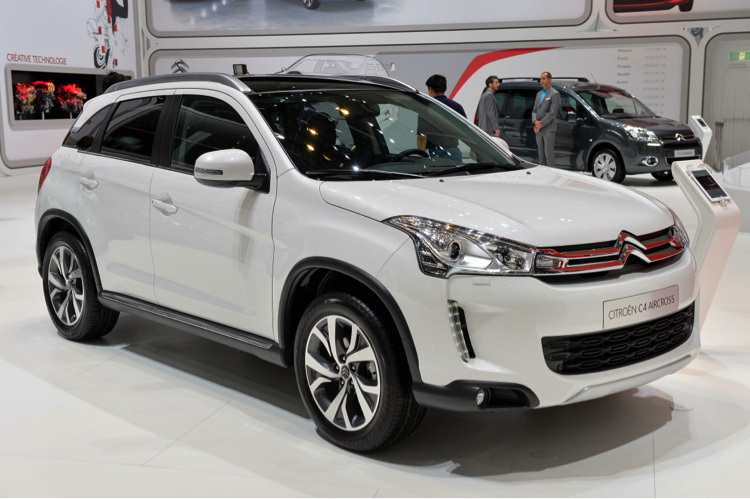
2 - Peugeot 4008/Citroen C4 Aircross

Citroen C4 Aircross

Readers who were scratching their heads during the second paragraph of this article will now be satisfied and safe in the knowledge that the mystery vehicles referred to remain enigmatic in the UK market. Based upon the familiar Mitsubishi ASX crossover, the 4008 and C4 Aircross have proven disappointing in terms of sales figures throughout Europe, including in the French market. Naturally, PSA were targeting the developing markets with this model, with Russia and Ukraine receiving the earliest launch date worldwide.

1 - Peugeot 206+

Peugeot 206+

Yes, Britain certainly received the Peugeot 206 with a whirlwind in terms of sales throughout its life time. However, the legend died in 2006 and thus was the end of the chapter. Not entirely, as Citroen produced a face-lifted model called the 206+ in Europe, or 207 Compact in Argentina. With the front end from the replacing 207, and a low retail price, the 206+ was aimed to compete with a similar project by Renault with the Clio based Dacia Logan. Sales weren't terrible either, with production lasting until late 2012 in Europe. Production ended at the Mulhouse plant in Paris following strong demand for the 208 and the launch of the 207-based Peugeot 301.

By Mike Armstrong


2014 Citroën DS3 Cabrio DSport Review

Matt Hubbard reviews the Citroën DS3 Cabrio DSport THP155

2014 Citroën DS3 Cabrio DSport

The Citroën DS3 is a fine looking car.  The Cabrio version looks almost identical so is also a fine looking motor.  You see, it's not strictly a cabriolet, instead the fabric roof slides back along the roof rails, hence the similarity in appearance.

To understand how much of a cabriolet it is think Citroën 2CV, which had a fabric roof that rolled back.  The DS3's is similar but the roof whirrs back at the touch of a button.  It doesn't just stop at the back though, press the button again and the rear window folds out of the way and the roof continues down.  Because no part of the roof folds upwards you can open or close it at any speed.  This does compromise the function of the boot though which is spacious but the opening is hard to get at.

With the roof fully retracted and the windows down it does feel pretty open and gives you almost everything you'd want from a convertible.  The downside is that it is quite noisy at high speed as the roof never fully seals when closed - instead it is stretched tight and held in place. It doesn't flap about or let water in but noise does filter through.

The cabrio aspect of the Cabrio is a success.  How about the rest of the car?

The DS3 has been around since 2009 and was face lifted in 2011. It looks fantastic and much more modern and funky than any of its competition.  Design touches, such as the tiny DS3 logos in the rear light cluster, the A shaped area of bodywork extending up the B-pillar and the DS logo itself, help bring together a sense of unflustered and unfussy chic.

The DS3 doesn't try to be cool, it just is.

Although if you're a 40-odd year old bloke you might not choose quite so much purple in the interior and the roof.

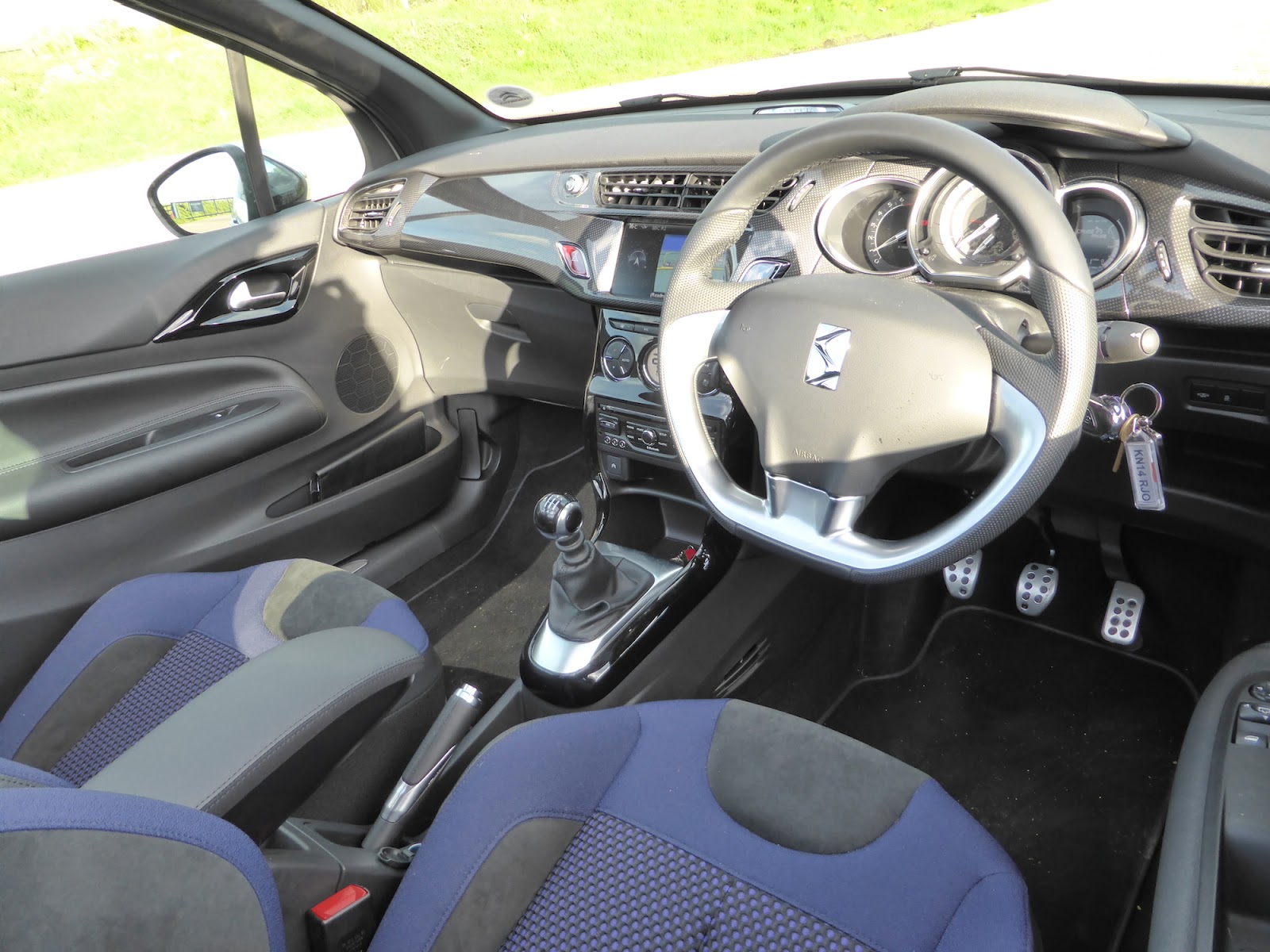
The interior is modern and, again, rather chic.  It's design led so that form doesn't always follow function.  The glovebox for example curves around the passenger's knees, forming a flowing line that's rather pleasing to the eye.  But open it and only half of it is actually glovebox, whilst the other half is just blank panel.  A less curvaceous, and more frumpy, lid would have given more space inside. C'est la vie.
2014 Citroën DS3 Cabrio DSport

Leave the roof open and a passing magpie would have a field day with all the shiny bits and pieces of chrome and aluminium with parts of the steering wheel, handbrake, gear lever, gear lever surround, dials and various parts of the dash glinting in the sun.

I loved the look of the dash top, the dials and, to be honest, all of the interior. It's not subtle but it is all rather good looking.

Feels good too.  The bright purple seats are super comfy and supportive all at the same time.  The driving position is spot on and all the tactile surfaces feel as good, as they should be for nearly £20k.

The infotainment system has a couple of flaws.  It does Bluetooth but not digital radio. Given that target buyers of the DS3 Cabrio are on the younger side this is a silly omission.  Similarly the satnav doesn't do postcodes.  Might as well not include a satnav if you're not going to include postcodes.

The engine is a turbocharged 1.6 litre petrol with 155bhp and 177lb ft of torque.  The gearbox is a 6-speed manual.

Could the DS3 Cabrio for all its glitziness be a proper driver's car?

It's not too far off.  The engine is plenty good enough.  It sounds OK and has plenty of pull once the turbo spools up.  Use the gearbox and keep it on the boil and it's quite fast - 0-60 takes 8.2 seconds, and it certainly feels fast with lots of oomph when you want it.

The turbo can feel as though it's lost some pressure when you suddenly floor the throttle after cruising - it takes a moment for the engine to respond.  This doesn't intrude on the experience and probably returns a few extra mpg.

The gearbox is better than average but you can get a bit lost when changing down through the gears. Sometimes it doesn't like going into gear when changing down in anger.

The steering and chassis are great.  I recorded a video whilst taking the DS3 Cabrio round my favourite roads and said the word 'fun' far too many times.

This could be because it really is fun.  The suspension is set on the softer side of boy racer.  The steering feels sharp and fluid and the car can be accurately controlled when flying around quiet country lanes, but it does roll a tad and never cocks a wheel in the air.

The controls all feel light and, with it's easy going yet refined chassis, make the DS3 Cabrio a great driver's car for anyone.

The Citroën DS3 Cabrio DSport is a great little car.  I liked it a lot.

Stats 


Price - £19,845 (£21,490 as tested) 
Engine - 1.6 litre, inline-4, petrol 
Transmission - 6-speed manual 
0-60mph - 8.2 seconds 
Top Speed - 132 mph 
Power - 155 bhp 
Torque - 177 lb ft 
Economy - 47.9 mpg 
CO2 - 137 g/km 
Kerb Weight - 1,250kg 
2014 Citroën DS3 Cabrio DSport

2014 Citroën DS3 Cabrio DSport

2014 Citroën DS3 Cabrio DSport

2014 Citroën DS3 Cabrio DSport

2014 Citroën DS3 Cabrio DSport

2014 Citroën DS3 Cabrio DSport

2014 Citroën DS3 Cabrio DSport

2014 Citroën DS3 Cabrio DSport

2014 Citroën DS3 Cabrio DSport

By Matt Hubbard


28 Apr 2014

Citroen DS3 Cabrio First Drive Review

I'm running a Citroën DS3 Cabrio DSport THP155 manual for a week.  Here are my initial impressions.

Citroën DS3 Cabrio DSport THP155

The last Citroën I drove was my own battleship grey BX back in the mid-90s.  It was rather lovely in a strange way, and its hydropneumatic suspension ended up costing me a fortune.  Ever since then my impression of Citroëns has been one of less zany and more boring and rattly, the mollusc shell shaped Xsara Picasso being a particular low point.

But when I was organising a run of convertible press cars for the spring I decided to ask Citroën if they would lend me one, pretty please.  They said yes. Hurrah!

Said car arrived last Wednesday.  It's silver with black touches and a purple roof.  Misconception number one was immediately dispelled, it looks great.  The overall shape is easier on the eye than a Fiesta, Corsa, 208 or pretty much any supermini.  The exterior touches are nice, the little DS logos embedded in the rear lights are super-funkylicious, the horizontal DRLs in the edge of the front bumper look groovy.

Despite the Austin Powers-esque adjectives the DS3 is definitely not a dad dancing car (as many Vauxhalls are) but is as cool as cucumber.  If you disagree then you probably do dad dance.

The interior is a riot of stylised design and touches with bang up to date flair that absolutely works.

My son has sat in dozens of press cars and rates it higher than anything he's been in before.  He likes the glovebox (I don't, it's tiny), the seats (so do I - purple bits, Alcantara bits, funny string-back bits), dash trim (I do too, it's shiny!), arm rest (I don't, it's annoyingly in the way of the handbrake), steering wheel (I do too), dials (I do, although the engine temperature dial is in a silly place), door handles (agree with him on that one) and gear knob (yep, same here).

He doesn't drive (he's only 11) so he doesn't know that the pedals are too close to the driver, no matter how well the steering wheel and seat adjust.  Otherwise the driving position is comfortable.  The car has cruise control to save ankle-ache on a long run.
Citroën DS3 Cabrio DSport THP155

The DS3 Cabrio is a cabriolet in a rather loose sense.  The fabric roof whirrs back and leaves the car open to the elements but it isn't really a full convertible.  It does, however engender a sense of space and openness so psychologically it succeeds as a cabriolet.

The only downside is that the boot is rather ridiculous.  As you can see in the photo the boot lid lifts up and sort of away.  This renders it difficult to actually get anything in it. A bottom hinged boot, à la the original Mini, would have been a better solution.

The 155bhp engine is surprisingly zingy and up-for-it.  It's quite a fast car, and the light 6-speed gearbox is pretty slick so enthusiastic driving is but a stomp on the throttle away.  It does torque steer quite a lot and swift acceleration finds the steering wheel bucking this way and that.

The steering is light and the chassis pretty good.  The DS3 is a good hustler on the back roads.

On the road and you'll need some entertainment.  The car has FM, bluetooth and auxiliary and CD and the sound from the speakers is good.  Spot the missing words, that's right it has no digital radio.  This is a huge void in a car designed for moneyed youngsters.

It might have a purple roof and not be exactly the most masculine of cars but I'm enjoying the Citroën DS3 Cabrio.  I'll report back with a full road test soon.
Citroën DS3 Cabrio DSport THP155

Stats


Price - £19,845 (£21,490 as tested)
Engine - 1.6 litre, inline-4, petrol
Transmission - 6-speed manual
0-60mph - 8.2 seconds
Top Speed - 132 mph
Power - 155 bhp
Torque - 177 lb ft
Economy - 47.9 mpg
CO2 - 137 g/km
Kerb Weight - 1,250kg

Citroën DS3 Cabrio DSport THP155

Citroën DS3 Cabrio DSport THP155

Citroën DS3 Cabrio DSport THP155

Citroën DS3 Cabrio DSport THP155

Citroën DS3 Cabrio DSport THP155

Citroën DS3 Cabrio DSport THP155

Citroën DS3 Cabrio DSport THP155

By Matt Hubbard


12 Mar 2014

Geneva Motor Show - Citroen C4 Cactus

Yes it's yet another SUV but the Citroen C4 Cactus is refreshingly different


One of my favourite cars at the Geneva Motor Show was the Citroen C4 Cactus.  You can read more details about the car here, as well as my eulogising about it.  When I saw it at Geneva, sat in it and had a poke around, I was convinced that it's going to be a huge success.

It's a straightforward, simple design.  The exterior is has something called 'air bumps' on it which  are panels that absorb minor impacts.  If they are damaged they can be replaced cheaply and easily.

The interior is delightfully laid out and uses tough but nice to the touch materials.  Weight is saved in as many areas as possible, including the use of grab handles and a digital dash instead of a full-on instrument binnacle.

It looks good and it feels good when you're sat in it.  There's no word on prices yet but it should be quite cheap.  It's bound to be a success, unless the price is ridiculous, because of the way it looks and feels but also because it's of its efficiency, which will be mainly down to its light weight - it only weighs 965kg.

It was also telling that I could hardly get any photos due to the vast amount of people crammed around each model on display.

In fact the only one I could get a clear photo of was the C4 Cactus Adventure (below) which is perhaps everything the Land Rover Defender replacement should be, although without the slightly daft camo colour scheme.


By Matt Hubbard


26 Feb 2014

Five Cars You Probably Didn't Realise Are Still On Sale

Graham King takes a look at some cars that cling on to life, despite selling in penny numbers and/or being way past their sell-by-date


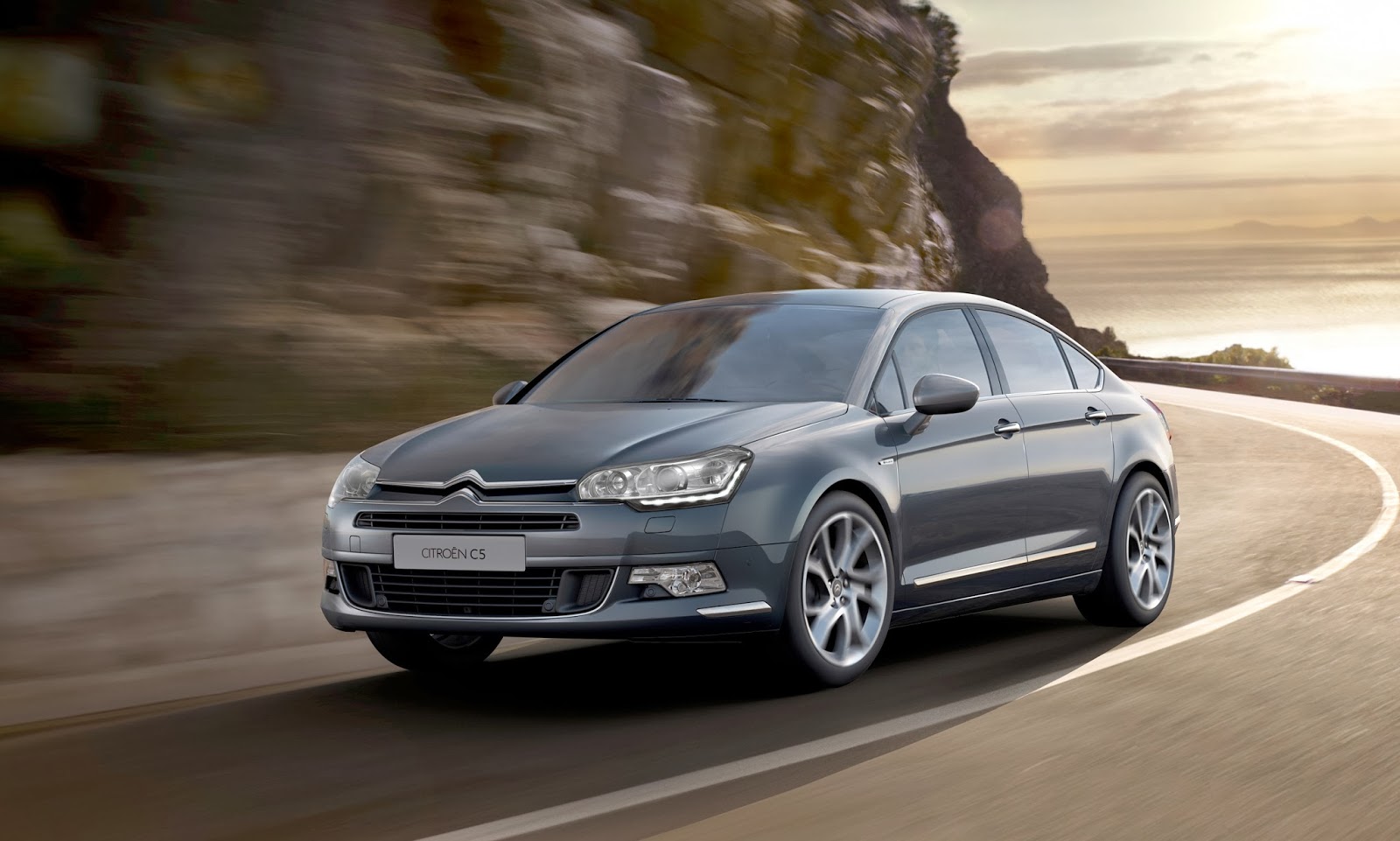
CITROEN C5


When it was launched in 2008 the new C5 was a huge leap forward over its ungainly, badly built predecessor. It was stylish, drove well enough and the build quality could just about give the Germans a run for their money. Every model came generously equipped and was extremely comfortable, either with the standard steel suspension or the hydropneumatic system fitted to top-spec versions and automatics. Unlike the idiosyncratic first-generation model, it was a genuine alternative to the Mondeo and Insignia. And probably just about the most soothing way of doing 50,000 miles a year.

It proved fairly popular for a few years, but in recent times sales have dropped off a cliff. The range was facelifted in 2011 but that didn't really help matters. I dare say most of the thousand or so that are sold every year go to Citroen loyalists and taxi firms (it is very spacious).

The C5 is still everything it ever was and still makes a lot of sense, even if it is getting on a bit. Unfortunately, you will probably walk straight past your local Citroen dealer and buy an Insignia instead.

FIAT BRAVO


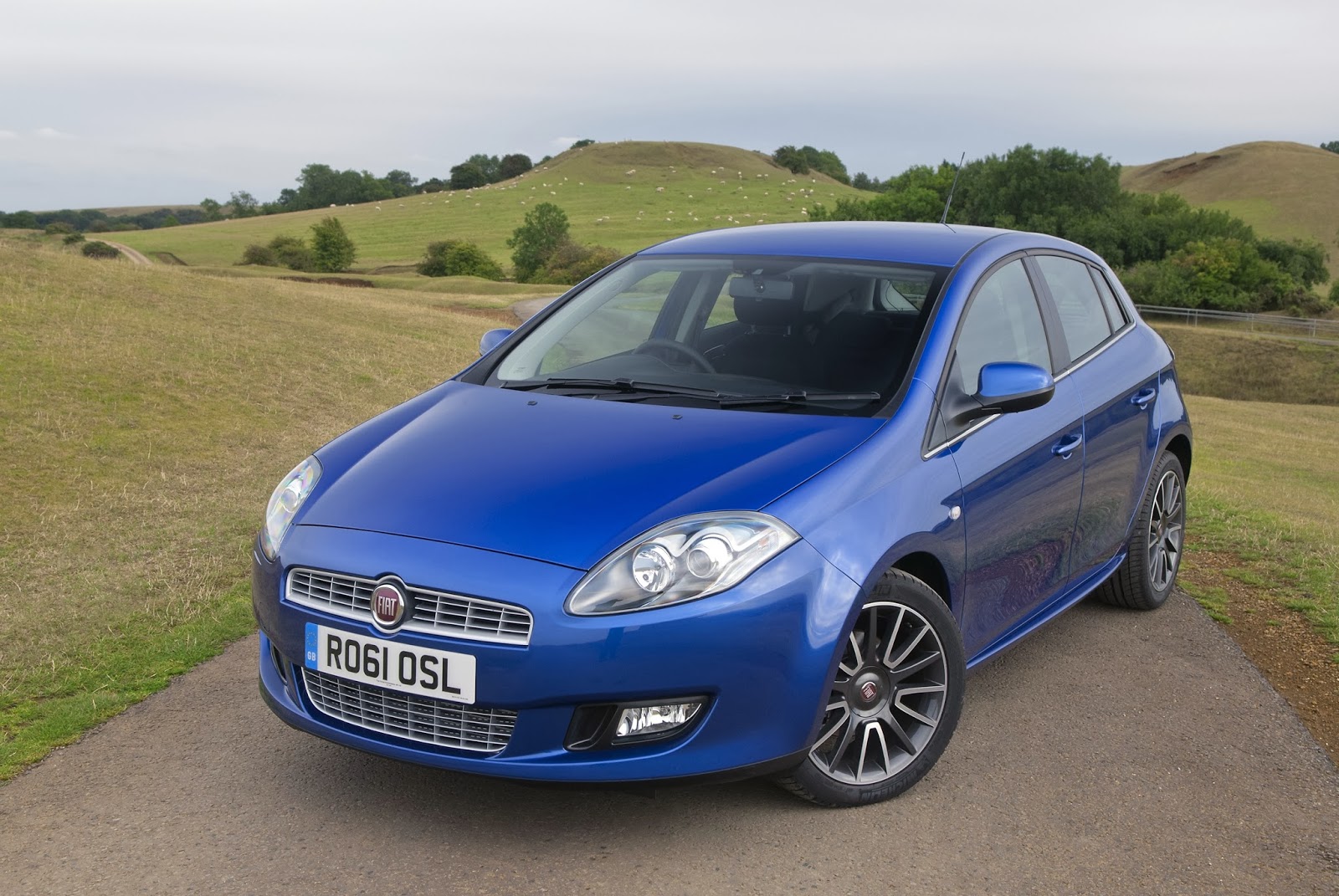
In 2007 Fiat wanted to distance itself from its previous attempt at a mid-size hatchback, the decidedly stodgy Stilo, so revived an old name with the Bravo. Like the original Bravo from the mid-90's, the new car was very stylish, in fact by far the prettiest Focus rival available. It still is, come to think of it.

As you would expect from a Fiat, the rest of the Bravo was a bit of a mixed bag. The turbocharged petrol engines were very keen as were the diesels, even if they were rather harsh. But the handling wasn't as involving as the Focus's. Typically some of the interior plastics were a bit cheap and the build quality questionable. There wasn't much space either, but it was at least very good value. And very pretty. But now its been overtaken by the Kia Cee'd and Hyundai i30, which are much better and cost about the same.

The Bravo has never been a big seller in the UK and a 2011 facelift didn't change that. The range has been cut back to three models, and with sales in the low hundreds and Fiat's attention increasingly focused on the 500 family, the Bravo must be due for the chop soon.

HONDA ACCORD


While it was built in the UK, the Accord was everywhere. The fact the current generation hasn't sold in anything like the same quantities is probably less to do with the fact it is built in Japan and more to do with it being pitched at low-end Audi A4/BMW 3-Series territory, rather than the highish-spec Mondeo area it occupied before.

There's absolutely nothing wrong with the Accord per se. Indeed when SpeedMonkey tested one recently we found it perfectly acceptable; it drives well, the diesel engine is brilliant if held back by the thing's bulk, the interior's pleasant, the build quality is excellent, its good value, etc etc.

On paper, the Accord does everything a biggish family car should. But it doesn't have the image to compete with the Germans, the saloon isn't all that practical and the estate is outclassed by the Skoda Superb. Actually, thinking about it, I wonder how many people part-exed old Accords for new Skodas? I'm betting a fair few.

But I digress. The point is, the Accord is a good car, but it's hard to come up with a reason to actually buy one. Which is probably why there aren't that many about.

MITSUBISHI SHOGUN


There's no getting away from the fact the Shogun is pretty ancient now. The current Mk.4 version was launched in 2007, though it was, in effect, a reskin and revamp of the Mk.3, introduced all the way back in 2000.

Its always been a bit crude to drive, and the ginormous 3.2-litre, 4-cylinder diesel engine is old hat now. But it comes with loads of kit and space, it's conspicuously good value, it's the only full-size SUV that you can still get in short wheelbase form, and it's pretty much unstoppable off-road.

Mitsubishi still sell a few hundred a year, probably to rural types who appreciate its ruggedness, value, and 3.5 ton towing capacity. Style-conscious urbanites who used to buy them for their seven seats have long since switched to the Volvo XC90 and Land Rover Discovery.

SMART FORTWO


The ForTwo will be back in the news soon as the third-generation version and its Renault Twingo twin will be unveiled at the Geneva Motor Show in a few weeks. But you'd be forgiven for forgetting about the current one.

The Smart has always been billed as the ultimate city car, ultra frugal and so short you can park end-on to the pavement, although that never seemed to catch on. For a while it was even quite fashionable, but since it looked like a commercial ice maker I was never sure why. Then it was comprehensively out-fashioned by the Fiat 500 and people realised it wasn't very pleasant to drive, had a terrible gearbox and was generally fairly pointless.

It seems a couple of thousand ForTwos still find homes every year, most the tax-free hybrid. Presumably most live in London, not that I've seen one recently.