Showing posts with label Motorcycles. Show all posts

3 Jul 2019

Why You Need A Motocross Bike As A Second Bike

Us bikers are never happy with just one bike. We covet our bikes in a way that car owners rarely do.

Some of us ride regularly for work and for fun, others for weekend scratching, and some even ride motorcycles for a living. Bikes are becoming ever more specialised. Yes you can buy a bike that will cover a lot of bases but it’ll be compromised in one way or another.

I love my Triumph Tiger 800 XCX. For me it’s the perfect do-it-all bike. It carries luggage, is comfortable, has cruise control and heated grips and looks fantastic. I use it for work and for pleasure.

But it would be no good on the track. It has enough power but its weight is too high, its suspension too squashy and its brakes would start to overheat after a couple of laps.

For track use you want something a little lighter, lower and with better brakes. More power would be helpful but its more important that the bike has a good balance. On my one and only motorcycle track day I used my Triumph Street Triple 765 RS.

The Street Triple is a beautiful looking machine. It sounds good too. For that day on that track I felt amazing. Man and machine in perfect harmony. Whilst out on track I couldn’t have been happier. I could have run on and on for hours more.

My only concern was how much it would cost if I crashed it. The 765 RS is a ten grand bike and you aren’t insured on track.

I eventually sold the Street Triple because it was too focussed, too hardcore for the road. I didn’t find it comfortable in terms of the ride and riding position. In certain circumstances it was absolutely amazing but for more than fast road riding or track time it was too narrow in scope for me.

After the track day I went on a completely different kind of motorcycle experience day. I attended an off-road school. It was the Yamaha off-road school in Mid-Wales.

These bikes aren’t sleek and low and powerful. They are tall and narrow and run comparatively small engines with just a single cylinder, a handful of horsepower and knobbly tyres.

And they’re an absolute hoot to ride.

You still have to wear specialist clothing such as boots, helmets, gloves and suits, all of which you can buy from 24mx. The gear all has a purpose. Motocross boots are rigid and prevent you damaging your foot in one of your frequent spills. The clothing also needs to protect you from the elements because motocross riding is messy and muddy and wet.

The fun in motocross comes from the type of roads, trails and tracks you ride on. I’d never ridden off road before but by mid-morning was riding my 250cc beast around a forestry track that was so churned up it looked impossible to walk over, never mind ride a bike through.

You stand on the pegs and mostly ride at low speed, using extremely fine throttle, brake and clutch control. The bike’s front wheel is narrow and tall and spoked for strength. You can aim it at impossibly steep inclines and the smaller, fatter rear wheel will drive it forwards.

Unlike on a track bike if you do crash a motocross bike it will probably be at low speed and the likely damage will be minimal. In fact it would be amazing if you didn’t crash on your first few tries at it. You’ll pick yourself up, analyse what you did and try not to do it again.

Motocross is so much fun that were I to buy another bike I’d seriously consider one over a track focussed bike. You can buy motocross bikes for the road so that as long as your nearest green lane or off road track is not too far (they’re not very comfortable on a long journey) you could ride there.

By Matt Hubbard

1 Apr 2019

Somebody Almost Killed Me On My Ride Home Today - By Not Being Observant


I'm a very experienced motorcyclist. I only passed my test when I was 32 but I've spent the following 16 years riding on average 8,000 miles a year.

I ride in winter and in the rain. I commute and tour and ride for fun on a weekend and summer evening. On the bike I constantly think about my skills and how I can improve them. I know my limits and I enjoy pushing them so I can understand more about the bike and myself.

I'm a fast rider and, I think, I'm a safe rider. I concentrate and think and observe and react according to conditions and hazards and other road users. But sometimes you cannot prepare for an event and it just smacks you right in the face and you have to deal with it there and then.

On my commute home today somebody almost killed me - and he didn't even know about it until it was too late.

My commute is 15 miles of roads that are tree lined, winding, poorly paved and with elevation changes. I'm often stuck behind people trundling along at 40mph in a 60mph limit. I will overtake as soon as is safe. When the traffic comes to a stop for a set of lights or roundabout I will filter past them.

I'm confident and happy to ride quickly if conditions allow. On the way into work this morning I overtook a car who was ignorant of his surroundings, and the fact I was in them until I appeared in front of him, and beeped his horn in anger. I ignored him in his ridiculous Audi Q8 and sped off.

This kind of thing happens often. Car drivers in their steel safety cages - unaware and detached from their environment in their own little bubble. They look down at their phones - I see dozens of them every day - and rely on peripheral vision and driver aids to steer them right. And if they do crash their cars are safe enough to save them from major damage.

We bikers have to be on red alert at ALL TIMES.

Unfortunately on the way home I wasn't quite on red alert. The road was clear and dry and the light was good. Perfect riding conditions. I was happy and I let my mind wander just a little. I was thinking of things other than my immediate surroundings.

I was travelling at 60mph and there was nothing ahead of me except a junction on the right and a parking area on the left - the one in the image above. I observed that there were no cars parked on the left and no-one was waiting on the right.

But then all of a sudden there was something. A grey Honda CR-V. It didn't stop, pulled right on to the road ahead of me. I was travelling at 27 metres a second and he was pulling out of the junction at 5mph.

I first saw him with about 70 metres distance between us. Me doing 60mph and him slowly pulling across the right hand carriageway and into mine at walking speed.

The following three seconds happened in slow motion.

My brain allowed me to think and do several things at once.

The first - pull the brake lever HARD. But not grab it - it has to be progressive. My tires are in good condition and are a good brand but 300kg of bike and rider being pulled to a stop with a contact patch the size of a credit card means no matter how good the rubber the way you brake counts as much as how hard you brake.

Get the initial bite right and then you can pull as hard as you like. Grab at the lever and you can lock up, skid and fall down. If I did this I'd probably die.

Once the tyre was engaged with the road and started to compress - half a second at most - I pulled at it for all my life.

And it did feel like my life could be stopped short. The driver was totally unaware and was not giving me space either side. By the time I arrived at him he would be diagonal across the lane, just short of fully straightening up.

I thought about heading to his right but then if I did go down I could be hit by an oncoming car - and that would certainly be fatal.

I thought about heading to his left but the bank was steep and dusty and this would affect grip. I would certainly fall down and may end up overtaking him whilst falling over and possibly ending up under his wheels.

Instead I opted to stay in the middle where the grip would be at its highest. And it is most efficient to brake in a straight line.

As all this happened, as I hurtled toward the rear of the Honda, I thought about my son at home. What he would think and how he would react if someone called at the door and told him his Dad had been killed. I thought about my dog and what would happen to her if I wasn't around.

All of this happened in three seconds and 75 metres. My teeth gritted, my eyes on stalks I came within 12 inches of the CRV's rear bumper.

Immediately the "emergency mode" my brain had been in turned to "red mist". I overtook the Honda, by this point doing 40, and gesticulated at him. The driver, a middle aged Asian man, had obviously not seen me. He had no idea why I was waving my arms and ranting at him.

He had pulled out of a side road and not looked to see if there was anybody coming. Attempted murder by total ignorance.

After forcing him to slow to a crawl, further arm gesticulation from me and blank and bewildered  faces from him I realised he really had no idea what was going on. I sped off but after half a mile found somewhere to pull over and stopped for five minutes to compose myself.

He passed me and I waited a while. By then I'd calmed down and thought I ought to put some distance between him and me.

I reflected as I rode home. I take risks every time I go out on the bike. You can be the best and most experienced motorcyclist in the land but there will always be someone waiting to kill you with their ignorance.

All you can do is be as prepared as possible. I'll never stop biking just because of uneducated ignoramuses. I just have to resolve to manage my response to them as best as possible.

By

Matt Hubbard


3 Sept 2018

My First Experience Riding A Motorcycle Off Road


My brother had said he fancied doing a motorcycle off road day. I think at the time I said something like "Yeah OK" and promptly forgot about it whilst he organised the whole thing. He did some research, decided the best one was the Yamaha Off Road Experience in mid-Wales and booked two places on the one day experience. Along the way he booked a hotel and sent me emails with all the information.

And then a few days before the actual event I thought I'd better look at the paperwork. Blimey! I said. It's a four hour drive from home and it starts at 9am - I'm not getting up at 4am. So I booked a really cheap B&B room in a place called Rhayader in deepest darkest mid Wales, just 15 miles south of Llanidloes.

And then I thought I ought to get in to the spirit and decided I'd ride there on my motorbike. You can see in the picture below that my own motorbike, a Triumph Tiger, is actually a kind of off roader. There's no getting round the fact that it is classified as an adventure bike. I bought it because it's comfortable to sit on and ride (I do 7,000 miles a year on it) and because it has a big aluminium box on the back (called a top box) which can swallow enough stuff for a weekend away.

But, unless you include a brief spin across Salisbury Plain, I'd never ridden it, or any other bike, off road.

The fact I had zero experience off road played on my mind as the day approached. I'd heard riding a motorcycle off road is a brutal, intensive and tiring experience. I'd heard tales of constantly falling off the bike and picking it back up, of getting stuck in mud, of being miserable. Would I enjoy it? Would It hate it? I had no idea.

And so after work on the Friday I checked and rechecked the Tiger. It had new tyres and I'd squeezed everything into the top box. I set the satnav for the hotel and left at 6.15pm.

The journey was pretty epic. An hour of M4, cross the Severn crossing, turn right at Newport on to the A449. After half an hour of dual carriageway the road became smaller and more twisty. And the scenery became more spectacular. I rode through the Brecon Becons, I rode up mountains and down mountains, round lakes, and through villages. It was warm and bright and brilliant.

Darkness descended and the road got even more twisty. My eyes were on stalks as I went this way and that following the snake-like contours of the A470 until finally I arrived in Rhayader at 9.45pm.

The room was spacious and comfortable. I necked a couple of beers and slept well.

At 8.30am I set off for Yamaha Experience Centre. It's so isolated the nearest postcode is half a mile away. It's a few miles west of Llanidloes and you have to set the co-ordinates into your satnav. I'd checked it out on Google Earth and found it easily enough and rode into the farmyard where it's based.

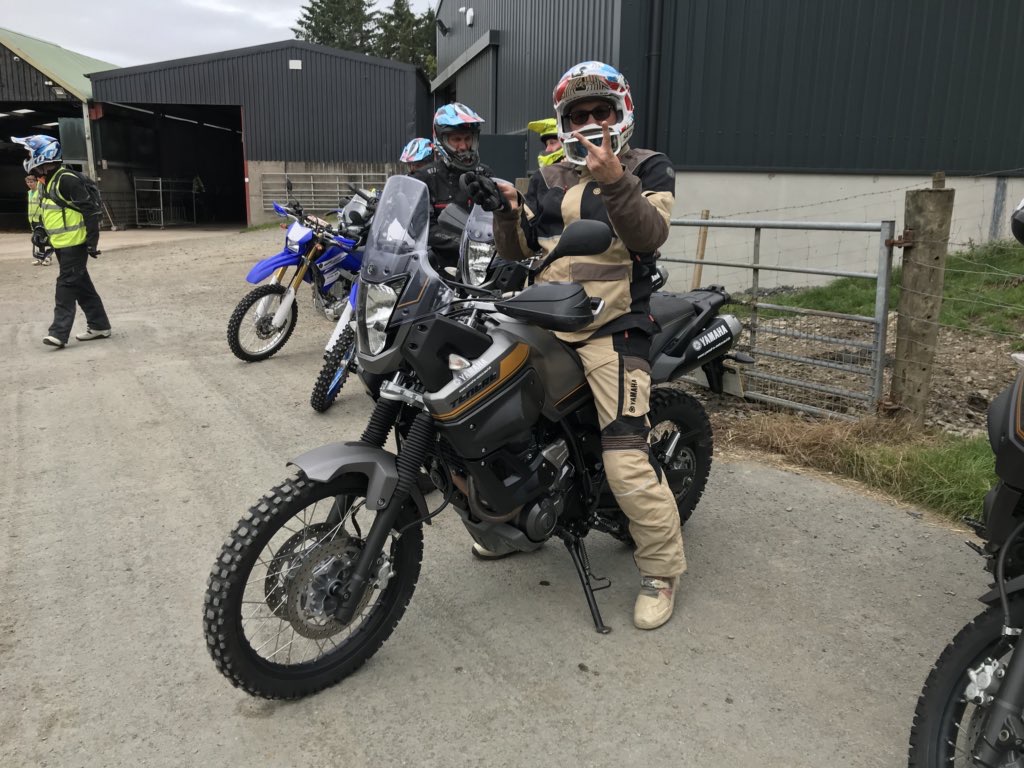
The site is literally a working farm. I was directed to park the Tiger in a massive cow shed and met up with my brother and the rest of the people who were on the course. We all gave our various waist and chest and feet sizes and were given boxes of kit, a pair of huge boots and a helmet.

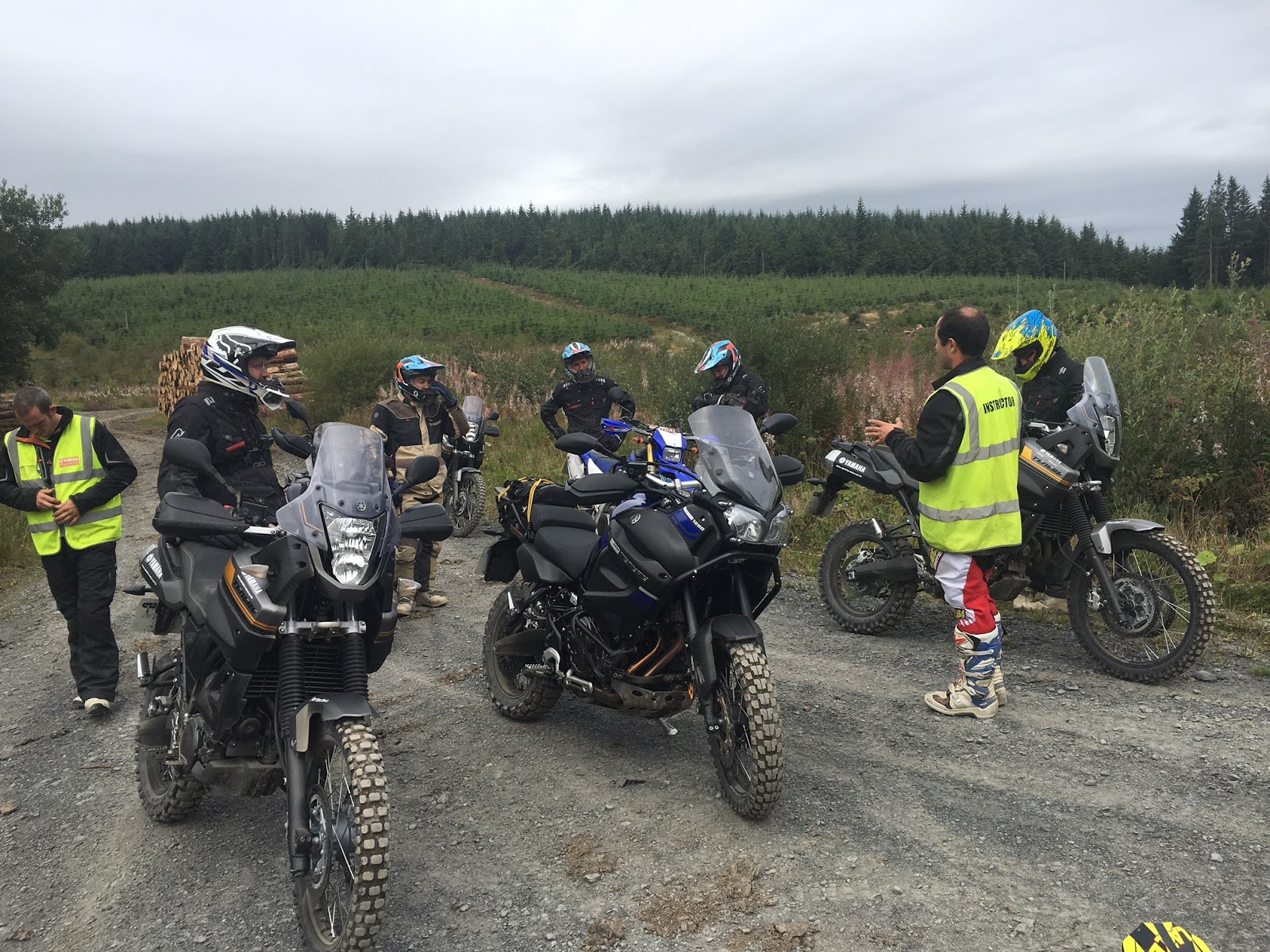
Once fully togged up in off road gear we assembled in the farmyard and inspected the bikes. There was a long line of hardcore trail bikes which were for another group who arrived just after us. Our row of bikes was a little more eclectic.

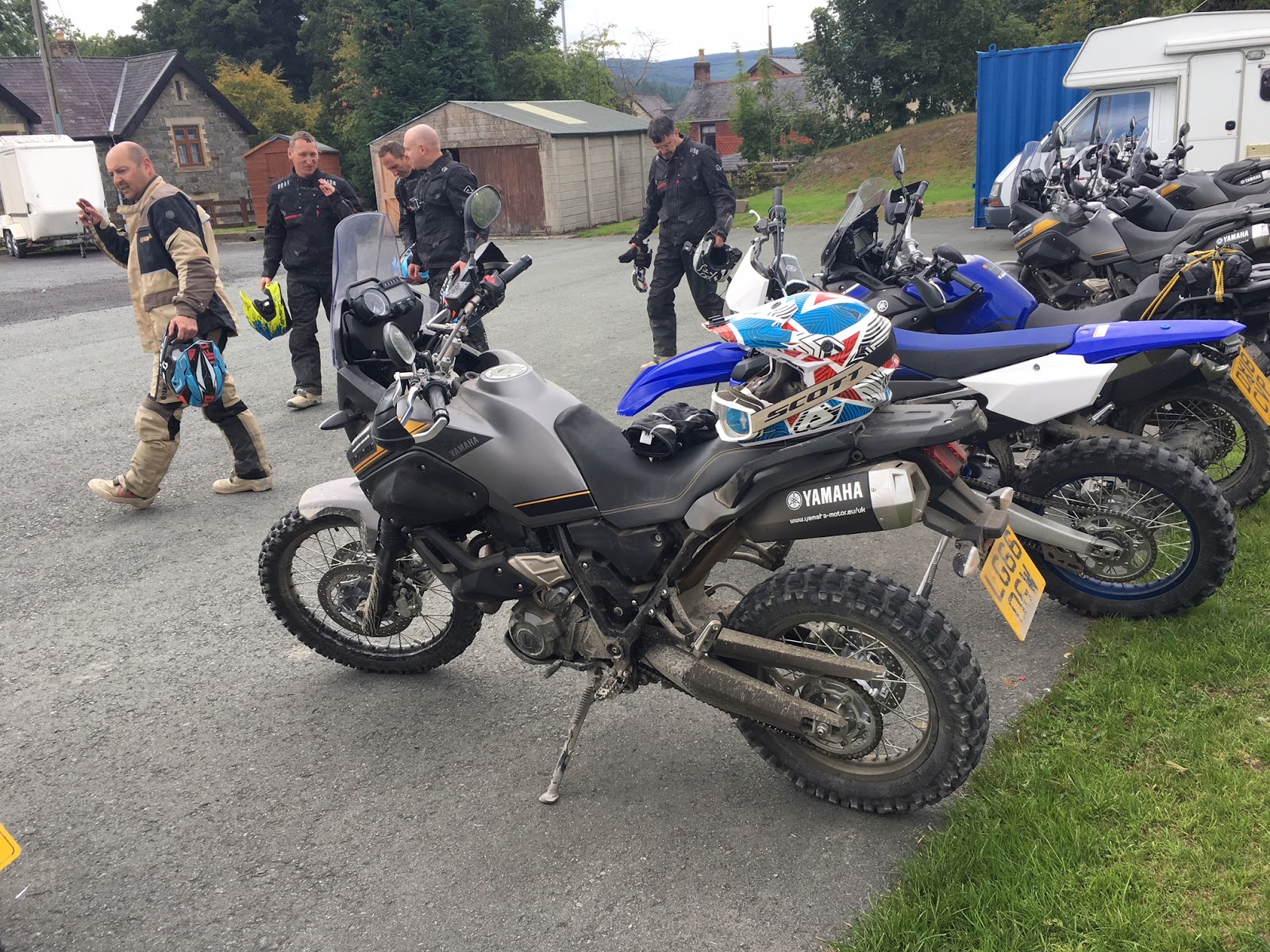
My brother, rather sensibly, had elected for the slightly less hardcore option and booked the Ténéré Experience. A Yamaha Ténéré is an adventure bike. It's road legal and has knobbly tires and a low revving, torquey engine. There were two 1200cc Ténérés and four 660cc Ténérés . As well as these there was a smaller, lighter WR 250R and a WR 450F.

There were six riders in our group plus two instructors. The lead instructor was Dylan Jones, a vastly experienced Enduro rider.  Dylan spent 30 minutes talking us through the bikes and their specs and capabilities as well as describing the format of the day and what to expect.

So far so good. My initial worries about off road riding were being to dissipate. The whole set up was professional. The bikes were obviously maintained to a high standard and the instructors knew exactly what they were doing.

Most bikes did bear a few battle scars though - and Dylan duly explained how to pick up a bike if one of us were to drop it.

Eventually we all chose bikes - I went for a 660 Ténéré and my brother a 1200 - and we set off in single file behind Dylan.

The roads around the farm are all single lane. The tarmac is old and dusty. The corners are sharp and often steep. We rode at 20 to 30mph getting used to our bikes and loosening up. My Ténéré felt odd compared to my own bike. The seat was a similar height, which is quite tall compared to most bikes, but the bars felt closer and higher. The engine was strong but vibey and it didn't like revving high. It had a sweet spot of between 1500rpm to 4000rpm and outside of that it complained gruffly.

After ten minutes on the road we turned on to a gravel track. We carried on, through the amazing Welsh countryside and into the Hafren Forest. The tracks got a little rougher and it felt less like farmland and more like wilderness.

Dylan parked up at a junction and we all came to a stop. Engines off and he explained that we would be riding in a loop taking in a few very sharp corners, some seriously rough ground and riding around some debris left by loggers.

He told us how to stand on the pegs and what we should be doing with the engine, clutch and bike in general.

We all felt ready for this as he led us slowly around the route. The bike was suited for standing on the pegs but I had to bend a little too much for comfort so I kind of swapped between standing and sitting. We spaced out and took the route at our own pace. It was undoubtedly tough but within a couple of circuits we all mastered the basics. We carried on round this loop a few more times, exploring different techniques and lines.

Eventually we stopped again and water bottles were handed out. We were all grinning and chattering away about our own experiences, what we found hard and easy. There was one particular section I found hard and it wrenched my arms and shoulders a little as I struggled to keep the bike upright. But I had become better at it each time I arrived at it and this simple incremental improvement felt hugely rewarding.

After the debrief and rest we headed off again on a longer ride at higher speeds round dusty, rough trails. We spun the rear wheels a little and controlled tiny slides and felt amazing.

Then we stopped by a place where a tiny track met the trail - disappearing into the forest. Dylan explained it was downhill, possibly slippery and there were a couple of sharp corners. We headed down one by one.

Standing up where possible it was first gear, very gentle braking, concentrate intensely on the track ahead. Where did it go, where precisely did I need to place the wheel, how would my body position affect the bike? All these things and more. I caught the front brake and slid a little on a very sharp downhill hairpin but let go the brake and reapplied it in an instant - this time more progressively and controlled and saved myself from an embarrassing spill.

At the bottom we were elated. Did we want to do it again? Yes! So we did, only better.

And that's how the morning continued. A decent ride at a fair old lick along some dusty trails followed by a tight and tricky section with some gravel and bumps and logs and rocks and hills and puddles and trees and sweat and concentration and smiles.

For lunch we headed to a small country pub in a small country village and ate a hearty meal and pints of coke and lemonade.

And in the afternoon we did it all again, only this time we did more and faster and harder. We swapped bikes and swapped stories. I had a go on the much smaller and lighter WR 250R. Its power band was smaller but it was more fun, and easier to use, on the rougher sections.

My brother rode the 660 Ténéré and the 1200 Ténéré. He reckoned the 1200 was pretty capable on the rough stuff - its weight and electronics and plush suspension taking care of some of the tougher terrain.

I had one crash, a fairly slow motion affair. I was really chuffed with myself. I'd successfully ridden down the steepest, slipperiest hill of the day. Right at the bottom was a sharp right hander and I kept it in too high a gear on the 250. It stalled and the rear wheel locked and I went down. No damage to me or bike.
I rode two bikes on the day

There were a couple of other spills. In the morning we all went into a forest section one by one. One lad stalled at the top of a slope and the rider behind, already committed to the slope had to avert and they ended up side by side like fallen dominoes. No-one was injured and the bikes were fine.

As the afternoon wore on I started to feel weary. We'd been well looked after by the instructors but the toll of riding all day was starting to make itself felt in my limbs.

After half an hour or so of non stop riding round amazing trails I slid to one side as I stalled again. I was fine but exhausted. I took stock and had a chat with the instructor. We were only a mile from the farm, he said, and would be back to base soon.

At around 4.30 we rode into the farmyard. Filthy, sweaty and exhausted, but happy and with a sense of achievement.

I'd mastered the art of off road riding and I'd had a brilliant day. I was glad my brother had decided to do it and organised it. My initial fears hadn't played out at all.
My own Triumph Tiger 800 XCX

The team at the Yamaha Off Road Experience were fabulous. The bikes were prepared well, the level of instruction was tip top and mid-Wales provided a fantastic playground as well as some amazing views.

That night we stayed in a local hotel. We downed a few cold beers, ate another large meal and swapped off road biking tales.

The next day I rode the four hour journey home on my Tiger. A perfect way to finish a wonderful weekend of biking.

By Matt Hubbard


9 Jun 2018

My First Ever Motorcycle Track Day


Being a biker means you are part of a community. There are 31.2million registered cars in the UK but only 1.2million motorcycles, and as most bikers I know own more than one there's a good chance there are less than one million active bikers.

We are the strange ones at work who aren't so interested in football but sit with helmet and gloves on our desk and a bulky leather jacket on our chair. We are the weird ones who, in the age of ever more stringent health and safety, sit astride 15 litres of petrol and ride a missile at silly speeds protected by nothing more than 1.5mm of leather and a helmet.

But even though there aren't many of us bikers there are many different types of bikers. I tend to ride my bike most days, to get to the office, meetings and whenever I need to get to London I'll ride the bike rather than sit in a train.

Some motorcyclists keep their bike locked away in a garage or shed, own a trailer or van (any van as long as it's a Volkswagen Transporter) to transport it whilst on the road, fit it with slick tyres and wouldn't dream of riding it to work. These are the track day enthusiasts.

I'd say I'm a dyed in the wool motorcyclist but until last Friday I wasn't in the track day tribe. I had never ridden a bike on track. 

During the winter a friend who is a moderator of a forum called South West Bikers told me they hold an annual track day and asked if I'd be interested.

Yep. I was definitely interested.

The thing that has held me back from attending track days before now is the fact I knew absolutely nothing about the culture. The prices aren't unreasonable but the whole thing seemed impenetrable. Would I be dead slow? Would I crash? Would someone else crash into me? Would everyone look at me as I entered the paddock? Would I feel daft the entire time? Would I remember any of the rules? Would my plain black leathers look out of place in a field of Power Rangers in colourful one piece leather suits? Would I be made to feel like I knew nothing?

The SWB day, as I was told, was a friendly track day. It takes place at Llandow in south Wales which is a short and tight little circuit and suited to novice and advanced riders alike. In the paddock would be everything from pure track bikes to people, like me, who would ride home from the circuit. Also, crucially, most people in the paddock would know each other. The track is hired by SWB for the day so the only attendees are forum members.

So I found myself at 7am outside the gates at Llandow Circuit in my friend's van with my 2017 Triumph Street Triple RS strapped down in the back alongside her Kawasaki ZX-6R 636 track bike, which had no MOT, no tax and no number plate. It lives only for track days.

We were second in the queue of Volkswagen T3s, T4s and T5s and when the gates opened headed for a prime spot next to the main circuit building. We parked 10 metres from a friend's VW Transporter, and everyone else adopted this strange spacing.

Then it made sense. As they all got out of their Transporters the first thing they did was erect gazebos to keep the bikes and electrics dry in the rain and for shade from the sun.

I've been in many track paddocks and Llandow's isn't much different, it's just smaller than most. The paddock itself is a few acres of tarmac alongside the track. There's a building which has a briefing room on the ground floor and a view of all the circuit on the top floor (though only staff are allowed upstairs), there's a toilet block and there's a cafe.

Everyone made themselves busy unloading and prepping their bikes and chatting amongst themselves. The cafe did a roaring trade in teas and coffees and breakfast baguettes and the toilet block took a hammering.

Not everyone arrived in a VW van. Some rode in on their bikes and it soon became apparent the variety of machinery on show. There were plenty of sportsbikes but there were also plenty of ordinary road bikes. Someone had brought a £24k 200hp supercharged Kawasaki H2, someone had brought a  BMW R1200GS and there were two supermotos. Gratifyingly there were a handful of Triumph Street Triples and a Daytona 675.

Once the VWs had all been unloaded there were around 50 bikes parked up, waiting for their time on track. Around a third of the paddock put tyre warmers on their bikes and all of us made sure our bikes were fully fuelled and the tyre pressures reduced to approximately 28psi front and rear, which is lower than you'd run on the road. This is partly because of the heat you put in to the tyre on track, which causes the air inside to expand, and because you want a bigger contact patch than you would on the road. Also, mirrors are either removed or taped up. This made me nervous as I like to know what's behind me but apparently it is safer on track to ride for yourself than someone behind you.

The rider's briefing took place at 9.30am and lasted almost half an hour. The chief marshall, John, is both funny and informative. He tells you what you should do and what you shouldn't do. Everyone who wants to ride on track has to attend.

When you sign on to a track day you have to specify what group you will be in. On our day these groups were novice, intermediate and advanced. Obviously I plumped for novice and was given a green wristband to wear. 

Each group would get 15 minutes on track in rotation and there would 17 bikes in each group as well as a travelling marshall/observer who wore a hi-viz vest and who would observe the activity on track and be available for feedback after each session. These marshalls aren't provided by the track but are members of the forum and are generally expert track riders.

The advanced group went first and mainly consisted of superbikes. Next up was the inters and then finally us, the novices.

Not all members of the novice group are actually novice riders. Most have some track experience and are just comfortable in the novice group. I felt nervous as I checked the bike over one last time, sat astride it and started the engine.

We all rode up to the holding area at the end of the paddock and stopped. A marshall checked everyone's wristband and checked our helmet chin straps were properly secured. People talked to friends around them and pulled at gloves, tapped the ground with boots and generally got all the little nervous tics we all have out of the way before the intense focus that awaited on track.

Our hi-viz wearing observer rode the BMW GS and in my group was a real variety of bikes, including a bright yellow supermoto, a Suzuki GSX-R 1000 and a couple of other Street Triples.

The red light at the end of the paddock turned green and we were off.

Llandow circuit is 1.5km long and 9 metres wide. The first section is called Bus Stop and is a tight little series of corners that go left, right, right, left. You then head into a long right hander called Devil's Elbow which leads on to the Hanger Straight at the end of which is a very tight chicane which leads on to a long right hander called Glue Pot. This exits on to the main Runway Straight. The pit entrance is along Runway Straight.

We all followed our observer for two laps and no overtaking was allowed. This is done to allow tyres to warm up (mine were stone cold when we started out) and for the riders to get an idea of the track condition.

Unlike a road the track was dead flat and smooth, no-one was coming the other way and there were no junctions. There was also no speed limit.

My nerves faded as soon as I headed into the tight and technical Bus Stop section. My focus was entirely on what I was doing. The observer set a decent speed but not one at which I felt uncomfortable. I had made sure I was the last rider on track, not wanting to hold anyone up so I could ride easily, knowing I could go as fast or slow as I liked.

I watched the rider in front and thought about track position, apexes, braking points. We rode pretty fast and I leaned further in the corners than I ever have, even at this cruising speed. After two laps the marshall let everyone off the leash and the fastest sped off.

With every lap I felt more and more comfortable. My speed was dictated by my bravery rather than the limits of my bike and was reasonably good. I wasn't too slow and I wasn't too fast.

After a few laps I was overtaken by one of the litre sportsbikes. A couple of laps later I started to get stuck behind a superbike which was slower than me in corners and faster than me on the straights.

After a few more laps the chequered flag was waved and it was time to come in. We filed into the paddock and I headed for my spot. I parked up, turned the engine off and grinned. My first session on track had been hugely enjoyable. I loved the speed and the demands on the bike and me. Nobody had been silly and no-one had intimated me on track.

I grabbed a cup of tea and drank some water - hydration is important on a track day - and chatted with my fellow riders. People asked me how it had been and gave helpful tips and comments. There was none of the intimidating culture I had perhaps expected.

I spoke with another Street Triple RS rider and discussed engine modes. I realised I had had mine set on Road mode so set it to Track. I looked at my tyres and realised the rear looked like a proper race tyre with tiny balls of rubber stuck to it and there was only a centimetre tyre left at the edge which I hadn't used.

Half an hour later and it was time for the next session. This time I wasn't nervous at all as we lined up ready to head out. I felt calm and watched what was going on around me. I wasn't at the back as I was happy I wouldn't hold people up.

We filed out and I concentrated on improving my track position, braking, speed and all the little things that would make me go faster. Because the faster I could go the happier I would be. I like speed, I like being on the edge, I like being in control of a machine that can elevate me way beyond the everyday mundanity of life

As the session progressed I became more confident. I thought about speed and about what would happen if I dared go faster in the long flowing corners. I thought about how expensive the bill would be if I crashed and I thought about how annoyed I would be with myself if I didn't push as hard as I could.

At the end of that session I drank more tea and water and chatted with friends some more. My tyres showed me I had leaned over further and I felt great.

As the day progressed I went incrementally faster. I settled into our group and overtook a few and was overtaken by a few. I got stuck behind the superbike some more and overtook some others. At one point the marshall on the GS flew past me! I thought about lines and braking points and tyres. I could feel the tyres moving around as I braked or put the power down exiting a corner.

I hardly ever looked at my bike's instruments but forced a quick peek just before the braking point at the end of the back straight and saw 106mph - my friend with the 636 did 117mph at the same point.

By the end of the day I was super happy with my riding and beaming with the whole experience. I enjoyed the track, the company, the bikes. My rear tyre was now fully worn right to the edge and I couldn't help but be filled with pride at the fact I had managed to ride fast enough to do this. 

At 5pm the day was over. We were all exhausted. The Volkswagen Transporters were loaded and the road bikes like mine had the mirrors put back and the tyres pumped up some more. There had been a couple of break downs and just one crash, when someone low sided in a fast corner. He was OK and the bike didn't look too bad.

The ride home was pretty arduous - track time really wears you out. I had ridden five sessions of 15 minutes each so that was 75 minutes of hard stopping, accelerating and full concentration.

The next day I felt tired and a bit weary but otherwise OK. 

I really enjoyed my first ever track day. My initial fears were mainly unfounded, although it helped that the day had been organised by South West Bikers who were supportive and friendly.

Next year's track day has already been booked with the circuit. If you want a spot you need to join the forum.

By Matt Hubbard


1 Feb 2016

2016 Triumph Tiger 800XCx - 400 Miles On A Motorcycle In January


Modern cars don't need running in. My Volvo XC60 will go in for its first service soon - at 12,000 miles and 12 months old. Modern motorcycles, with their higher revving and higher performing engines, do need running in.

My new Triumph Tiger 800XCx needs running at half revs for the first 600 miles after which it will head to the dealer for an oil and filter change.

For the first couple of weeks after taking delivery I was frustrated that I hadn't ridden the Tiger that much and I was frustrated that when I did I could only use the first 6,000 rpm.

So I decided to take it on a road trip. I called my brother, who lives 200 miles away, to see if he was free for me to pop at the weekend. He was. I prayed for clear weather.

Saturday arrived and the sky was clear. Being late January this also meant all the warmth had escaped from the surface of earth. The bike told me it was 4°C. Very cold for riding a bike.

I had strapped a tail pack to the rear seat and stuffed a change of clothes and my tooth brush in it. I dressed in leathers, rather than full waterproof gear, because my leathers are more comfortable than my ancient waterproofs.

I wore thick socks in my boots and a thick fleece under my jacket. It was 11am and it was damn cold when I fired up the Tiger.

The bike has an electronic display with all sorts of information. You can choose trip 1 or trip 2 and within those you can select miles covered, average mpg, average speed and time on the road. The bike also tells you which gear you are in, what the temperature is, how many miles until the tank is empty and what speed you have set the cruise control.

Yes, cruise control. I had never ridden a bike with cruise control before.

The Tiger is a big bike. I have to really swing my leg over the seat and with a tail pack on this is even more difficult. Once on the bike and rolling it feels much lighter and agile than it actually is. Within a few miles I felt confident in it and in my ability to control it.

I was also feeling pretty cold. The first few miles were 30mph country lanes but then I was on the M4 followed by the A34 it was 80mph cruising.

God I was grateful for the heated grips and hand guards. In the past I've come off a bike and not been able to feel my fingers for half an hour afterwards but on the Tiger my hands will always be toasty. This was something of a revelation.

My feet were also warm, due to the hiking socks I was wearing. Unfortunately the rest of me wasn't quite so warm. In fact the cold air rushing around my neck and into my helmet felt a lot colder than 4°C - that's wind chill for you.

Otherwise the bike was great. Even though I could only use half revs it had plenty of power and the cruise control was amazing. It works just the same as in a car but when you disengage it it does jolt the bike a bit, something I learned to anticipate.

100 miles passed smoothly and I stopped at a service station for fuel for the bike and for me. Due to the bars being wider than I was used to and the fact I wasn't bike-fit I my shoulders were aching. I necked a chocolate cake for calories and a hot chocolate for warmth and set off again.

My core temperature was lower than I would have liked but the second half of the journey passed without event. When I got to my brothers I fell off the bike and drank a gallon of tea.

The next day I headed back home. This time the weather was warmer but wetter. Maybe I should have worn waterproof gear. My brother had an all in one waterproof over-suit but it wasn't quite big enough for me and I felt it would have hindered my riding so I didn't use it.

It was drizzling when I left. I had filled up with fuel at the end of the previous day so had a full tank which would be good for around 150 miles.

The rain didn't stop but with the screen, hand guards and bits and pieces of plastic fairing it was only really my lower legs and shoulders which were wet.

After an hour I realised I was really enjoying the journey. The previous day had been dominated by cold and getting used to the bike. Now, with experience and a slightly higher temperature, I was able to focus on the bike, my riding and all those things a biker enjoys on a ride.

After another hour I stopped for fuel and lunch and chatted with a fellow biker. He was wearing a bin bag under his leathers. He had ridden 200 miles on Friday but his clutch cable had snapped on the journey and he'd been stuck by the side of the M6 in the pouring rain waiting for a recovery truck. All his gear was sodden, even two days later. Poor bugger.

On the rest of the journey I continued to enjoy the bike and the ride and my confidence increased to the extent I was able to ride just as I had on my old Street Triple.

I arrived home three hours after leaving and having covered almost 400 miles in two days. I was exhausted but elated. Riding a motorcycle in January isn't the most sensible thing to do but the Tiger had made it bearable, and even fun.

And now it is run-in. It will be serviced next weekend and then I'll be able to rev it right the way up to the red line and enjoy all that power.

Can't wait.


By Matt Hubbard


A Tale Of Two Triumphs - How I Nearly Bought The Wrong Motorcycle

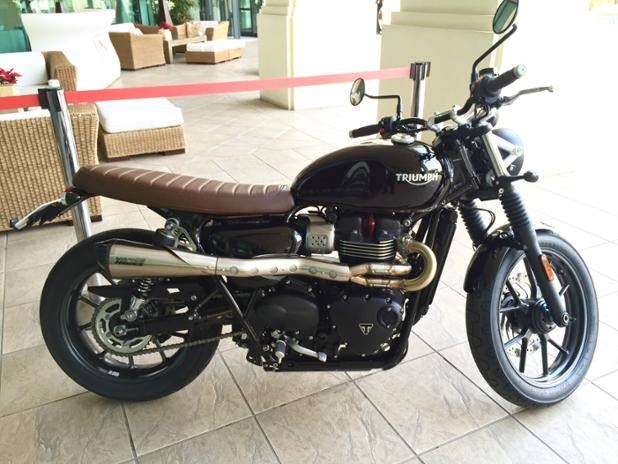
My mind was set. I was going to sell my Triumph Street Triple and use the proceeds together with some cash I'd squirrelled away to buy a brand new Triumph Street Twin. You see, I'd wanted a Triumph Scrambler for years but when I saw the newly launched Street Twin with Scrambler pack I was smitten.

Triumph Tiger 800 XCx

I found myself with a free day in November so took myself down to the motorcycle show at the Birmingham NEC. I oohed at the Yamahas and aahed at the Hondas and then I arrived at the Triumph stand.

The Street Twin with Scrambler pack with its high-level exhaust sat on a revolving plinth. I watched it for a few minutes and my mind was made up. As soon as possible I'd head down to my Triumph dealer and put down a deposit on one.
Triumph Street Twin with Scrambler pack (note high level exhaust)

Then I sauntered over to the adventure bike section. The new Triumph 800 Tiger looked good. I swung a leg over it and immediately knew I'd fallen for the wrong bike. The Tiger was perfect.

It looked great, and as I was sitting on it it felt great. The seat was the perfect height, the footpegs were in the perfect position, the handlebars were the perfect distance apart and the perfect distance from the seat. If ever a bike had been built to suit me it was the one I was sitting on, a Tiger 800XCx in blue.

I talked to the Triumph lady. The top Tiger XCxwas at least £2k more than the Street Twin. Hmmm.

On my way home and for the next few days I turned the problem over in my mind. I'd always wanted a Scrambler but the Tiger was so much more practical. The Street Twin was affordable but the Tiger was quite expensive. The Street Twin was a simple bike but the Tiger came with all sorts of useful features. The Street Twin would only ever be a summer bike but the Tiger would be a year round proposition, with it's screen, heated grips and hand guards. The Tiger looked great but the Street Twin looked amazing.

I courted opinion and everyone told me the Tiger was the one to go for. I headed to my Triumph dealer to have a chat and look at the Tiger again. The Street Twin was so new it wasn't in the dealers yet. I walked into the dealer with my mind still not yet made up.

There was a Tiger in the showroom in the same spec as that at the show - an 800XCx in blue with heated grips, a sump guard, engine bars, traction control, ABS, cruise control and a centre stand.

It was a 2016 model but was sitting in the showroom in December and Christmas was fast approaching. The dealer was obviously getting a bit nervous about it sitting around so had knocked 10%, a full £1,000, off the price.

That was it. Decision made. I bought the bike there and then and arranged for delivery in January.

The next problem was shifting the Street Triple that was taking up the space in the garage that I needed for the Tiger. Being Christmas the phone didn't ring at all but when January arrived interest picked up.

A few people called but the first to see it was a young chap called Adam. He arranged to travel up from the south coast to my place in Berkshire on a Saturday morning. When he arrived he had two mates with him, one dressed in bike leathers.

The viewing was conducted in fine drizzle. They talked amongst themselves, they drank tea, they stroked chins and then Adam made an offer. I counter offered. He accepted. He gave me the cash then and there and his mate in the leathers rode the Street Triple home.

I immediately headed to the dealer and we finalised the paperwork and arranged a delivery day, the next Friday.

And so it was on fine Friday morning my brand new Triumph Tiger 800 XCx was wheeled from out of a van and into my drive. I was working at the time so had to wait for the next day for a good run on it.

It was taller and heavier than anything I'd ridden before so I was a little nervous at first. But it was also better. Much better. I knew there and then I'd made the right choice. If I had bought the Street Twin I would surely have enjoyed it but at some point I would have known that ultimately it wasn't a bike for keeps, whereas the Tiger is.

By Matt Hubbard


22 Jan 2015

The Great Motorcycle Battery Kerfuffle

It was the middle of winter but for once it wasn't raining, so I decide to take my Triumph Street Triple out for a spin

The Triumph in its lair

I keep the bike in the garage. Motorcycle batteries are quite small and lose charge quite quickly, especially when it's cold. They need hooking up to an electrical umbilical, or an optimiser, which maintains a constant trickle charge to keep the battery topped up.

Perfect for when you want to take the bike for a spin in mid-winter.

I had the time, it wasn't too cold, the roads were dry. Yes, I decided, I will go for a 10 or 20 mile spin to blow the cobwebs out of the bike and out of me.

In order to make sure everything would be fine I checked the bike over. It had an MoT (its first ever) in November and I'd changed the oil and filter at the same time. The Triumph never uses any oil between services so predictably the oil level on the stupidly designed screw-in dipstick was fine.

The tiny water reservoir for the cooling system is located under the seat. That was fine too.  I checked the tyres for pressure and they were fine.

Aside from a light sprinkling of sawdust (I've been making bird boxes out of off-cuts of wood in the garage) the bike was in fine fettle.

With one exception.  The battery was flat. Hmmm. I checked the optimiser. 2.3V and 0 amps. Despite the bike being only three years old it was on its third battery.

Bike batteries might not last long but the Street Triple seems to abuse its batteries particularly harshly, with the result that they don't last long. There are plenty of complaints on on-line forums about them. It just kills them.

I've previously had to bump start the bike (which can only be done with someone else pushing - I know, I tried doing it by myself for about 60 minutes). My old Yamaha Fazer could be bump started just by me pushing it along in gear and closing the clutch. The Triumph needs more speed than the rider alone can muster.

Anyway, back to the present. The battery was flat and was obviously dead. Bollocks.

I tried it another 24 hours on the optimiser but alone this time, out of the bike. Nothing. Not a single amp - or fraction thereof. Knackers.

So I bought the bike's fourth battery. Fortunately my local motor factors had one in and fortunately it didn't cost a great deal - £40.

Motorcycle battery manufacturers don't do 'elf n'safety. Take a look at the photos and you'll see that what you get in the box is the battery itself...and six tubes of a clear fluid.
The sulphuric acid is in the box

On closer inspection the fluid is sulphuric acid. A look at Wikipedia suggests sulphuric acid can cause severe burns, readily decomposes skin and other bodily bits, causes irreversible internal organ damage if ingested and induces permanent blindness if splashed into the eye.
And here it is in its full glory - eek, acid!

You know that girly screech Richard Hammond makes when he's mildly scared. That's the noise I made when I read the above.

Anyway, not wanting to be a girl (sorry, girls) and being a motorcyclist and therefore extremely tough and manly I got to it.

You have to rip the cap off the tubes of acid and turn them upside down, pierce the seal on the battery then leave the acid to pour down into the battery. Once that's done you have to remove the tubes and push a black cap on to the holes in order to seal the battery.

The operation proved to be a success. The actual pouring of the acid into the battery was straightforward but the cap seals very tight and just pushing it in place with your hands isn't enough so I had to gently push it in place with a hammer. It is during this phase that you are most at risk of death, blindness or both.
Pouring the acid into the battery is thankfully quite straightforward

Anyway the battery was now complete, acid and all. I put it in the bike and left it on the optimiser overnight.

The next day was a work day but at lunchtime the weather was reasonably dry and cold but not freezing so I thought I'd take the bike for a run.

Hoorah! It started first time!

I left it warming for five minutes whilst donning my jacket, gloves and helmet, cocked a leg over the seat and set off on a 15 minute dawdle round the local lanes.

It felt like heaven. A small taster of heaven but heaven nonetheless.

Yet again I have vowed to ride the bike more this year. Let's hope I do, it is a wonderful way to travel and just to experience and enjoy life.

By Matt Hubbard


12 Dec 2014

The Sheer Misery Of Being A Motorcyclist In Winter

You non-motorcyclists have it easy. You drive your car all year round, perhaps suffering a little in the winter but generally you're cushioned from the elements by a roof, a heater, brilliant lights and smooth suspension. And when you're done you lock the car, leave it on the drive and forget about it. These dark times are much harder for us bikers.


As a motorcyclist you have one of two choices when autumn starts to bite - to ride or not to ride.

If you ride you are doing so either because you've got no choice or because you are a sadomasochist.

The winter poses many problems for us fans of powered two wheelers (as the government calls motorcycles). For three years in the mid-2000s I worked in Reading town centre in an office with a tiny car park, and I wasn't allocated a space. I decided that public transport was simply not for me so I rode to work every day.

Even in the deepest, darkest gloom of winter I rode to work, such was my allergy to trains and buses.

People say there's no such thing as bad weather, just the wrong clothing. This isn't true. Even if you've read our article on how to choose the right motorcycle gear and you've covered yourself from head to toe in expensive waterproof kit you'll still get soggy when it rains hard enough.

Rain will find its way down the front of your jacket, into your boots, down your sleeves into your gloves. Sometimes you'll be so wet you might as well have sat in a bath.  This is unpleasant at the best of times.

Then we have to contend with the cold. You can do your best to alleviate the cold by wearing thick winter gloves and fitting heated handlebar grips to your bike. When the outside temperature gets down to below 10 degrees neither of these make a difference, especially when you add in wind chill from travelling at speed.

I used to arrive at work on a winter's morn and wrap my hands round a cup of tea. My fingers would sting from the heat but until I'd warmed them up they wouldn't work properly. The smug car drivers, warm, dry and cosy, would have done half an hour's work before my hands were working enough to operate my keyboard.

And then we have visor misting. Imagine your car windscreen on a cold day. It would mist up if you leaned forwards and breathed on it. In a helmet you cannot hold your breath for the entire journey so you crack the visor open a touch.

This is fine if it is not raining, but when it does rain the water gets into the gap, no matter how infinitesimally small, and soaks your face. It also dribbles down the inside of your visor. If you wear glasses, as I do, it will get wet on both sides of the lenses.

Can you imagine how hard it is to see anything with water on the inside and outside of two clear layers immediately in front of your eyes? Add in unintentionally homicidal drivers, checking their Facebook status and drinking from a bucket of coffee, and the commute becomes a thing of nightmares.

It's still better than taking the bus though.

In a car when the roads become slippery from wet and mud you just have to take a bit more care. When you hit an extra slippery patch your stability control will sort it out.

On a bike there is no stability control. The power to weight ratio of even a 675cc bike such as mine is more than that in a Lamborghini. The contact patch from the tyres is minuscule, only the rear tyre feeds the power to the road and the front tyre provides 99% of the braking force.

Unless you are an expert this is a recipe for disaster. You quickly learn to become an expert, but one who is constantly balancing on a tightrope - and you can't see all the terrors being thrown at you because of all the rain on your visor and glasses.

I even rode when it was snowing. Even staying upright on a gritted road is hard work, add in corners and roundabouts and you soon end up with a train of angry drivers behind as you desperately try not to lean more than 1 degree off upright. That horrible black sludge that forms on snowy roads is sprayed all over you from the vehicles coming the other way. The cold is unbearable. Visor misting happens even when you've opened it a touch. Your eyeballs freeze solid. Your nose dribbles liquid snot, which is the only thing that doesn't freeze.

Why the hell would anyone ride in the winter?

Because we love our bikes. To a rider a motorcycle has a personality. The bike and the rider become one when on the road. We share the pleasures of riding and we share the miseries of riding. Motorcycling provides more highs and more lows than anyone who has only ever driven a car could imagine.

When we arrive home we park the bike in its place and we fuss over it. In the winter we have to clean all the muck it is coated in because we care for our bikes. When we walk away from the bike we look back at it and smile.

For those of us who don't ride through the winter we feel guilt when we see our bike. It is like a neglected pet. Mine lives in the garage. It is on an umbilical electrical lead to make sure the battery is working when the sun comes out. I see it every day and every day I am reminded of what a bad person I am for not taking it out for a spin.

Once Christmas and New Year are over a biker thinks two things - the Isle of Man TT is not too far away and I'll be able to ride my bike soon.

From February onwards we wake up in the morning and think, "Is it time? Should I ride today?"

Then one day it is dry enough and warm enough and we sling a leg over the seat, start the engine from its winter slumber and we go for a ride.

That day is a good day.
My Triumph Street Triple in its winter hibernation place

By Matt Hubbard


18 Nov 2014

Guy Martin, Carl Fogarty On Reality TV And The Brands Hatch Invader

Motorcycle racing has a low profile in the mainstream media, but in recent weeks it's been given a massive boost.


For those of us who've followed road racing for a while Guy Martin's success on mainstream TV has been no surprise. Guy has a strong, interesting personality which shone through in the movie TT:3D. 

After that his increasing fame could only be reigned in by his reluctance to do too much telly, on top of all his other commitments. Happily, Guy seems to have found the time and made some great TV programmes.

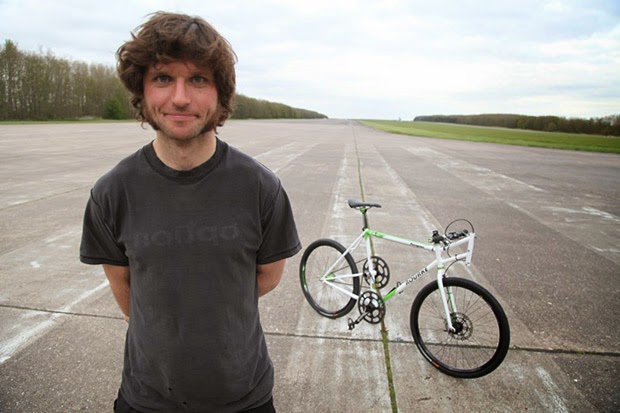
Speed with Guy Martin saw our erstwhile hero set various records, including a fantastic episode where he became the fastest rookie at Pikes Peak on his homebuilt motorcycle.  You can watch some short films he recorded with C4 here.

Guy has never managed to win a TT but Carl Fogarty has - King Carlos of Blackburn has won 3 TTs.

And now he's on ITV every night for three weeks on I'm A Celebrity Get Me Out Of Here.  Carl said he went on the show because he wanted a new challenge.

Appearing alongside idiotic reality TV stars and a footballer who's scared of his own shadow Carl won the first challenge of the series with ease, spending 12 minutes in an underground box full of snakes.

When the challenge finished he said, to himself, "Yes. Victory." To Foggy, who retired due to injury in 2000, a win is a win and he's won some races in his time.

World Superbike titles in 1994, 1995, 1998 and 1999 and 59 wins from 219 starts is the headline but what shows the true mettle of the man is his three TT victories. In 1992 Steve Hislop and Foggy fought one of the best TT battles of all time, which you can see below.

It's brilliant having road racing stars on mainstream TV. The sport attracts extreme personalities because you need to have a screw loose to take the risks required to win - unlike football - and it's good that some of them are getting the exposure they deserve.


Finally, the news has just come in that Jack Cottle, the blithering idiot who drove his VW Polo on to the track at Brands Hatch during a race, has been jailed for 8 months.

Great. He deserved it. Racers take enough risks, they don't need some half-wit moron adding to the danger on track, although Maldonado fills that role in F1.

By Matt Hubbard


21 Oct 2014

Fleet - The Triumph Street Triple's First MoT

I never buy new cars but the Triumph Street Triple is the third brand new motorcycle I've bought.  This is daft because I drive cars every day but the bike comes out of the garage much more infrequently.

The Triumph - aged 3

I bought the Triumph in October 2011, chocked a knackered Bandit in as part-ex against it and paid the balance on the never-never.  The finance ended this month so I now own it outright. Being three years old means it needed its first ever MoT.

After a summer of fantastic weather, which extended right through to September, autumn arrived with a vengeance in early October.

I used to ride all year round, in fact I commuted into central Reading for three years on a Yamaha FZ6, but since I hit 40 I've turned into a fair weather rider.

So it was that the morning of the MoT it had rained all night and was drizzling at 9am when I set off.  The dealer, Bulldog Triumph, is 13 miles from home. The roads were wet and the traffic was busy.

I wasn't looking forward to it. Motorcycling is all about confidence and the last time I rode in the wet was in August 2013.

Togged up in my winter riding kit I headed out - and found it perfectly fine. The visor misted up when I slowed down but otherwise the Street Triple's light weight and supreme balance helped no end. It was a cinch.

Brake earlier and smoother, corner slower, lean less, accelerate with a lighter touch and riding in the rain is fine. Avoiding slippery manhole covers, puddles and painted lines the journey was great fun, if a little cold.

It took 40 minutes for Bulldog to pronounce the bike fit to be ridden, with no advisories.  Whilst waiting I looked at the bikes in the showroom, persuading myself I didn't need a new bike, but when faced with such gloriously presented, brand new stock my resolve crumbled.

I've no allegiance to any car manufacturer but am happy that Triumph make the only bikes I'll ever need.  I'd love a Scrambler but there wasn't one in the showroom. There were, however, a trio of gleaming Tiger 800s.  I sat on them, I looked them over and I did the man-maths in my head.

I asked for a valuation of the Street Triple. £3800 said the man. What??? Surely my three year old bike is worth more than that? A Tiger is £8k so I'd end up paying out over £4k for a new bike.  No way Hosé.

In fact the Street Triple is worth more than that, more like £4,500 in a private sale.  But that shocker was enough to put me off.

I've bonded with my bike, I love it in a way that only a man and a machine can do (obviously not in any kind of perverted way).  I'm not getting rid of it, I'm sorry to it that I even thought I would.

One day I'll be one of those old blokes who own a classic bike, and bought it brand new.  Yep, that'll be me and the Triumph. It's a keeper.
The palace of glittering delights

A Triumph Tiger 800

A custom Bonneville

One of the new Bonneville T124s

By Matt Hubbard


2 Oct 2014

2015 Suzuki GSX-S1000

Suzuki has revealed a bunch of new and refreshed bikes, the most interesting of which is the GSX-S1000 ABS

2015 Suzuki GSX-S1000

Naked superbikes tend to be home-made by riders who crash their faired, 1-litre, race-inspired machine and, instead of paying through the nose for a new fairing and other expensive bits and pieces, stick a headlight and set of bars on it.

Now fans of insane bikes you can ride without wrecking your body trying squeeze on it are in luck. Suzuki has taken its iconic GSX-R 1000, stripped it of a fairing, lowered the peg height, heightened the bars, fitted a comfy seat and produced the GSX-S1000.

Looks good, goes fast but it's fitted with traction control and ABS so at least you stand a chance of staying on it.

By Matt Hubbard


2015 Ducati Scrambler

Ducati has revealed the new Scrambler range which will be available in 2015

Ducati Scrambler Urban Enduro

The original Ducati Scrambler was dropped in 1968. In 2015 the bike will be relaunched as a kind of retro-inspired but thoroughly modern bike.

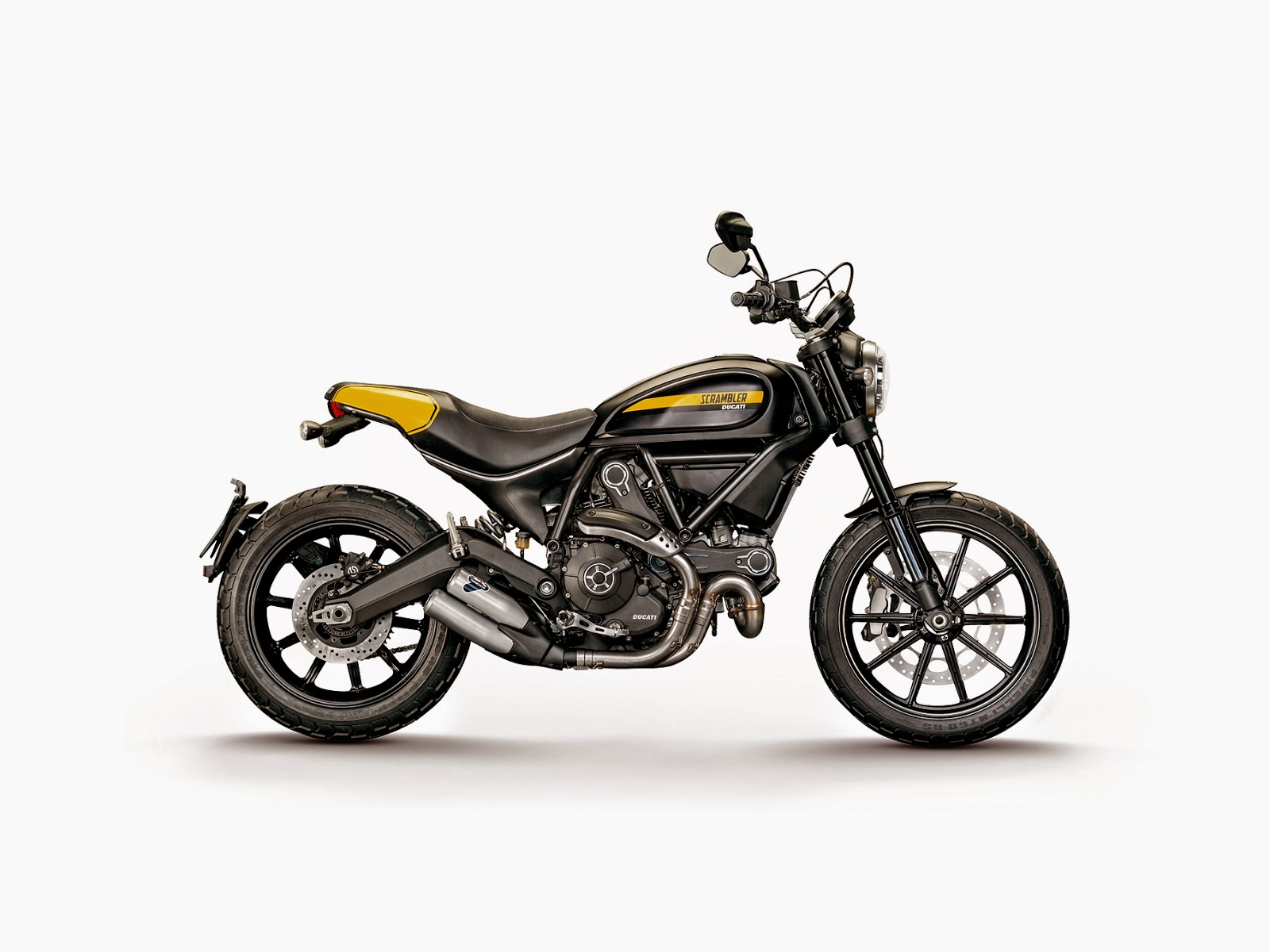
The engine is an 803cc V-twin taken from the Monster 796 with an output of 75bhp.  Four versions of the Scrambler will be available with the Icon, the standard model, in yellow and red.

The Urban Enduro is painted 'Wild Green', the Full Throttle has a black tank and the Classic gets spoked wheels and metal mudguards, much like the original Scrambler.

Prices are likely to start from £7,000 and the first models will be in Ducati dealers in January 2015
Ducati Scrambler Icon

Ducati Scrambler Full Throttle

Ducati Scrambler Classic

By Matt Hubbard

Triumph Motorcycles Reveal Four 'New' Models

Triumph has revealed four new motorcycles, although they're actually reworkings of existing models.  Still, they all look pretty damn cool


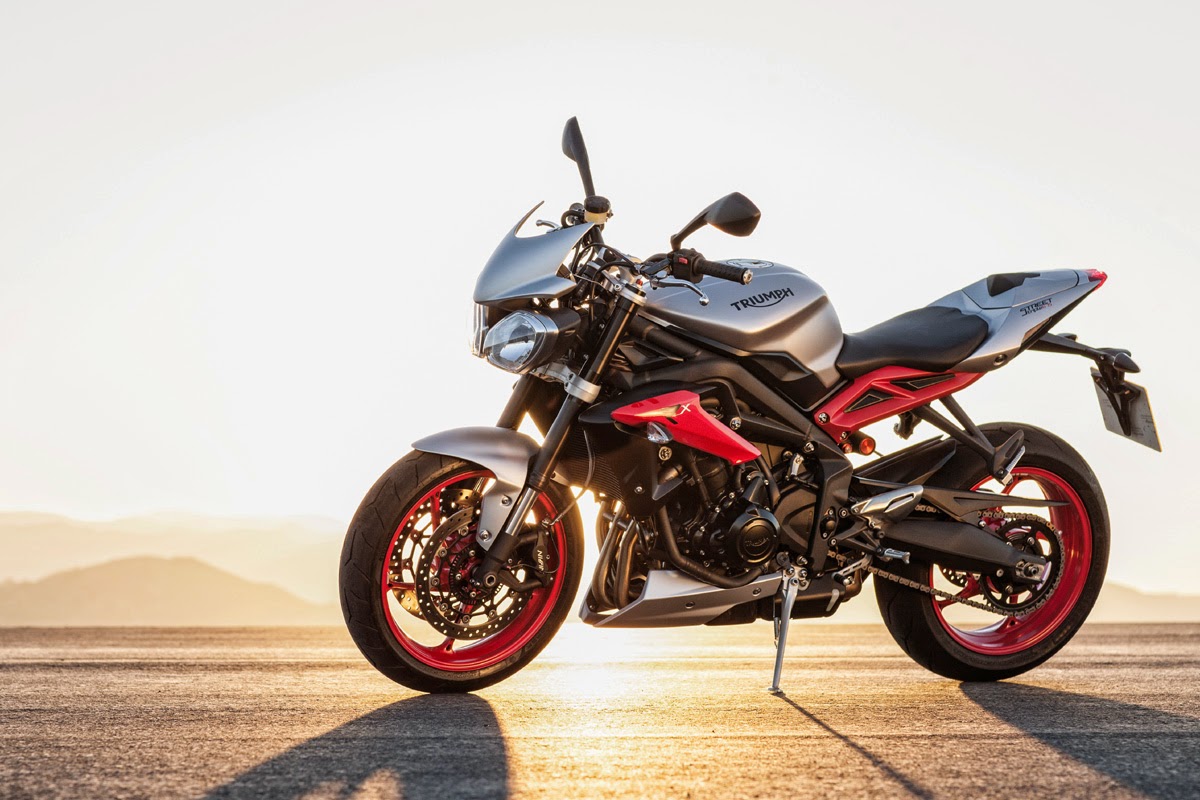
First up is the Triumph Street Triple RX. It costs £8,549 and gets the Daytona 675's rear subframe and seat, a quick shifter, Nissin radial 4-piston brake callipers, lightweight wheels and a new paint job.
Triumph Street Triple RX

The Triumph Bonneville T124 is limited to 1,000 units and is a homage to Johnny Allen and his 1956 land speed record of 214.4mph at Bonneville Salt Flats. It costs £7,849 and is pretty much limited to a unique paint scheme.
Triumph Bonneville T124
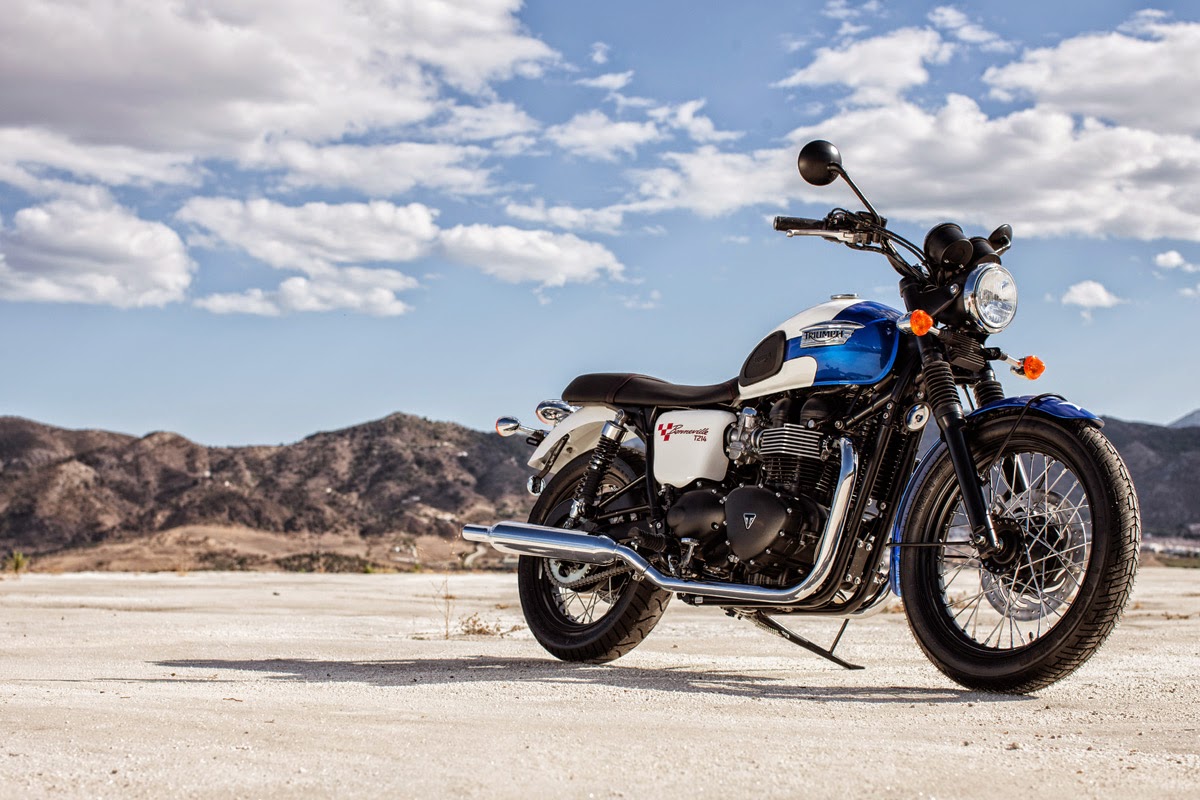
The Triumph Bonneville T100 Spirit costs £7,499 and gets a blue and white painted fuel tank and matt black where there would normally would be chrome. It also has the smaller headlight from the Scrambler and the shorter rear mudguard from the Thruxton.
Triumph Bonneville T100 Spirit
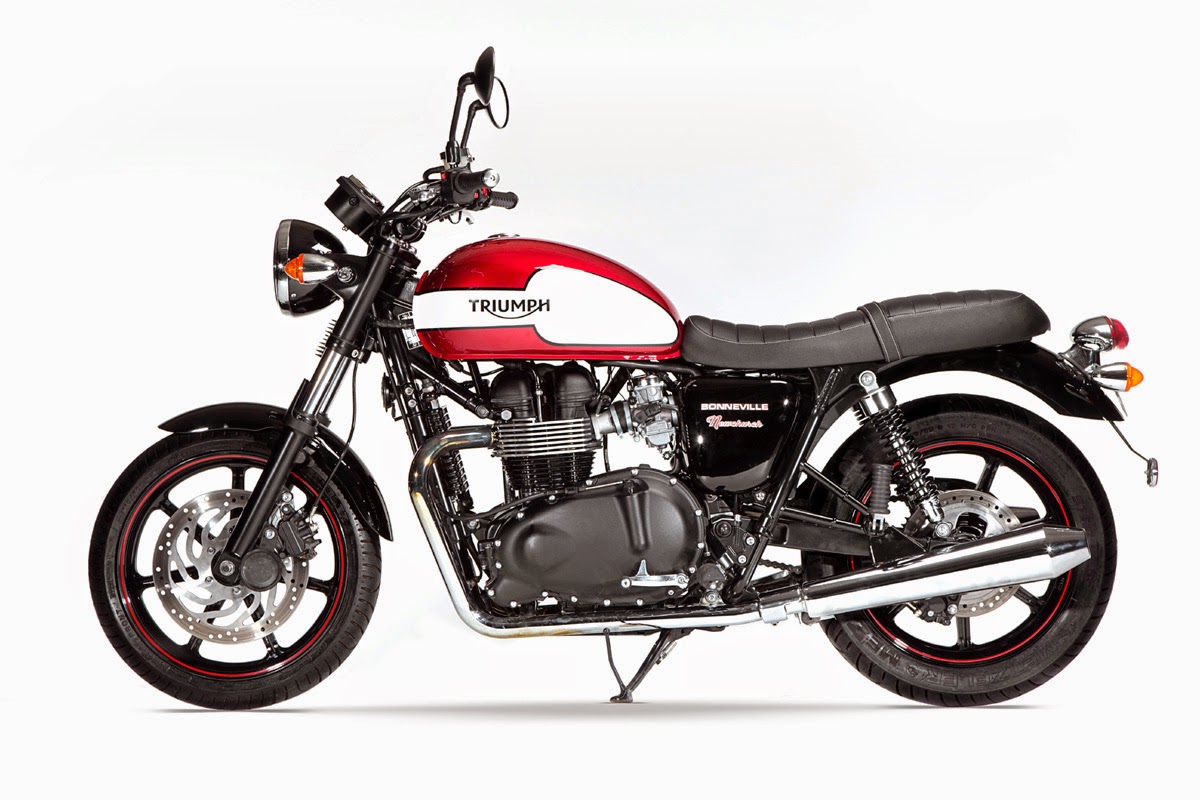
The Triumph Bonneville Newchurch is named for a town in Austria which hosts an annual Triumph get-together and party - the largest in the world. The Newchurch gets a snazzy red and white paint scheme on the tank and matt black components and frame.
Triumph Bonneville Newchurch

By Matt Hubbard


30 Aug 2014

Iron Horse - Why Motorcycles Are So Much More Evocative Than Cars

I've just arrived back from a spin out on the bike, a Triumph Street Triple.  I used a tankful of fuel and can hardly remember where I went.  Perfect.


Motorcycles carry the spirit and enliven the soul in a way that cars can never do.  I've ridden only a handful of bikes in my life but have driven several hundred cars and no car ever came near any bike. Sure, cars can be epic, uplifting and invigorating but step on a motorcycle and the experience is multiplied several times over.

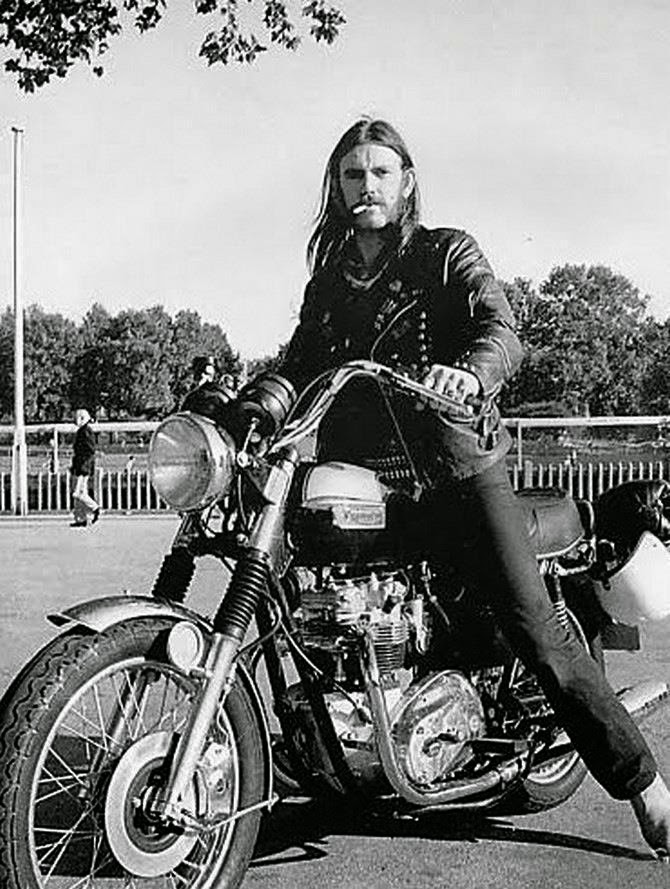
Lemmy got it right when he wrote Iron Horse/Born To Lose.  It's written for and about Tramp, leader of the Hell's Angels in Britain in the 70s.  Bizarrely enough Lemmy isn't a biker.

Iron Horse/Born To Lose


He rides a road, that don't have no end
An open highway, that don't have no bends

Tramp and his stallion, alone in a dream
Proud in his colours, as the chromium gleams

On Iron Horse he flies, on Iron Horse he gladly dies
Iron Horse his wife, Iron Horse his life

He rides the roads, he lives his life fast
Don't try to hide, when the dice have been cast
He rides a whirlwind, that cuts to the bone
Wasted forever, and ferociously stoned
On Iron Horse he flies, on Iron Horse he gladly dies
Iron Horse his wife, Iron Horse his life

One day one day, they'll go for the sun
Together they'll fly, on the eternal run
Wasted forever, on speed bikes and booze

Yeah Tramp and the brothers, say they're all born to lose
On Iron Horse he flies, on Iron Horse he gladly dies
Iron Horse his wife, Iron Horse his life


11 Jul 2014

All Geared Up - How To Choose The Right Motorcycle Gear

In 20 years on and off riding a motorcycle I have probably ridden 20,000 miles, but 10,000 of those were in 2012 when I decided to take the car off the road to hone my riding skills in all weathers.  If it rained or shined I had no option but to get togged up and onto 2 wheels to get to work or wherever I needed to be.

This experience teaches you a lot a lot about vehicle control and very importantly about what gear is required to keep you warm, dry or cool depending on what the weather has thrown at you that day.

When you first take your test or indeed any additional training which I have done (IAM course is well recommended!) they don’t give you any advice about what to wear or how to wear it.  I have found that reading bike magazines can help a little.  Ride magazine regularly carry out long term detailed and scientific tests on all sorts of gear.

Whilst this is helpful you also have to remember that every human is a different size so even when ordering recommended clothing off the internet it might not fit and you end up living with it - either too big or too small, thinking it will ‘give’ a little when used. In addition it's very expensive to kit yourself out in recommended gear and to buy all new, you could easily leave a shop having spent four figures on your credit card.

Motorcycle clothing has two main purposes;

1 - to protect you should the unthinkable happen and you end up sliding down the road at 70 miles per hour, into a kerb, or even under a car, so it is generally made from leather, which has excellent abrasion resistance, and armour, to cushion impacts on vulnerable parts of the body, or parts that will take an impact such as shoulders, elbows and knees.

2 - to protect you from the elements by keeping you warm and dry so your mind is focused on your riding rather than cold/wet parts of your anatomy.

It is regarded that motorcycle clothing should be a snug fit so the armour doesn’t move in the event of a fall.  It is worthless if it is not positioned in the area it is intended to protect.

Let’s start with your helmet, which serves to protect your most important commodity, your brain.  Without your grey cells working propely you fail to operate.  In an impact your brain moves in your skull. The helmet shell protects your skull from impact and the padding stops your head moving within the helmet.  You need to cushion your skull from impact and stop your brain moving too much in your skull which causes brain damage. Scary stuff hey.  Do it right and do it properly.

First off always buy new and always ensure it fits right. Go to the motorcycle clothing shop.  Try many different makes on as they all fit slightly differently.  Take advice from the salesperson to ensure it fits properly as it’s better to be tighter and give a little than slightly loose and loosen up too much. 

At this point you will end up with red ears from trying on lots of helmets but believe me it’s worth getting it right.  If it’s not comfortable move on to the next. Remember, a better fit is vastly more important than an expensive helmet but try to get the most expensive you can afford as generally the more you spend the better quality materials and testing it has had. 

If you like a specific helmet from the larger manufacturers such as Arai and Shoei they can sell different padding to ensure the one you like fits properly. If you still want to save money go find and buy the same helmet you like on the internet, knowing it will fit.

Now you have it look after it.  Don’t drop it as the shell gets damaged easily so if you do have an off it will not do the job it was designed to do. Even if it drops off your bike seat a helmet will lose strength.  Think of an egg shell breaking - once damaged it is visibly damaged and weakened but a motorcycle helmet doesn’t show its shell is weakened - another reason for not buying secondhand as you do not know the history. So don’t leave it on your bike seat or tank when on its side stand and keep a location at home or work where it's flat, dry and safe. I keep mine in my top box when out as it can’t fall from there.

Next up is the jacket and protecting the second most important item on your body - your core. You need to be warm at all times otherwise you could ultimately lose concentration and experience numbness, pain, drowsiness and weakness which will massively affect your ability to ride safely. 

Leather or textiles are your down to personal choice.  I have both and use the textiles for cold wet weather as leather isn’t waterproof. Ensure there's armour in the shoulders and elbows and you can move around freely in it. Your choice of bike can also dictate what you wear, not just in fashion but in design. For example a sportsbike with bars and seat at pretty much the same level is the perfect environment for one piece leathers as if you were to wear separates you might get plumber's crack and rain running down your undies.

For a leather jacket try to keep it a tight fit so the armour stays where it’s designed to and just enough room for a couple of light layers underneath. For textiles I bought mine with a slightly bigger fitment so I can get some more layers underneath as I wear this when it’s colder. The armour's still in the right place but I am warm.

In warm weather leather jackets have vents to open to let some cool air in and you can open the main zip a little, not a lot as you want it to stay on you in the event of a tumble.

Note - outside pockets aren’t waterproof so don’t put phones, wallets, cigarettes in them if you want to keep them dry.  Instead use an inside pocket, which should be waterproof.

For trousers try to buy the same make as your jacket so that they zip into each other at the waist.  This makes a massive difference for keeping in the heat and also safety as they hold together in the event of an off. Again look for armour on the knees and also the shins and look for some padding on the hip. I wear my leather trousers all year round and use overtrousers if it rains.

Motorcycle Boots offer protection not just to your feet but your ankles and calves - areas which could get injured very easily by a car or low wall. Firstly ensure they are not too big for you and could come off in the event of an accident when the socks you are wearing would end up being your only protection. 

As with most items of clothing try these on at the shop.  Whilst motocross boots look mean they are very rigid and make changing gear on a sportsbike very difficult. I bought some Alpinestars size 9 off the internet after trying some size 9’s on in a shop.  When I put them on they were very tight. It turns out I bought the waterproof ones with a gortex liner which made the boot a tighter fit. A good tip to break boots in is to go for a walk in them.  I walked the dog out in mine every night for a week and they soon gave a little. It took 6 months to get them to a comfortable fit though.

You can buy the best boots in the world that have been proven to be 100% waterproof but you must remember that there is always a large hole in the top where you put your feet in. I have been caught out many times in heavy rain when the water runs down your leg and into your boot and they act like a tank to collect water. Not fun. Now I carry some simple overtrousers and when I suspect it may rain I pull over and put these on, their main purpose being to divert water over the top of the boots so my feet remain 100% dry.

For any bikers out there who have struggled to put on waterproofs quickly and with your boots on at a bus stop ensure you keep a plastic shopping bag with you. Simply step into the bag with one boot and hey presto the waterproofs slide over your boot like a warm knife through butter, transfer the bag to your other boot and in 60 seconds you have your waterproofs on. The bag ensures theres no abrasion on the rubbery boot surface for the grippy inside of the overtrousers to catch on and you stay upright rather than tripping up and ending up sat on the floor. Been there done that!

Gloves, you can’t have enough pairs of gloves as they get dirty, wet and you often try different ones depending on summer or winter in a bid to keep your fingers from freezing or overheating. I try to look out for ones with some carbon or Kevlar protection on the knuckle, not just do they look purposeful but they also offer good protection to your knuckles which is the most likely place you will get any injury as you cling to your still beating bike flying sideways down the road. As I ride through most months in varied weathers I look for gloves that are longer in the wrist area which offer more weather protection as you don’t want to get your fingers wet as the padding starts to go out of shape and the seams move so they are uncomfortable.

My top tip for gloves is to ensure they are positioned inside your jacket whenever it’s looking like rain, when it rains the water pours down your arm and into you gloves and they fill up like a balloon under a tap and you lose what feel you had over your minor controls. Unless you ride a chopper with huge cowhorn handlebars you are always better off tucking your gloves inside your coat and zipping it up to ensure a snug fit, I have never experienced wet arms from water going between gloves and coat this way. On a personal note my right coat sleeve is harder to fasten so I do zip the right one up first and then the left using my right gloved hand. It’s trial and error to whatever suits you.

For anyone out there who doesn’t have a snood I would recommend the next thing you do is get on line or to your nearest shop and try one. They bridge the gap between your coat collar and helmet and act as a plug to stop wind getting down your jacket and making you cold. In addition they stop the rubbing you get from abrasive coat collars. When it’s really cold I use 2 to really keep the drafts out. I have an Oxford one which is better made than the other non-branded one and keeps its shape better. As mentioned I have 2 and rotate them weekly, washing when not in use to regain their elasticity, oh and also smell nicer.

With regards to waterproofs it’s best to wear proper textile tested to destruction and monsoon type weather clothing but not everyone has the funds to have both leathers and textiles. My experience has shown me that normal waterproof overtrousers and waterproof overjacket over your leathers can work well to keep the wet away and keep you dry until you get home. The main places where you get wet are in the boots from the rain running down your leg, in the crutch from water running off the tank and collecting just in front of you and your neck where the top of your jacket meets your helmet. I tried a 1 piece rainsuit on numerous occasions which was a nightmare to put on over leathers and in the end bought a simple 2 piece oversuit which is perfect as a temporary measure.

The last item of clothing on the list and is easy to forget is undergarments - thermals, mid layers and base layers. The base layers are designed to draw sweat from your skin, known as wicking and also act as an insulating layer. These are generally a thin elasticated long sleeve top and separate ‘long johns’ and cost circa £25-30 each. Mid-layers are a thin compacted fleece material which offers wind proofing and heaver insulating properties and are long sleeve tops with a slighty higher collar. You can also get ‘Long-Johns’ as midlayers but these are for more severe conditions than we have in England. The final layer top is a fleece to add extra insulation to your core and help keep the wind off the base layers. The beauty of the laying system is that its not too bulky to wear under you existing coat and trousers so you can be comfortable and not too hot.

So now you have bought all the gear you now have to decide what to use on the day. Depending on your journey you should always think about how long you are out for, what the weather will do, where am I going and where can I stop. If its dry then it's leathers, and your choice of under layers.  If its dry but you expect rain, why not put on your leather trousers and textile jacket and take some over-trousers in a tank bag. If its rain then it’s the full monty of waterproofing and I even put on my tankbag as it keeps the rain from running off the tank and pooling in the crutch region.

Now think about how you wear the items.  Do I need to open the vents, close the vents, do the main zip all the way up or leave open a little for fresh air?  Do I need to open my helmet vents to let in fresh air or is rain due and the rain will get into the helmet, it then stays wet and can get mouldy.

If you have a black visor for really sunny days (when it’s quite frankly dangerous to ride with a clear visor) then always carry a clear visor in case the weather turns or the police pull you over. Black visors are illegal for road use even though you have better and safer vision that wearing sunglasses so be on your guard and keep the excuses at the back of your mind ‘well officer it is a perfectly clear sunny day and I thought it safer to wear this visor than my clear one to protect my eyes from the sun.  If the weather turns I can quickly swap to my clear visor which is here in my top box!’
Note I experience misting up issues last year and found the pinlock system on my Shoei (or a fog insert product) to be a fantastic solution, it works by keeping a screen of plastic about 1mm away from the visor inside and it acts like double glazing, it simply doesn’t mist up. My black visor steamed up in cold weather, mornings, and in the rain as it didn’t have a pinlock or fog-guard. No matter what products I used on the inside it steams up in certain conditions if you do not have a fog insert. Seriously consider getting a fog insert or pinlock system if you ride a lot, it really could save your life.

Riding in the rain can be tricky and on the subject of visors I would heavily promote a rain repellent so that the rain beads off your visor. Light mist can be difficult to see in but with the rain repellants sprayed and wiped clean regularly on your visor you simply turn your head and the water runs off.

Often when I go on a journey there’s something which annoys me.  Maybe my jacket isn’t done up enough, I have left a pocket open or I didn’t put on overtrousers when it was looking like rain. At this point I think WHY DIDN’T I just do this or do that?  Now at the start of a journey I think WDI before it happens, then think about the weather, where I’m going and then look at buttons, vents pockets, zips, visors and then set off happy that I’m going to be happy. Why don’t you try that next time you go out!

With all of the above put into practice I hope you can stay warm and dry but I have listed below a few additional tips:

1 - When you buy new gear, always keep the old gear in case of emergency. If for example the heavens open and you get soaked to the skin, if you have kept your old gloves, boots, leathers you can wear them the next day whilst your wet gear dries out. Wet gear can take days to dry out.

2 - Don’t dry out motorcycle clothing on radiators.  Leave to naturally dry in the house over the back of a chair or window sill. Heat dries out and causes cracking which in the  long term damages leather.

3 - If you really can’t keep your hands warm with just gloves then try heated grips.  They can be bought from just £40 and are fairly easy to fit and make the world of difference when the weather is freezing or just when wet.

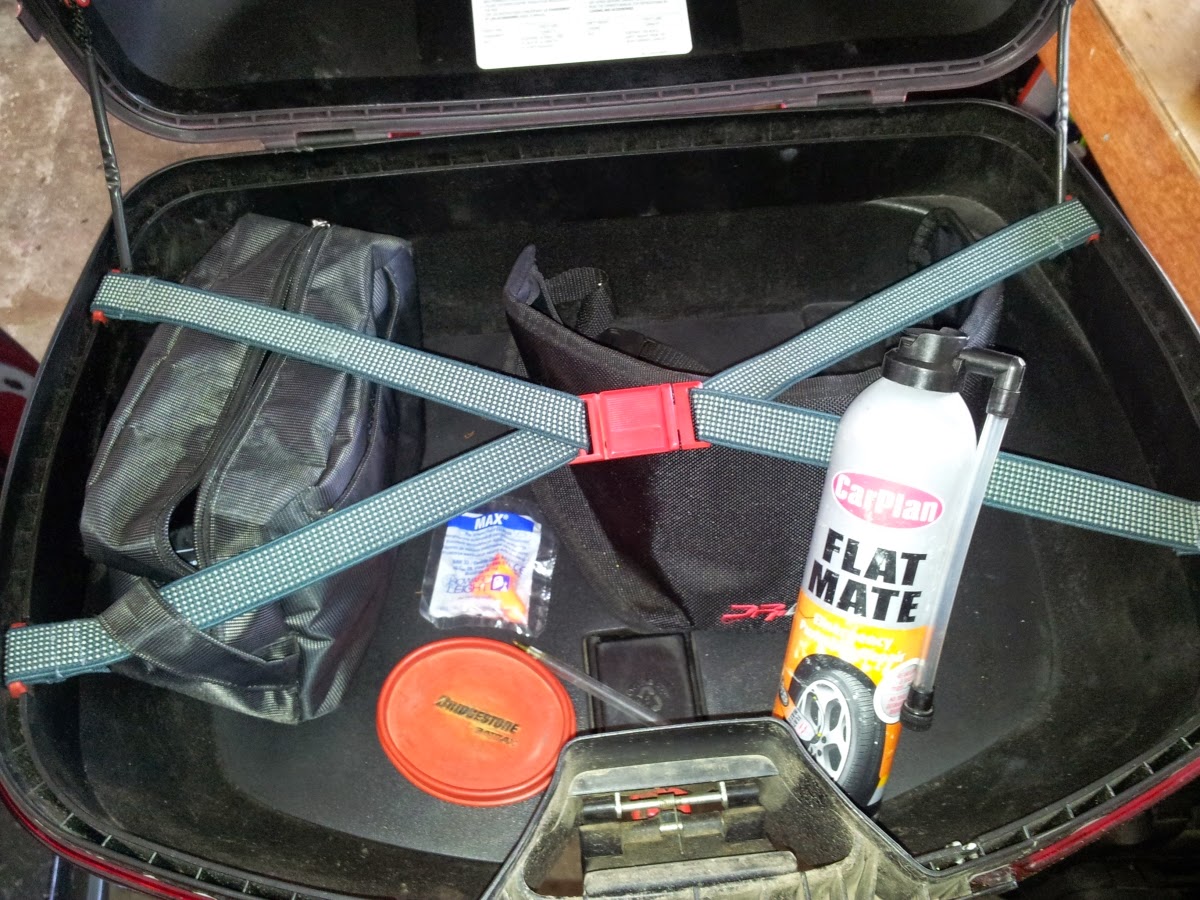
4 - If you ride on a daily basis seriously consider a top box, they allow you to safely and securely take items/shopping with you and at the other end store your helmet, gloves etc so you don’t have to walk around with them. In addition put a toiletry pack inside and keep essentials such as a tin of tyre weld, a pen, baby wipes and a side stand plate to stop you sinking in the mud when you haven’t got an old beer can.

Thanks for reading and if you have any tips please add as a comment.

Article by Colin Hubbard