Showing posts with label Alex. Show all posts

3 Jul 2014

Mercedes-Benz SLS AMG GT Review

Alex Wakefield reviews the Mercedes-Benz SLS AMG GT

Mercedes SLS AMG GT
Mercedes launched the SLS in 2010, and it’s not a common sight. There may be two reasons for this. Firstly, it’s not a cheap car. With prices approaching the £200,000 mark with options, it’s pitched at a market that tends to favour the outrageous. Take a drive through Central London on a Saturday night and the streets seem to be awash with recent Ferrari and Lamborghini models. Within this, is the second reason for the car not being a regular spot; it’s really rather discreet, despite the gullwing doors and race-bred engine.

I’ll admit that the SLS has always confused me. The McLaren developed SLR which preceded it did too, because I’ve always thought that supercars, or more recently hypercars ought to shout loud about their capabilities. Sharing the experience with the public at large should be part of the ownership requirements.

The SLS in launch form could never be described as a shrinking violet however. Fitted with the famous handbuilt 6.2 litre AMG V8 engine - naturally aspirated - it makes a very healthy 571BHP, and surges to 62mph in less than 4 seconds. If it were not for the presence of an electronic speed limiter, the car would happily push beyond 200mph. But the model has been on sale for a few years now and in the 21st century spirit of constant upgrades, Mercedes has subjected it to some modifications, and the range has spawned the GT model.

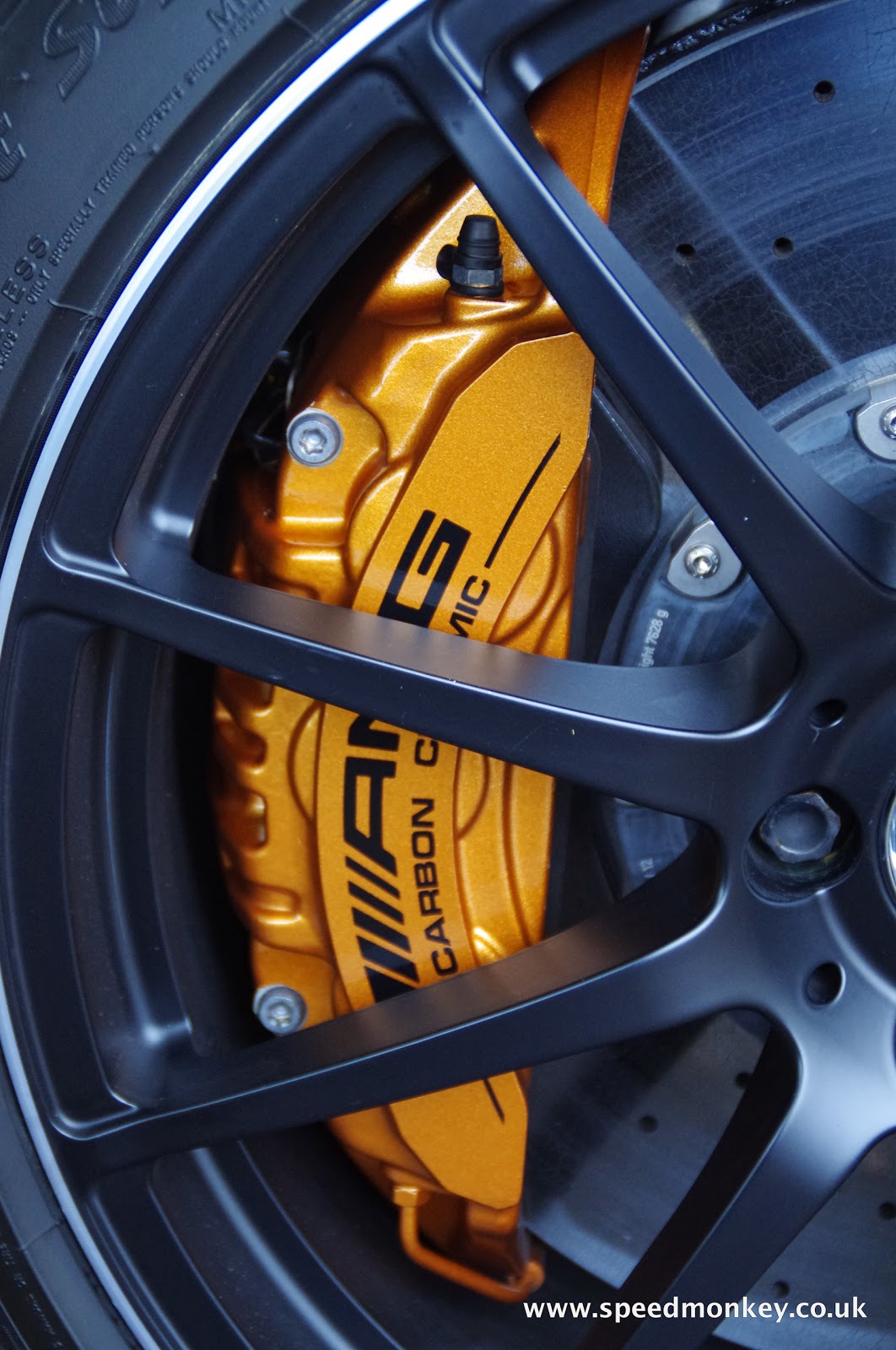
Our test car, the Mercedes Benz SLS AMG GT costs £165,030 before options. It is fitted with another £20,000 or so of kit, including the striking matte Magno Monza Grey paintwork, but most significantly, a ceramic composite braking system at £8,140.
Mercedes SLS AMG GT

Having been fortunate enough to gain experience of supercars in the past, it’s pleasing to find that there are none of the usual feeling of nerves in approaching the SLS. Supercars which scream at you with rakish design and fluorescent orange paintwork, also remind you how expensive and vulnerable they are. Once you’ve worked out the gullwing doors, and negotiated the wide sills, the car feels completely unintimidating. Those doors by the way, are great for avoiding damage in crowded car parks, although require a generous garage height. Inside, the dashboard is familiar enough to anyone with experience of the current Mercedes range, almost disappointingly so, with parts carried over from lesser models and some inexpensive feeling materials present.

Pushing the metal engine start button brings that 6.2 litre engine to life. Much of the AMG range is now being subject to downsizing and turbocharging, but this motor continues in the GT with alterations to bring about additional power to 591BHP. This is combined with updates to the 7 speed automatic gearbox, which has manual override, to bring about faster gearchanges and improved acceleration figures. 62mph is now yours in a mere 3.7 seconds.

Having been lulled into a false sense of security, pulling away reminds you that indeed, this is a supercar. We’re familiar with the 6.2 litre engine in models lower down the AMG model line-up, and the abiding sense in those cars (the C63 AMG Edition 507, for example) is of a monster being barely contained. In the GT, the engine is a core part of the experience, and so central to the car’s existence that the bonnet it sits under is central to the design language. It projects out in front of you, seemingly for miles whilst the driver is sat almost over the rear wheels. You’re reminded of this as you pass over speedbumps, potholes and any other imperfection, as the rear axle is incredibly firm.
Mercedes SLS AMG GT

The V8 motor sings away, whizzing, whining and barking as you thread the car through traffic. The race car heritage is never far away even at cruising speed, where the driver can never be in doubt that right in front of them, sits a massive internal combustion engine complete with camshafts, pistons, valves and all the mechanical elements needed to burn petrol and harness the chemical potential energy it contains. That’s not to say it’s intrusive, but there’s no attempt to isolate you from that process of burning petrol, something that’s at odds with the comparatively muted exterior.

It’s not long before the urge to stamp on the throttle becomes too much. Coming out of a roundabout into an unrestricted section of the A5, with a clear road ahead, the car is straightened up and the accelerator pushed all the way. It’s difficult to remember what happened that first time, as greatly illegal speed beckoned so quickly, a stretched elastic band attached to the horizon pulls you forward with no fuss. There’s none of the almost shocking, bewildering brutality of the likes of the C63 and E63 AMG, all the more amusing as the car goes from minicab to hypercar so quickly. This car was designed to handle this performance from day one and controls it beautifully.

The soundtrack sticks in the memory, a combination of the metal parts of the engine thrashing up to the red line, and the exhaust system bellowing directly beneath your buttocks, blaring out behind the car over the tarmac you have just annihilated. The delivery of the performance is ruthless, efficient, and unremitting, the driver holds on to the wheel tightly as the race car inside comes to life. Like all the other AMG cars, attempting to shift manually is largely an exercise in futility because the programmers know better than you do, if you want to achieve those claimed performance figures.

The manual override is a sop to those who want to kid themselves that they are really in charge here. Under certain circumstances, it won’t even respond to orders to change manually, if the pre-set amount of revs is not achieved. The gearbox is best left to the computers, as you enjoy the chassis. The bonnet sticking out in front of you makes you think that this is a large car, but the close fitting cockpit soon brings about a confidence that this is a car that can be piloted with precision. You can never forget that this is a front-engine, rear wheel driven car with close to 600BHP, but the levels of grip are intense, the feedback through the gorgeous, meaty feeling steering wheel is a treat, and the brakes are incredible.
Mercedes SLS AMG GT interior

To those unaccustomed to the joy of driving a supercar, it’s often the braking system that is the most memorable thing about the experience, once the throttle pedal has been explored. This test car is fitted with the optional carbon ceramic system. The response is superb; instant, with huge levels of feedback through the pedal, but never grabby. Having excellent brakes is arguably more important than extra power, as you shed speed more effectively, allowing you to concentrate on the corner you are negotiating.

This SLS is never intimidating as you steer, because the car communicates to you so effectively through every means - suspension, brakes, steering, engine. It’s a real driver’s car, despite the computer control of the gearbox. It’s not a car that flatters you, or fools you into thinking that you’re talented, by filtering out your mistakes through a microprocessor, but rather it makes you aware of your inadequacies as you strive to meet the high standard set. You’re reminded of this on the odd occasion where that near 600BHP output just gets a little too much for the rear wheels on a damp roundabout, at which point the decision to follow the advice NOT to turn off the traction control is determined to have been a good one.

To try and understand the SLS, it has to be driven. It seems that Mercedes set out to create something that would appeal to the driver, rather than the general populace. Whilst the SLS certainly entertains the crowds with its musical exhaust system and undeniable presence, the message it conveys is somewhat confused. The styling and of course, those gullwing doors clearly evoke memories of sporting Benzes past, but the rest of the car is decidedly modern, in how technology is used to improve the experience of driving it. But Mercedes have deliberately chosen a traditional front engine, rear wheel drive set up, where others are concentrating on all wheel drive.

There’s storage space and a theoretical capability to crush continents, but the thought of a blast down to the Mediterranean doesn’t seem to suit it. You’d arrived ruffled, sweaty and desperate for the toilet, as the firm ride and race car soundtrack is likely to have become too much after a few massively entertaining hours. What is the purpose of the SLS then? If you want to spend hours on a racing circuit, you can buy a Lotus Exige for a fraction of the price. If you want to smash down to your villa in Spain, an SL63 will give you most of the performance for a lot less money, and cosset you all the way before coming alive in the hills leading to your driveway. But no supercar can meet every requirement, although some get close.

But it fills a niche. Not everyone wants to be associated with overpaid footballers and visitors from the Emirates parading their fragile toys around the metropolis. The SLS manages to conjure up heritage in spades from its appearance, and offers the driver reassurance that any challenge can be dealt with. Silly doors aside, it goes about this business with a certain level of discretion that will appeal to those who love to drive, but don’t want to be seen to be overtly display their wealth. In short, it has taste and it’s probably fair to say that to choose one over a Lamborghini or Ferrari involves a lot more engagement with the grey matter.

It’s a remarkable achievement, to have created a supercar that gains nods of respect from those who understand cars, whilst never drawing the wrong kind of attention, or conveying the particularly offensive image that a certain other German manufacturer is famous for. I often wonder what I would spend my fantasy lottery cash on, and a nicely specified SLS would have to be high up my wish list.



Article by Alex Wakefield

28 Dec 2013

Driven - Skoda Octavia vRS 2.0TSI 220PS DSG

Alex Wakefield reviews the 2013 Skoda Octavia vRS

2013 Skoda Octavia vRS

The third generation Octavia has been with us now for about a year. This range of medium family hatchback and estate cars has struck a chord with buyers in the UK. The Octavia has always been a handsome vehicle, although conservatively styled. Towards the end of the first generation, the vRS model appeared with the same 1.8 litre 20 valve turbocharged petrol engine that was at that time, seeing service in the VW Golf GTI and Audi TT.

A second generation model followed, and the popularity of the car grew amongst those who wanted hot hatchback performance, with family car practicality. With a massive boot, and a more reasonable price tag than the VW and Audi models equipped with the same technology, the car also found favour with the emergency services, becoming a common sight on the motorway, piloted by police officers who have always had a requirement for sensible cars with above average performance capabilities.
2013 Skoda Octavia vRS

This third version has now set deeper foundations and rather than the Octavia being seen as a less expensive alternative to a Golf , it has developed a unique identity. The external styling of this high performance Octavia is distinct and confident, from the darkened front light surrounds, via the 18” alloy wheels, to the rear with for the first time, twin exhaust outlets. Yet, like the two versions which preceded it, it doesn’t shout or brag.

Inside, the cabin of our test car is very dark, with a black headlining, and black leather seats, but the optional electric glass sunroof offsets this somewhat. It’s a nice feature, giving a greater impression of space in what is already a very generous package. The dashboard is dominated by a large touchscreen satellite navigation system which is a must-have option. It’s responsive and informative, and incorporates a DAB radio system and telephone preparation. All occupants of the car will enjoy the above-average legroom, allowing them to stretch out, although headroom is a little limited in the rear. The boot is absolutely huge, offering 590 litres of space with the back seats up, and 1,580 litres with them folded down. The space is so significant in fact, as to render the estate model largely unnecessary.
2013 Skoda Octavia vRS interior

Opening up the glass roof lets in the outside world, although those hoping for a sporty cacophony from the twin exhausts will be disappointed. The only really noticeable external sound is the turbocharger whistling loudly as the 220BHP engine sends power to the front wheels. This latest model has an extra 20BHP over the last one, although much of this advantage is lost through torque steer. The driver has to hold on to the wheel tightly on full-bore acceleration, as the rim squirms in the hands quite noticeably. Otherwise, progress is extremely swift and uneventful. With the DSG gearbox fitted to our test car, the official 0-62mph time is a useful 6.9 seconds, and there is no reason to doubt claims of a 152mph top speed.

With the torque steer, the DSG transmission makes a lot of sense, allowing the driver to concentrate on keeping the car straight as speeds build up. In the Octavia, the system is a 6 speed, with nicely chosen ratios which make use of the turbocharged torque, but which also give the car a nice relaxed cruising capability. It’s a nice combination of confidence-inspiring sprinting ability, with long distance loping also firmly on the agenda. That latter aspect however, it dented by the lack of standard cruise control fitment, which seems rather mean on a car like this. The plastic gearchange paddles are a little disappointing, but in general the gearbox does what you want it to, and the changes are lightning fast.
2013 Skoda Octavia vRS

The motorway is likely to be the natural hunting place of the Octavia vRS but it can do B-roads well. It’s an easy car to throw around, although the above average exterior dimensions can cause a little anxiety when confines become tighter. The car feels quite wide and long, but the trade off is a smooth ride quality which allows you to concentrate on your road positioning. The beautiful, high quality steering wheel transmits a good impression of the road surface to the driver. The steering never feels excessively light but in hard cornering it can come across a little numb. For a front wheel drive car with too much power for two wheels, it’s not surprising to discover that understeer will result from foolishness, but you have to be deliberately provoking the car to unstick the front tyres.

At first, it’s easy to wonder if the Octavia vRS is just a little too competent. Everything it sets out to do, is done to a good standard, from the quality of the construction, through to the use of the performance, with the possible exception of the torque steer. Indeed, those unnecessary extra 20 horses are the only exception to a package which resists the urge to shout too loudly about what it can offer to those with a heavy right foot. But the more time you spend with the vRS, the more you realise that this has to be close to the perfect family car for those who don’t want to draw attention to themselves. It’ll put a smile on your face on those rare occasions where there’s an opportunity for a blast, swallow a Christmas tree, cross continents and, if the previous examples can be used as a guide, still look good in another decade.

It’s not the most exciting car in the world, true. But if you’re not made of money, and have space in your life for only one car, then it is hard to imagine a better fit into your lifestyle than the Octavia vRS.

Review by Alex Wakefield


19 Nov 2013

Skoda Rapid Spaceback Review

Alex Wakefield reviews the Skoda Rapid Spaceback SE 1.2TSI 105 6 Spd Man and 1.6TDI 90 DSG 7 Spd

Skoda Rapid Spaceback

24 Oct 2013

Mercedes Benz C63 AMG Edition 507 review

Alex Wakefield reviews the Mercedes C63 AMG 507

Mercedes C63 AMG Edition 507
We’re probably about one year away from an all new C Class model finding its way into the showrooms. It says a lot about current model lifecycles, that 5 years or so is the expected shelf life of any car. Over the quite brief existence of this generation of C Class, we have been able to enjoy the C63 AMG, which has sat at the top of the model tree, casting a glow over the hugely popular run of the mill versions.

Despite the relatively modest dimensions of the C Class, AMG engineers managed to shoehorn a 6.2 litre V8 under the bonnet, and connect it to the rear wheels via a 7 speed automatic gearbox, with manual override function. The standard model boasts 457BHP, which you would imagine is plenty. But now, Mercedes will charge you an extra £10,000 or so for the ‘Edition 507.’ It may not surprise you to learn that it has 507BHP.

Everything about the Edition 507 screams power, especially in the Fire Opal paint of our test car. The wheelarches poke out, the bonnet has had two slashes taken out of it to assist cooling and there are comically oversized four exit exhaust finishers, all topped off with massive brake calipers showing through the 19” AMG cross-spoke alloys. It’s a very striking package, although the large go-faster stripe running along the bottom of the doors looks naff.

This impression of power continues inside after a few moments. Our test car had a pleasant duo-tone leather and suede upholstery but all is fairly standard C Class to begin with. The compact, suede rimmed steering wheel, flat bottomed and sporting a ‘sight’ on the top rim to let you know what way you are pointing, gives some clue as to the purpose of this car. There is also a ride control dial on the centre console and an ‘AMG’ button. Push the latter, and the car is turned into a monster. These take your attention away from the otherwise standard C Class fittings and fixtures, which is a good thing because some of these feel horribly cheap, such as the climate control rings and other plastic parts. Some of the dash is covered in good quality leather though, and the rest is formed mostly of decent quality rubberised material.

Once in, and bottom planted on the supportive front sports seats, a press of the metal starter button causes, after a short delay, the 6.2 litre V8 engine to fire up. From this point, you are in no doubt that this is a muscle car. On the side there’s a badge which reads ‘6.3 litres.’ It’s not actually, but that’s beside the point. In front of you, even at idle, you can hear, and feel the mechanical gnashing of 8 cylinders in vee formation, which sit just inches away from you. I’ve always thought as the C Class as a relatively large car. With the massive engine just ticking over, you start to feel small and somewhat intimidated.
Mercedes C63 AMG Edition 507

That engine is handbuilt by AMG, and each one has a stamp on top, from the person who signed it off. Ours was built by Marc. By all accounts, Marc did a pretty good job, because the car can barely keep up with the monster he was responsible for creating. Even a modest push of the throttle causes an intervention from the traction control. The rear wheels want to spin, pulling away from the Mercedes HQ in Milton Keynes, and we’re not even fooling around yet. A sense of respect is formed very quickly. Once the car warms up, it’s possible to push things a little further. The engine responds instantly to even delicate throttle inputs, threatening to overwhelm you very quickly unless you hold on tight. A beautiful, savage mechanical bark is emitted from all hot parts of the car - intake, cylinders, exhaust - as you try and guide it along the public highway. 100mph arrives in a flash before it’s time to brake hard because we’re not on a closed racetrack. 0-62mph is covered in a frantic 4.2 seconds, and the car will surge all the way to 174mph before being reined in by a speed limiter. The brakes need a good shove, but work well and inspire confidence.

As you slow down, the steering weights up as you transfer the load of the car into a turn. There’s plenty of feedback through that compact wheel and the front grips the tarmac tightly. The back end must be treated with respect. 507BHP through one set of wheels, in a car with a relatively short wheelbase could at once make for a huge grin, or a visit to a hospital. The margin between the two seems thin. Turning off the traction control would be the work of an idiot in these conditions. Keep the throttle in a more respectful position and it’s possible to thread this fearsome compact package through turns with ease, although the car never feels lithe.

It’s the result of such a dense package of muscle, like a heavyweight boxer who manages to dance around the ring, a sensation helped by the super slick 7 speed automatic, which can be freed up by overriding with the paddles behind the steering wheel rim. To be honest, those are there just to make you feel like you’re in control. You’re not. The car knows better than you. It’s probably better to leave it in auto and use your hands to hold on tighter.

When it’s time to switch off the AMG setting (and the ludicrous selection of race car dials projected onto the satnav screen), the car can be driven relatively normally. The ride remains very firm and that awesome V8 is never far from your attention, whizzing away just a short distance from your feet, exhausts occasionally popping on the overrun as you slow down. Should the need arise, call it up and the response is swift and brutal. Overtaking happens so quickly, you can’t even recall what just happened. But slow down again, and normality is resumed for now.

At the end of the drive, the heat from the engine bay can be felt in the cabin and outside, a haze shimmers across the vents torn out of the bonnet to keep this naturally aspirated motor cool. It’s the last outing for this amazing engine in the C-Class at least, as downsizing and turbocharging is starting to filter through the rest of the range. The new model will apparently receive a 4.0 litre turbocharged engine, but our experience of the smaller turbocharged V8 in the larger E63 AMG does not give cause for concern. Although the days of cars like this are likely to be numbered, the future is bright. But it’s hard to imagine the next model, with a physically more compact engine having quite the same visceral feeling of this Edition 507, a direct consequence of the magnificence of a huge engine fitted into a modest sized car. This is the ultimate C Class for now, just as long as you don’t take it out in the rain.

Article by Alex Wakefield

You might also like: