Showing posts with label Angela. Show all posts

19 Aug 2013

2014 Yamaha MT-09

We’ve heard the rumours, and we’ve seen the YouTube video…. Now an all-new 3-cylinder sports bike from Yamaha is to take on the class-leading Triumph Street Triple in 2014….Say hello to the MT-09!
Yamaha MT09

From reading the Yamaha press release, one of the key goals in the MT-09 development project was to create a machine that gives the rider increased levels of pleasure and enjoyment by being able to control the machine at will. We all know that a well-designed motorcycle should feel like an extension of the body. After putting the current YZF-R1 designers to work, this was the result:
  • Linear and enjoyable torque delivery 
  • Best power-to-weight ratio in its class 
  • Lighter than a YZF-R6 
  • Slim and lightweight aluminium chassis 
  • Naked Motard ‘mass-forward’ style 
  • Compact body design 
  • Upright riding position for maximum control 
  • Refined ergonomics for a stress free ride 
Yamaha MT09
Without a doubt the most significant feature is that all-new 3-cylinder engine. The goals according to Yamaha during the intensive development programme were to create a compact, powerful and lightweight 3-cylinder engine; it would also be a visually attractive powerplant that would ‘enhance pride of ownership’. Furthermore, the MT-09 development team also placed great emphasis on achieving high levels of economy together with good environmental performance.

Featuring a displacement of 847cc, this is an all-new 4-stroke DOHC 4-valve engine, with forged aluminium pistons. The MT-09 is also significant for the fact that it is the first multi-cylinder production Yamaha motorcycle to utilise an offset cylinder design; it has been developed to embody Yamaha’s ‘crossplane philosophy’, ensuring instant throttle response together with strong low to mid-range torque. One of the best characteristics of a 3-cylinder engine design is its linear torque output, and it is this strong and responsive power delivery that Yamaha says defines the fundamental character of the new bike.

The MT-09’s 3-cylinder design is also inherently lighter, slimmer and more compact when compared to parallel 4-cylinder designs, being around 10kg less than the Yamaha FZ8. This has given the designers greater freedom to produce a correspondingly compact and agile-handling sports chassis.
Yamaha MT09

With its efficient fuel injection system, the MT-09 offers a potential range from the 14-litre tank of 150 miles or more, depending on the conditions. Hurrah!

I can remember my MT-03 doing just 80 miles on its 15 litre tank of fuel once, after some spirited riding that is….

Yamaha’s engineers have used the Yamaha Chip Controlled Throttle (YCC-T) from the YZF-R series supersport bikes. This ‘fly-by-wire’ system senses every throttle action made by the rider, and the ECU instantaneously actuates the throttle valve to give an immediate engine response. In addition, to give the MT-09 rider the bike - and the excitement - he or she needs in different riding situations, this new motorcycle is equipped with the Yamaha D-MODE system. The rider has a choice of three different throttle valve control mapping settings, STD Mode, A Mode and B Mode.

STD Mode has been designed to be used in a wide range of riding and road conditions, and it allows the rider to enjoy the 3-cylinder engine’s linear torque output and top performance right through the bike’s rpm range, from low to high engine speeds.

With the A Mode the engine delivers the maximum level of adrenaline. This setting gives a sharper throttle response in the low to mid speed range for a more aggressive sport riding experience.

B Mode delivers a milder throttle response with easy-to-use power characteristics which are perfect for riding in the city or in adverse road or weather conditions.

The MT-09 is fitted with an integrated single-piece 3-into-1 exhaust system and short muffler. The three stainless steel exhaust pipes feature connecting tubes between pipes 1 and 2, and between pipes 2 and 3 - and the pipes are also treated to prevent discolouration, rust and stains; so the system should stay looking factory-fresh, even after being subjected to a few harsh British winters!

Weight and space saving designs seem to have been used extensively, making this the one of the lightest sport bikes in the over 700cc class on paper, at 188kg wet. As a comparison, the MT-09 is actually lighter than the YZF-R6, recognized as being one of the most agile bikes in its class. This can only be good news, as many riders are put off by the sheer dead weight of some larger capacity machines.

By carefully selecting such dimensions as the wheelbase, seat height and overall riding position, Yamaha’s designers look to have been able to produce a compact and easy handling chassis.

Suspension-wise, the bike is equipped with newly-designed upside down front forks which offer 137mm of wheel travel - 7mm more than the FZ8 - to give high levels of riding comfort and responsive steering on a variety of road surfaces from cobblestones through to fast twisties; plus they can be adjusted for rebound damping!

At the rear, a link-type Monocross suspension design has been used, which incorporates an almost horizontal shock positioned beneath the seat. The location of the shock not only contributes towards the bike’s centralization of mass which helps to enhance handling - it also makes for a slimmer chassis layout, and the under-seat location protects the shock and linkage from the road dirt to help reduced wear and tear (see the MT-03 and Ducati 1199 Panigale for similar examples). Featuring rebound damping and preload adjustment, this rear suspension can be fine-tuned to suit a range of riding conditions and preferences, which is a welcome addition considering the variety of riders the bike is being aimed at.

In order to achieve Yamaha’s goal of building a compact chassis, the swingarm’s pivot assembly is located on the outside of the frame in a system similar to that used on the MT-01 and MT-03. This reduces the chassis width in the footrest area to that of a typical parallel twin cylinder machine, and gives a slimmer and more agile feel to the whole motorcycle.

An all-new asymmetrically-mounted lightweight LCD instrument panel features a digital bar display for the tachometer, and the panel also includes a useful gear position indicator. The angular headlight features a multi-reflector design, and a new-style LED tail light (inspired by the MT-01) features separate left and right side lamps when the lights are turned on, while the whole surface lights up during braking.

I think that overall the MT-09 is a handsome machine - although the lack of a fly screen does mean the front end looks a bit underfinished and, dare I say it, a little ugly?

I hope this bike does well, Triumph needs some serious competition in the naked sportsbike sector; and suggestions that this bike may undercut its main rival on price (the Street Triple is £6999) shows that Yamaha are definitely on a mission. Good luck to them; and I’m booking a test ride slot at my local dealer as soon as it hits the showroom….

Technical details:
  • 850cc liquid-cooled 4-stroke 3-cylinder DOHC 4-valve engine 
  • 115hp @ 10,000rpm 
  • 87,5 Nm torque @ 8,500rpm 
  • Forged aluminium pistons and direct-plated cylinders 
  • Offset 3-cylinder layout 
  • Newly-designed 6-speed transmission with compact clutch 
  • Pipeless design for cooling systems 
  • Single unit-type exhaust pipe and 3-into-1 muffler 
  • Yamaha D-mode switchable mapping 
  • Lightweight frame featuring CF aluminium die-cast swingarm 
  • 188kg wet weight, 171kg dry weight 
  • Link-type Monocross rear suspension with horizontal shock 
  • Upside-down forks with 41mm tubes 
  • Newly-designed lightweight 10-spoke 17-inch cast aluminium wheels 
  • 14-litre 'slim-fit' steel fuel tank with depression in knee grip area 
  • Dual floating 298mm front discs 
  • Radial-mount 4-pot opposed piston calipers 
  • 400mm long flat seat giving range of riding positions 
  • Multi-reflector headlight 
  • Forged aluminum brake and gear shift pedals 
  • LED tail light 
  • Newly-designed hexagonal rear view mirrors 
  • Lightweight LCD instrument panel 
  • All-new compact switchgear 
Colours

Deep Armor with MT fuel tank logo graphic
Blazing Orange with MT fuel tank logo graphic
Race Blu
Matt Grey
Yamaha MT09

Yamaha MT09

Yamaha MT09

Yamaha MT09

Article by Angela Freeman

21 Feb 2013

2013 BMW R1200GS - specs, prices and images

BMW have released specifications, pricing and photos of the new R1200GS.  Angela Freeman takes us on a tour of the updates to this most venerable of biking institutions 

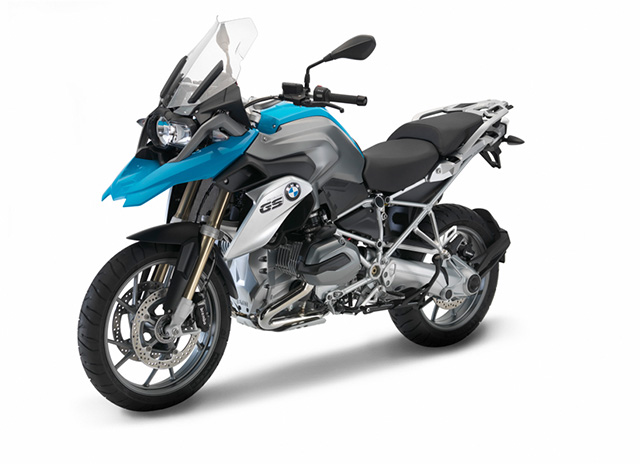
It has finally landed - the new and much anticipated BMW R1200GS. With Triumph, KTM and Yamaha striving to steal sales away from the Adventure Bike class leader, what has BMW done to make sure they will still rule the roost this year?

With a new air/liquid cooling system and cylinder heads, the redeveloped boxer engine delivers impeccable performance, refinement and pulling power, and should please the emission-conscious authorities; and also gives the bike an extra 15bhp. Torque is up too.

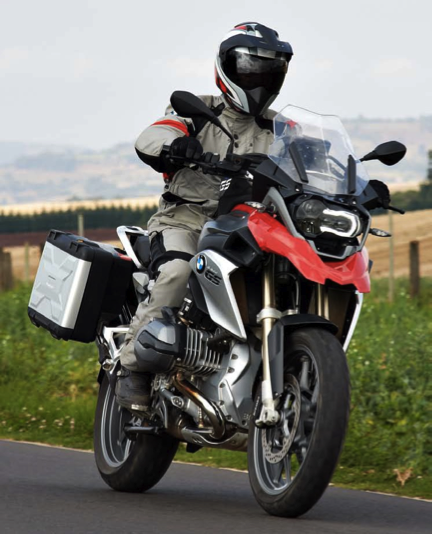
Looks-wise, there has been a subtle overhaul; the famous ‘beak’ has been tweaked and the new optional full LED headlights make it a much more handsome machine to look at - I have always liked the quirkiness of the GS’s Patrick Moore-esque face, and this combined with new wheels, side panels and screen is in my opinion a winner. The exhaust route and shaft drive have swapped sides on the new bike. There is also - shock horror - a conventional single indicator switch!

A lot of the switchgear has been lifted from the K1300 series bikes, but there is still the old analogue rev counter and speedo sitting with the LCD display panel, as per the outgoing model.

Suspension wise, the main frame is now more rigid and the Telelever and Paralever systems, unique to BMW, are significantly more precise than that of previous models. Dynamic ESA, available as an option, also further improves the bike’s performance. The electronic suspension system adapts to the current riding surface, enabling riders to fully connect with the ground beneath them. Furthermore, new tyre sizes (120/70 R19 front and 170/60 R17 rear) ensure that all the power is delivered exactly where it is needed most.

The swingarm is 53mm longer, and the Brembo brakes now have larger pistons in the radial calipers. The front discs remain the same size, but braking should be vastly improved as a result of this, and the new bike also has a larger rear disc (up from 265mm to 276mm).

Optional riding modes are also available to GS riders, providing a variety of set-ups. Five settings can be chosen at the push of a button, changing the configuration of the ASC (Active Stability Control), ABS (fitted as standard), throttle response and Dynamic ESA, and providing five different riding experiences.

Comfort-driven ergonomics mean the enjoyment never wears off, with the motorcycle offering four individual positions for the rider seat and a pillion seat which is adjustable lengthways.

The new GS is still a weighty bit of kit, coming in at 238kg fully fuelled, but with a low centre of gravity this shouldn’t be too much of a problem in every day riding; however I wouldn’t want to drop it and then try to lift it up on my own!

And finally, we come to the price list - the standard bike is £11,395; with the Enduro spec model at £12,345 and the top end Touring version hitting a heady £13,815 (this model has the semi-active suspension set up fitted).

I think BMW have done the impossible here; they’ve made a great all round bike even better, and I’m hoping the new engine and chassis refinements make it a less intimidating bike to ride for newer converts. Let’s just say this; they’ve had 33 years of practice to get to this point!

Optional Extras

Vario panniers
• Black plastic case with new-design aluminum insert in the case lid.
• Bow-shaped bar for changing case capacity.
- A patented adjuster mechanism means that capacity can be adjusted conveniently and quickly with only one hand by flicking a lever.
- The reduction in width (12 cm narrower) obtainable by reducing the capacity of the cases really pays off, particularly in city traffic.
• Capacity of case, right: Approx. 30-39 litres.
• Capacity of case, left: Approx. 20-29 litres.
• Suitable for off-road riding.
• Maximum payload per case: 10 kg.
• Optional inner bags available.

Adjustable footbrake lever
• Brake-lever pedal is now wider and height-adjustable at the hinge mechanism.
   - Hinged, double-size footplate patented by BMW.
• The footbrake is easier to use and control when the rider is standing on the pegs.
   - Adjusting the height is a no-tools operation; the rider flicks the footplate down before riding off.

Adjustable footrests
• High-quality forged footrests, anodised gold finish.
• 3 positions selectable for height of footrest.
   - Bottom position same as standard footrest, 2 higher positions are selectable, and best of all, easy to adjust by screw.
• Spring-mounted footplate:
   - Comfortable spring shock absorption for seated riding.
   - When the rider stands on the footrests the extra weight presses the footplate down flush with the footrest. This offers a better stance and therefore more control over the motorcycle.

Headlight Guard
• Protects the headlight lens against flying stones when the motorcycle is used for off-roading.
• Snap-lock system for straightforward, speedy installation and removal.
• For off-roading only.

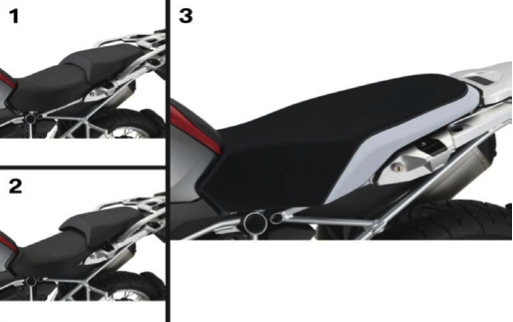
Seat Options
1. Standard rider seat: Height adjustable in two positions.
2. Riders low seat. Height-adjustable in two positions, so it is easier for the rider to put his/her feet on the ground, and therefore the motorcycle is easier to balance when stopped.
3. Riders high seat. Positioned higher and seat harder for off-road use.

Slim line seat helps off-road riders reach the ground with their feet.

The range of seats and positioning means that the seated height extends from 820mm - 870mm. Furthermore, a lowered suspension factory fit option is also available, taking overall possible seat height to 790mm. This is great news for the shorter rider, as they are generally not able to reach the ground on the GS.

16 Jan 2013

Moto Guzzi California 1400

Angela Freeman takes a look at the new Moto Guzzi California 1400

‘The sense of adventure and luxury, in perfectly balanced harmony.’ So says the official Guzzi literature for the long awaited new California.... Which comes in two variations: Touring and Custom.

After decades of promises from the company of a new updated bike, it seems that the wait has actually been worth it - this could be the most important bike that Guzzi have made in years.

The Touring is the California in its most classic expression, thanks to a great level of comfort, aerodynamic protection and load capacity.
Equipped with “Patrol” windscreen, supplementary chrome-plated headlights, 35 litre panniers, engine and pannier guard kit, the Touring is able to trot along all day with great comfort and a soundtrack to match, being powered by the largest V-twin ever seen before in Europe.

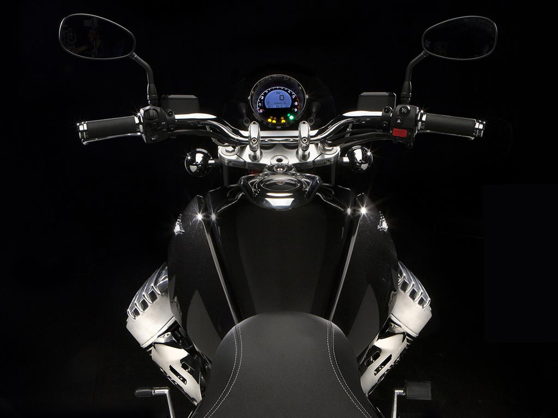
Special attention has been given to the chromatic colour schemes: white with dark pinstripes on the tank, inspired by the California Highway Patrol versions, or classic black with white pinstripes, reminiscent of the original versions, such as the V7 and 850 California. The LED lights look amazing and the overall look is very classy with lashings of chrome wherever you look - not sure how it would fare after a couple of British winters though!

The clocks are neat, functional and easy to read, and well laid out; there are inklings of the parent company Aprilia there with some of the switches being raided from their parts bin, but that’s not a bad thing. Everything looks fresh and modern, not futuristic like a Victory but not as retro as a Harley Davidson.

It’s a very big machine, not only in width, due to the massive cylinder heads on the transverse 8 valve V-twin engine, but it’s also very long; only a couple of centimetres shorter than a Honda Goldwing in fact. Weight could be an issue for the smaller rider, as the Touring tips the scales at a whopping 337kg before you’ve loaded it with luggage. The Custom should be slightly lighter, but probably not by much once you’ve accessorised it!

Interestingly, the California has pretty good ground clearance, and plastic sliders fitted to the footboards; cue much fun on twisty routes and roundabouts.

The addition of radial Brembo brakes is the first for a cruiser of this type, and should do a good job of hauling its significant mass to a stop without too much trouble. The engine may only produce 95bhp, but there is bucket loads of torque available; which is what you need for long haul trips on motorways.

The sculpted fuel tank holds around 20 litres of fuel, and the beautiful stylish panniers hold 35 litres of luggage and are lockable too; but they are bolted on to the frame so aren’t easily removed, and reports suggest that they struggle to accommodate a crash helmet, which is a shame. The frame itself is a new double cradle steel item, and is now the stress member rather than the engine as per older models. The engine itself is rubber mounted to eliminate vibrations.

The California Custom is the naked, hardcore version of the Touring.

It certainly looks every inch the bad guy! This can be seen in the details, such as the two-seater saddle boasting an Eagle logo, the drag bar handlebars with light-weight supports and the original rear shock absorbers with external tank. The design is also subtle, with minimal graphics based on textured colours such as mercury grey and basalt black, and black lacquered wheels with red Moto Guzzi logo and black wing mirrors.

Once in the saddle, the differences compared to the Touring emerge: the sport saddle and drag bar handlebars provide a low slung and backward sitting position over the rear wheel which is actually pretty comfortable. The California Custom, like the Touring, has cruise control as standard, with MGCT traction control which can be set at three levels of intervention and, thanks to RidebyWire, it is also possible to adjust the engine response according to three modes, Turismo (Touring), Veloce (Sport) and Pioggia (Wet), respectively. The Custom isn’t available in the UK yet, but it looks amazing and would definitely not look out of place in a Bond movie!

And if the rider of the California can choose the character of their motorbike according to the type of route and use, they can also adapt it to their personality, drawing on the most extensive accessories catalogue ever produced by Moto Guzzi. High performance silencers, chrome-plated and machined components, saddles of all types and materials, as well as support and the App which turns an iPhone into a supplementary dashboard to obtain all kinds of information can be found here.
Pricing is not too bad, with the Touring coming in at £15,770 on the road here in the UK. That’s more expensive than the Japanese competition; the Kawasaki VN1700 costs approximately £13,500 - but it is cheaper than the US bikes; for example the Harley Road King starts at £17,400.

I hope Moto Guzzi sells plenty of these bikes, the revamp gives the California a new lease of life and it really deserves to do well. Bellissima!

30 Nov 2012

2013 Ducati Hyperstrada

Angela Freeman examines the new Ducati Hyperstrada.  

Ducati have now revealed one of their newest machines to take on the Kawasaki Versys 650 and Triumph Tiger 800…. The Hyperstrada. A bike, Ducati claim, for those riders who find the current Multistrada ‘too powerful and intimidating’.

The Hyperstrada is probably better described as an extension to the Hypermotard family. ABS, DTC, windshield, side bags, dedicated ergonomics and a series of touring features offering a new choice for the budding tourer who doesn’t fancy the tyre shredding cababilities of the larger engined Multistrada and the SP version of the previous Hypermotard.

The original dirtbike-inspired look of the old Hypermotard has become more daring with the new model, thanks to the visibly higher ground clearance, the high and tapered tail and the narrow sides. This means that the bike can be used for urban commuting, B-road scratching, touring or for a day-out on the track.

Although maintaining the typical hand protectors of off-road models, the new Hyperstrada (as well as the new Hypermotard) offers redesigned rear-view mirrors in order to blend in perfectly with the model’s clean design and the need to use it in the city.

The Hyperstrada has also adopted a new 4-valve engine with a water-cooled cylinder, featuring a bore x stroke of 88 mm x 67.5 mm designed to achieve a perfect balance between usability and performance according to Ducati engineers: this is the new 821 cc Testastretta 11° engine which provides maximum power of 110 hp @ 9,250 rpm and torque of 89 Nm @ 7,500 rpm.

Ultimately, Ducati has managed to obtain a new engine that is ‘extremely enjoyable, performs excellently and which can significantly limit emissions of unburnt fuel’. Makes sense, as the Multistrada has never been what I’d call fuel efficient!

The new engine is equipped with an APTC oil bath clutch with ‘slipper’ function which can be activated with reduced force on the lever. All the models are now equipped with cable-clutch control; this has proven the best solution for this application in terms of build simplicity and reliability. The slipper function intervenes when the drive force is reversed and reduces the pressure on the clutch discs and so enables the vehicle’s stability to be maintained during aggressive changes typical in sports riding.

The rear suspension includes a Sachs monoshock which is easily adjustable in remote hydraulic braking in extension and preload, which gives the rider more control in being able to set the bike up just right for their personal needs.

The fuel tank holds 16 litres (4.6 litres more than the old Hypermotard), guaranteeing a greater range without affecting the bike’s fundamental and sinuous lines. I always thought that the old Hypermotard had a ridiculously small fuel tank, which rendered it totally useless for anything except city commuting, which ultimately isn’t what you buy a supermoto for!

I have to say I do like the new bike, I had a fondness for the old Hypermotard but it was simply too uncomfortable, too extreme for normal daily use due to the riding position and very poor fuel economy; and very expensive, which I’m guessing is why it’s never been a big seller for Ducati, unlike the Monster (which the old Motard shared it’s engine with).

The Hyperstrada will definitely sell here in the UK - not everyone wants a full on superbike with panniers and finicky manners around town, which essentially is what the Multistrada is; it’s a scaled down but very practical alternative to its bigger brother. The luggage looks to be of a good size and quality, the options list is pretty good; you can get bigger screens, extra power sockets, and various gadgets to make life that much easier on the road. The handling and brakes should be pin-sharp too, as it is with the majority of Ducati’s current range of bikes. Pricing seems to be reasonable too, with the base Hypermotard now costing just over £10,000 on the road. I definitely want a go on one - now, how long will it be before KTM brings out a baby Adventure model to compete….

Technical Specification and Features:

  • Magneti Marelli electronic fuel injection system. Throttle bodies with full Ride by Wire system 
  • 6 speed gearbox - Ratio 1=37/15 2=30/17 3=28/20 4=26/22 5=24/23 6=23/24 
  • Tubular steel Trellis frame 
  • Front suspension: 43mm USD forks 
  • Rear suspension: Progressive linkage with fully adjustable Sachs monoshock. Aluminium single-sided swingarm. 
  • Front brake: 2 x 320 mm semi-floating discs, radially mounted Monobloc Brembo calipers, 4-piston 2-pad, axial pump with adjustable lever, ABS 9MP as standard. Rear brake: 245 mm disc, 2-piston calliper 
  • Instrumentation: LCD display with DOT matrix area 
  • Dry weight 181kg 
  • Wet weight 204 kg 
  • Seat height 850mm (33.5in) 
  • Wheelbase 1.500 mm (59.1 in) 
  • Fuel tank capacity 16l - 4.2gallon (US) 
  • Warranty: 2 years unlimited mileage 
  • Service intervals 9,500 mi/12 months 

Available Equipment:

Ducati Safety Pack (ABS + DTC), 50 l (13.2 gal) semi-rigid side panniers with incorporated supports, touring windshield, touring seat, passenger grab handle, centre stand, larger front and rear mudguards, engine sump guard, two 12 V power outlets. The bike is ready for fitting of anti-theft system, heated grips, and sat-nav.

Base Price (OTR) £10,650

22 Oct 2012

Yamaha Moto Cage-Six Concept

The 21st century has seen massive growth in the extreme sports scene, both in terms of the number of people participating and also in the numbers of fans who follow it via social media and video sharing sites. Whether it's freestyle MX, downhill mountain biking, kite surfing or snowboarding, extreme sports have become more mainstream, and according to Yamaha, with it has come ‘a new look and a new attitude’.

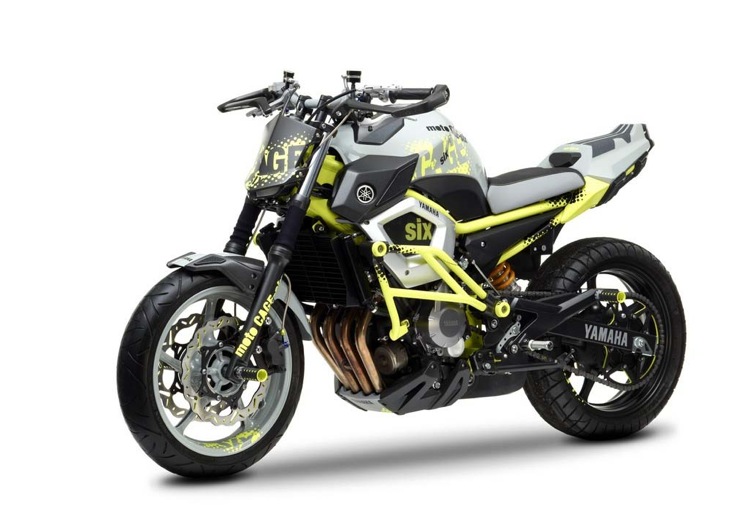
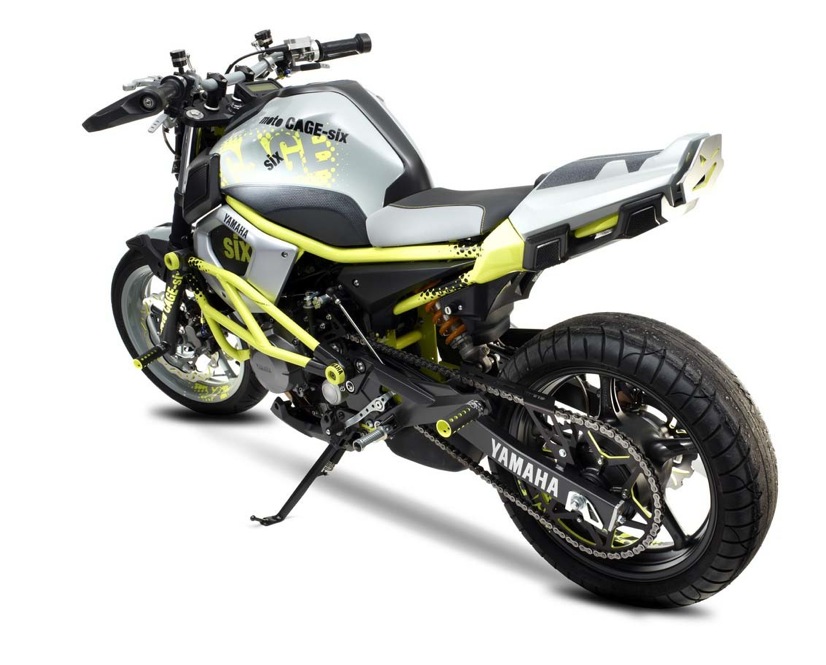
The Yamaha Moto Cage-six concept bike has been inspired by the motorcycle stunt riding scene which has now become an integral part of the motorcycle sub-culture. Stunt riders like Mattie Griffin and Chesca Miles are now rightly seen as professional athletes, and stunt riding competitions and shows have started to attract huge interest.
Yamaha Moto Cage-Six Concept

The Moto Cage-six is equipped with heavy-duty metal tubes that accentuate the stunt-inspired look and also offer extra protection to the engine cases. Built for the urban jungle, Yamaha says it has been inspired by a new generation of riders who want a machine that complements their lifestyle. This also explains the sump guard/skid plate under the engine.

Featuring next generation colouring and graphics, and a large rear sprocket, the Moto Cage-six demonstrates Yamaha’s interpretation of contemporary trends to young free-thinking riders; top speed isn’t everything anymore!

From the photos, it looks like the Moto Cage-six designers have had a ball raiding Yamaha’s extensive parts bin - the front end of the bike and the wheels come straight from the MT-03, complete with the universal hand guards used on the MT and XT range of road bikes; the 4 cylinder powerplant would most likely have been donated from the XJ6, which itself uses a heavily detuned R6 engine.

I think if it ever made it into production this engine may not be the most suitable choice for the type of riding the Moto Cage-six would be used for, due to its high revving nature. Possibly the new triple cylinder engine Yamaha have been beavering away on for a while would be the best compromise; it would have plenty of grunt throughout the rev range, as well as keeping overall weight down on the machine.

I love the styling; Yamaha certainly know how to make eye-catching concept machines, and many of the ones that have later made it into production have barely changed - good examples of this are the MT-03 and recently retired MT-01. Watch this space!

Article by Angela Freeman

16 Oct 2012

2013 Kawasaki Z800

Kawasaki reinvents the ultimate middleweight - Say hello to the new Z800!

Following on from the Z750, which recently has become outclassed, out-performed and out-styled by the competition - namely by the Triumph Street Triple, MV Agusta Brutale and Yamaha FZ8, Kawasaki proudly presents the newest model in the Z family.

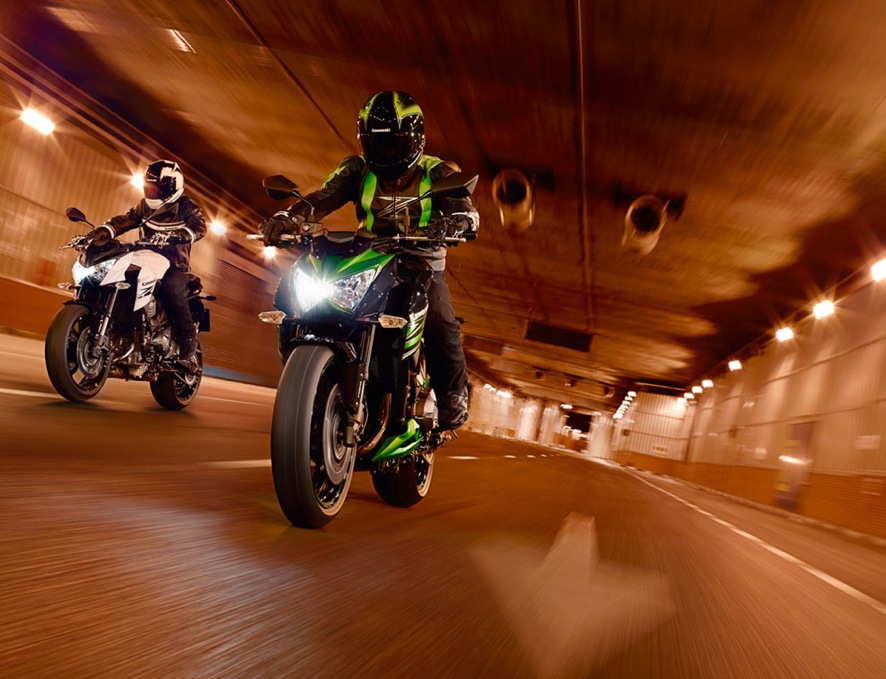
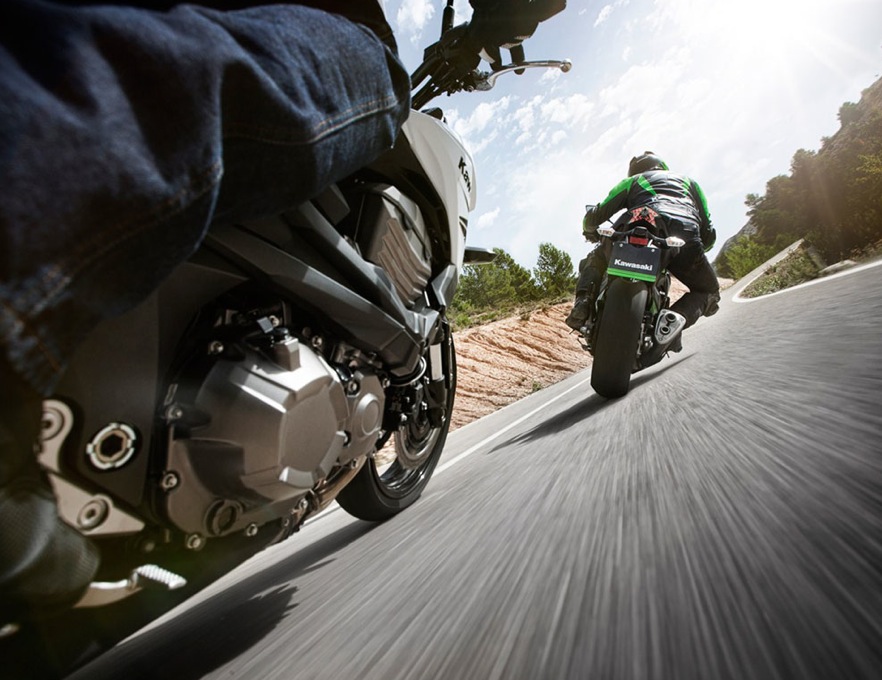
Forty years after the birth of the original Z, Kawasaki’s designers were given free reign to pursue a more vivid expression of the brand to compete far more closely with the competition, and going by these press release photos they seem to have come up trumps!

Apparently Kawasaki’s engineers were also equally unconstrained when it came to engine and chassis design…

Key Features

  • Larger bore size increases displacement from 748cc to 806cc 
  • Strong torque from low rpm, but retaining the high revving top end power that the in-line 4 cylinder engine is renowned for. 
  • Ultra-smooth power delivery, which should help with city riding and filtering. 
  • Reduced-power variation for Europe: 70 kW versions will be available to meet European restricted licence regulations.
  • Improved chassis: Sporty yet with a light, rider-friendly handling character, increased suspension and front braking performance, and slimmer ergonomics all yield increased chassis performance. Riding position looks to be more upright too. 
  • "Ferocious” design: New front cowl design is a key element of the Z800’s more aggressive styling. According to engineers, this styling apparently gives the bike a ‘fiercer glaring appearance. The image of the bike as a whole with the lower fairing appearing to grip the engine is like a snarling beast holding prey in its mouth’. Scary stuff! 
  • New instrument panel design complements the bike’s exterior design and features multi-function LCD screens and a level-meter-style tachometer.  
Let’s be honest, the Z750 was starting to look a bit dated - it was also pricey, overweight, too peaky with its power delivery and didn’t handle as well as it should’ve done. The competition had moved onward and upward and the Z750 was quickly being left behind.

The Z800 looks amazing in these photos, and definitely sounds worthy enough to deserve its place as the little brother of the Z1000, which itself is an awesome arm-wrenching brute of a bike.

It’s about time that the middleweight naked sector had a kick up the backside from Kawasaki, as many could accuse them of sitting on their laurels and neglecting a very popular market in motorcycling. I for one am hoping that this bike lives up to the hype and does just that!

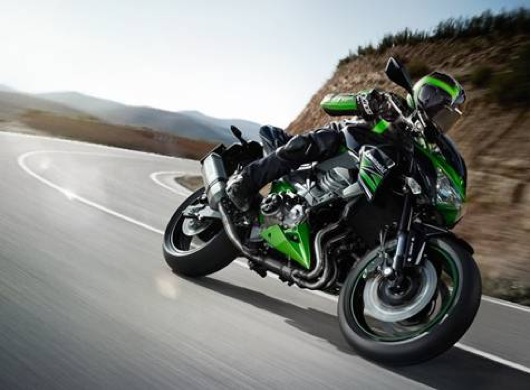
The seating position looks quite comfy, assuming that the rider in the promo pictures is of average height, say between 5ft 8ins and 5ft 11ins. The pegs are set a fair way back but it doesn’t look to be compromising the reach to the upright bars.

I’m glad the side mounted exhaust has stayed, underslung exhausts may look tidy but it can reduce the choice for aftermarket cans somewhat - and also with the British weather, finish can be compromised when it gets coated with crud and salt.

Hopefully there will be a comprehensive accessories list on offer, I can see this bike being popular with riders wanting to do the odd track day but also needing something comfy and practical enough for longer journeys; good mounting points for tailpacks and extra luggage would be a good idea.

I wouldn’t say it was ideal for pillions, the seat looks increasingly narrow and precarious; the lack of pillion pegs on the promo bikes prevents me from guessing as to how cramped it may be on the back though. Perhaps on short journeys it would be ok but I don’t think taller pillions would fancy going much further than 30 miles on the back!

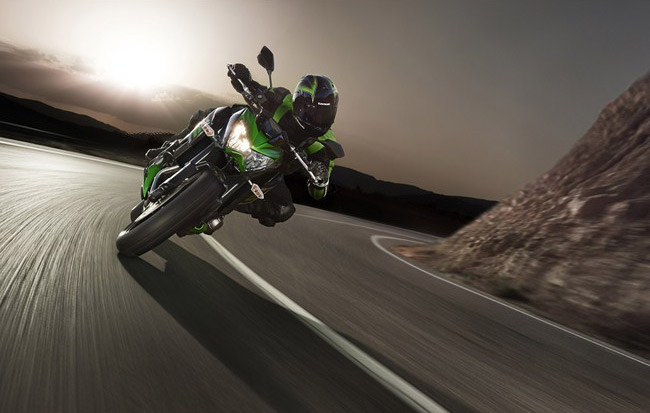
I for one love the styling - it’s great to see the green and black paint scheme back; and it looks very aggressive, I’m sure it will, and should be, a serious competitor to the Street Triple (which personally I’m not a fan of, as the new headlights make it a bit too feminine looking) especially with the retuned engine.  Perhaps Kawasaki have managed to get the 4 cylinder as near as they can to the flexible power delivery of a triple? The Yamaha FZ8 has been criticised for being a bit too rev-dependent, and the price is also a bit salty, unless you can get a good deal on an ex-demo bike from your local dealership.

I’m guessing that pricing on the Z800 will be competitive as it always is with Kawasaki bikes, and the finishing (especially chrome and paintwork) of recent models looks to have improved greatly; so with a bit of TLC, i.e. frequent rinses after riding, it should easily see itself through the worst British winter without any major grumbles.

Overall, I’m looking forward to seeing the bike in the flesh and having a go on one - waiting list permitting that is!


Article by Angela Freeman

18 Sept 2012

2013 Kawasaki ZX-6R Ninja

It’s time to go back to the future! Kawasaki has just confirmed that they will be releasing a 636cc ZX-6R Ninja in 2013.

Capitalising on the strengths of the highly competitive engine and chassis package of the 599cc Ninja ZX-6R (ZX600R), the new bike builds on these further, offering performance in a wider range of situations.  Sounds great already!

With displacement increased to 636cc, the new bike offers a broader spread of torque throughout the rev range as well as great usability in everyday riding situations. Additionally, with chassis settings now more focused on winding roads, it will be able to deliver greater feedback and confidence in situations, from the track to the urban city streets.

This is, according to Kawasaki engineers, the most advanced mid-size supersport model they have ever produced; the new Ninja ZX-6R is loaded with cutting-edge technology to help a wider range of riders enjoy its serious sport riding performance. Features like 3-mode traction control (KTRC), power mode selection and anti lock brakes (KIBS) come directly from their flagship models. There are apparently also new fork and clutch technologies fitted to further increase this bike’s potential for fun and exciting riding.

KEY FEATURES
  • Increased displacement from 599cc to 636cc
  • Strong low-mid range torque and easy-to-control engine character means increased everyday flexibility.
  • Next-generation forks: SFF-BP (Separate Function Fork - Big Piston) by Showa delivers both racetrack performance and everyday usability.
  • The F.C.C. Assist & slipper clutch mean that actuation is light, with a sporty feel. The bike also has a back-torque limiting function.
  • Kawasaki’s latest traction control system and 2 selectable power modes give a total of 8 combinations to cover a wide range of riding situations. 
  • Supersport-grade ABS: KIBS (Kawasaki Intelligent anti-lock Braking System). This system gives the minimal amount of intrusion during hard riding, helps suppress rear wheel lift during hard braking; and takes into account back-torque from downshifts.
  • Latest aggressive Ninja styling; elements are based on the Ninja ZX-10R for a strong family resemblance.

This must be the most eagerly anticipated bike of the coming year for Kawasaki fans and enthusiasts; the ZX-6R has always been a popular motorcycle both on the road and the track, and the old 636 carbed model was a real cracker.  It was a real shame when Kawasaki returned to making 600cc machines, but this was mainly a move made to help with racing, as the 636 was not eligible to compete in the British, European or World Supersport categories due to its increased displacement. In response Kawasaki did make a 6RR model homologated for track use, and reports suggest that this will again be the case.  This would be a good thing, as the 600cc bike would be mainly aimed at the trackday and club racing enthusiasts.

High revving hard riding sports bikes can sometimes be just too harsh and uncomfortable to ride on our potholed British roads, so the introduction of a slightly larger capacity bike with more torque means that you won’t be hunting through the gearbox to find the powerband for smooth overtaking, fuel economy should be better as the engine won’t be working so hard, and the riding position doesn’t look as extreme as some earlier incarnations of the ZX-6R so comfort may not be so much of an issue, especially on longer journeys.

Styling-wise the bike looks great in the promo pics, Kawasaki have never failed to make a ferocious looking sports bike and this one is no exception; taking on features from the brilliant ZX-10R is a brilliant move.

Pricing hadn’t been released at the time of writing, but a small increase over the cost of the current model wouldn’t be a bad thing; you’ll be getting a lot of bike for your buck!


©Angela Freeman

17 Sept 2012

Changes to Yamaha Models for 2013

It’s that time of year again - manufacturers are releasing details of changes to current models to refresh them for next year’s market!

Yamaha have just made public some subtle changes to the following bikes:

WR125R and WR125X

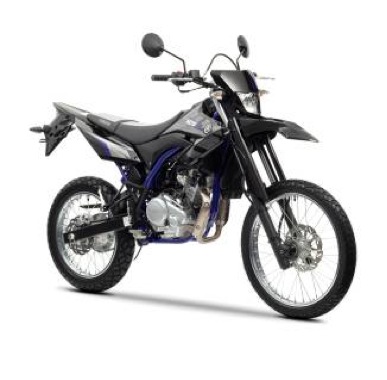
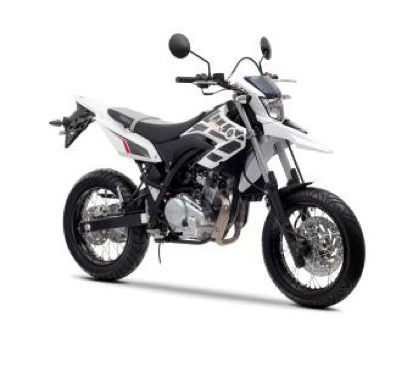
These great learner legal machines now come with updated graphics, and the R model is now available in Sports Black. Both powered by a surprisingly willing and free revving125cc fuel injected single cylinder engine (which makes approx 15bhp) they are really good fun to ride; and being full sized they look the part too, especially with lots of quality parts such as wavy discs on the R, and a 140 section rear tyre on the X, as well as matching the rugged styling of their bigger brothers, the XT660R and XT660X.


XT1200Z Super Tenere

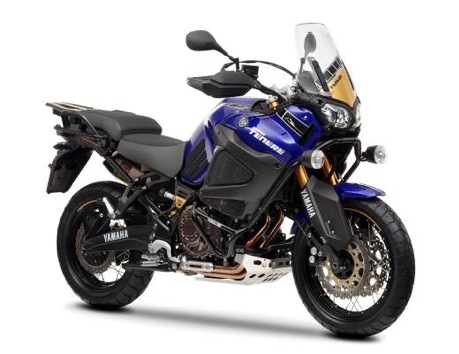
The surprisingly nimble XT1200Z Super Tenere Adventure bike will feature new style graphics on both the Yamaha Blue and Competition White colourways. Well, if it’s good enough for Nick Sanders…..

For 2013 the Worldcrosser kit will also be available for current owners of the standard spec Super Ten who wish to enhance and upgrade their bike for a worldwide adventure without having to trade in their old bike for a new fully specced one. Prices will probably be a little salty, as all official Yamaha parts tend to be; but if you want the authentic look and don’t fancy trudging through the latest Touratech catalogue this may be your best bet. It certainly makes the Ten stand out more and will help to protect the more fragile components, although I think the sump guard should have been a standard fitment.

Other changes across the range include the removal of the fender stay on the XVS1300A and XV1900A cruisers, new graphics on the Yamaha Blue variant of the kiddie friendly PW50 mini bike and WR450F competition bike, and numerous cosmetic and colour changes to the XJ6 range; which are detailed in an earlier article here on speedmonkey.co.uk.

©Angela Freeman

11 Sept 2012

New bike - Kawasaki Ninja 300

It’s about time! It looks like the glory days of the small capacity sports bike have returned; remember the Suzuki RGV250, Yamaha TZR et al? Lightweight bikes with nimble handling and plenty of poke, and also looked the part too; but at the fraction of the cost of their bigger, thirstier brothers….

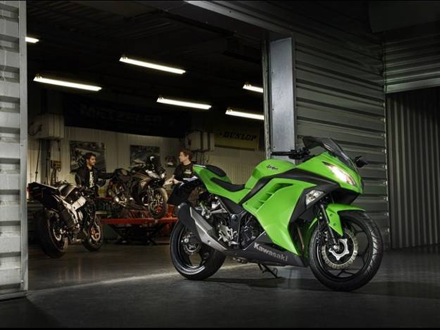
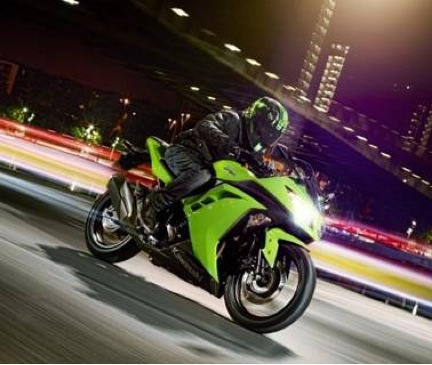
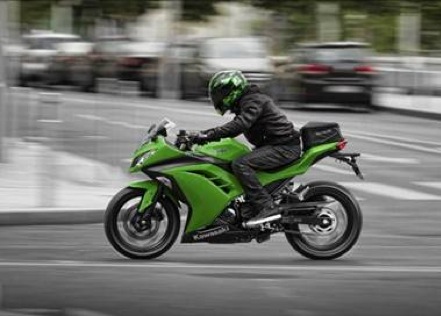
Enter Kawasaki’s new mini Ninja; the 300. Essentially it was developed along with the 250, but has trick parts usually associated with the supersports ZX6-R; fuel injection with dual throttle valves, slipper clutch, a wide rear tyre, torque limiter and even optional ABS!

It looks from the photos that a lot of bodywork has come from the ZX10 parts bin, including the screen, headlight cowl and the tail unit, which is no bad thing.

The engine is based on the carburetted 250 Ninja parallel twin, but boring it out to 296cc and adding fuel injection and better cooling technology means that it has a better spread of torque, power is boosted to a claimed 38bhp (which means it will sit nicely within the new learner legal guidelines set by the EU, which come into force in January 2013) and weight is kept to a minimum. Kawasaki states the kerb weight of the new Ninja 300 will be 173kg; which is just 1.8kg heavier than the current 250.

It all looks and sounds pretty good; I for one am impressed by the technical specification and the bike actually looks a lot bigger than a 300cc machine - it reminds me of the Yamaha YZF-R125, which dimensions wise looks almost identical to its bigger brother, the YZF-R6. And this can only be a good thing for younger riders and taller riders too, as many 125 and 250’s are tiny, and look very spindly especially with a larger rider on board!

I think Kawasaki are on to a winner here; the market has been seriously lacking recently when it comes to smaller capacity machines. If the price can be kept relatively low, it should sell by the bucket load; not all motorcyclists want a screaming 4 cylinder 600cc supersports machine once they’ve passed their Module 2 test - there seems to be nothing between 125 and 600cc that can be used for commuting during the week, and carving up the twisty B roads at weekends.

Where there was once a flood of mid capacity bikes available, such as the ZXR400 race rep, Bros 400, XT500 etc, now there are a few 250’s before you hit the larger capacity single and parallel twin bikes like the ER6, Versys, MT-03 and XT660. In order for the motorcycle industry to be kept alive, we need the gap to be plugged by affordable, reliable and cheaper to insure and run motorcycles. The Ninja 300 may just start a new trend.

© Angela Freeman

6 Sept 2012

Motorcycle Post Test Training - Part Five


So, you’ve read about the types of training available to bikers of all ages and abilities, but what if you can’t afford to do any at the moment, or just don’t have the spare time in your diary? Well, I can point you in a direction where you can learn the basics for free. That’s right; this stuff won’t cost you anything!

Norfolk County Council’s Road Safety section has developed a series of free rider skills download sheets designed to assist all motorcycle riders in their everyday riding. These skills and techniques were established by generations of police instructors through their training manual Motorcycle Roadcraft, in its various evolving forms. The manual itself is also used by RoSPA, the IAM and numerous private training bodies for one very good reason, it works! The only trouble with it is how it reads - it is very formulaic and you can easily forget what it is trying to teach you; whilst the use of diagrams is better than reams and reams of text, it all becomes ‘samey’ far too quickly and as a result you lose focus and interest!

This potentially life-saving information is too valuable not to be readily accessible; so the downloads break the material down into easily readable topics with accompanying embedded videos to illustrate the main points where applicable. These videos were filmed on Norfolk roads, but the principles will be the same regardless of where you live in the country. The topics are as follows:

  • Hugger Rider Skills - Cornering
  • Hugger Rider Skills - Overtaking
  • Hugger Rider Skills - Filtering
  • Hugger Rider Skills - Police System
  • Hugger Rider Skills - Observation and Planning
  • Hugger Rider Skills - Junctions
  • Hugger Rider Skills - Wet Weather Riding (to be released late 2012 - early 2013)

You can download the topics from the Think Norfolk website; the videos are embedded but you can search for them on YouTube by typing in ‘Hugger Rider Skills’ into the search facility on the site.

If you have not taken any post test training, it may make you think about things slightly differently. It will help improve your safety as well as your enjoyment of riding by being more in control of your environment and being smoother and more accurate in how you ride. 

These downloads are not a substitute for training, but can give you a good starting point as to what you need to focus on when you do enrol on a training course; be it BikeSafe, ERS (Enhanced Rider Scheme), IAM or RoSPA. 

A head start is better than going into training blind….


©Angela Freeman


Motorcycle Post Test Training - Part Four


I’m going to go off kilter for a second now - have you heard of the I2I Motorcycle Academy, based in North Yorkshire?

They are responsible for an innovative variety of new motorcycle training courses, intended to appeal to all riders including those that might not be convinced about conventional training packages. These fun and educational courses are run all over the country.

The MC1 and MC3 courses concentrate on exploding some common motorcycle myths understanding the physics of motorcycling and how to use these forces to your advantage. There will be exercises to increase self belief & confidence in the bike to remove such things as panic braking and learning how to easily control a 'tank slapper'. These are run at an airfield in a controlled environment, and you use your own bike.


They really are brilliant - I have completed the first one here in Norfolk, and I must say it was very well organised, the team involved all the participants; asking us for experiences we’d had on bikes which influenced the riding style we had, then showing us why in most cases the things we thought would happen actually couldn’t due to simple physics! Mind boggling!

Different exercises were demonstrated on two different types of bike, and afterwards we had a go ourselves, on our own machinery. I won’t spoil any of it for you, but although it did scare a few of us at first, we soon realised that our bikes were capable of much more extreme stuff than we could throw at them! I can brake harder and safer, corner quicker and overall have so much more control and confidence than ever before…

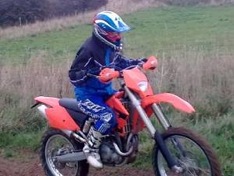
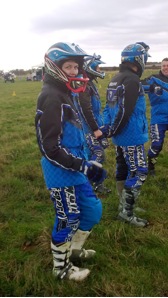
The MC2 course is run up in the Yorkshire Dales, and is taken on KTM off road machinery. I did this 1 day course in October 2010 (pictured left and below) and loved every minute of it, even though I’d never ridden a motocross bike or done any off-roading!
It was fairly expensive to do, but considering all the equipment is included in the price (bike loan and all the Wulf Sport kit I’m wearing in the photos) it’s good value. It concentrates on the basic skills of MC1, but in a more extreme environment. Yes, I fell off a lot and got covered in mud, but I really learnt a lot including how to safely transfer weight to maximise grip, do jumps and land safely afterwards, control skids and do powerslides. Awesome stuff!

The MC4 course is also run up in Yorkshire on an airfield, and is conducted on supermotards. The skills are roughly similar to that of MC2, but tested on tarmac on high performance bikes.
Recently the guys at i2i have started doing tutored trackdays all over the country, which look like great fun.

i2i MCA have a new website that you can book onto directly. You can view photos and a full breakdown for every course they do. You can also make payments through their secure payments page on www.i2imca.com

©Angela Freeman