Showing posts with label Max. Show all posts

26 Oct 2013

Shenanigans - The death of a Mazda MX-5

This is an article by American writer Max Prince, who is currently living in the UK and studying for his masters degree in auto journalism at Coventry University. He fondly remembers his favorite Mazda MX-5 Miata, and how his best friend murdered it.

A while back, my friend and college roommate John spent two years trying to kill a Japanese roadster. He owned a turbocharged black 2002 Subaru Impreza sedan, but had been bitten by the rear-wheel drive bug (after taking my BMW M3 for a jaunt) and purchased an early-90’s Mazda MX-5 Miata, which spent most of its time being flogged like an insolent American in Singapore. It was John’s ruckus-mobile - the ‘I give up’, elastic waistband sweatpants of motor vehicles. Wearing a woefully thin coat of sun-beaten green paint, its suspension was modified with Koni shocks (which he blew jumping railroad tracks) and lowering springs, along with some elementary power-adders and a host of ‘quirky’ qualities.

To begin with, it had an air horn. Not like the cool, scare-girls-jogging air horn; a creepy, feminine one. My guess is the previous owner was a Gacy-esque birthday clown who used it to lure unsuspecting children into his basement. The seats were worn through, the tires perpetually bald and, to add insult to injury, it only ran on three cylinders. John did everything he could to abuse this poor car, hoping to fully detonate the factory engine as to justify swapping out its meager 1.8-liter four-banger in favor of something more virile. But, alas, he had no luck. That little MX-5 just took it, day in and day out. I remember him once getting annoyed by the oil light and begrudgingly funneling a few quarts of used 10W-30 into the reservoir until the warning lamp went off. ‘Finally,’ he murmured as the Miata sputtered to life, the three remaining functional cylinders panting under the stress of recycled motor oil.
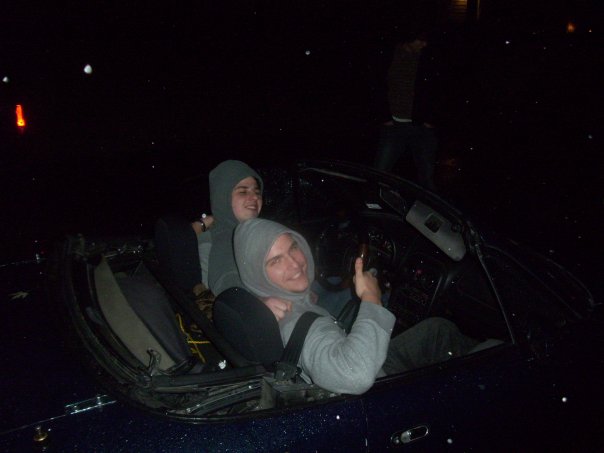
One spring afternoon, John and I were driving the Mazda to get lunch when it began pouring down rain…inside the car. Apparently, his impatience had inspired a habit of retracting the convertible top (by hand) while traveling at highway speeds. This, of course, had torn the stitches, letting Mother Earth into our cabin, unsolicited. Not to worry. Roaring in three-cylinder gloriousness, we slid into a small parking lot (miraculously, the parking brake never failed) and John sprinted across the asphalt into a nearby store. He emerged minutes later with a staple gun and a roll of super-absorbent, As-Seen-On-TV shammy towels. Four fabric cuts and several hundred staples later, we were dryer than nuns on a Sunday.

What we learned, though, was that the holes in the top had actually saved our lives. The cat-back exhaust system John had fitted to the Mazda leaked worse than a Hannah Storm backyard barbeque. As soon as he sealed off the cockpit, it began stinking like a morgue and getting us both high as kites. From that point forward, the MX-5 became a ‘top-down’ car (not unlike an ‘outside cat’), which resulted in some peculiar ecology after the rainy spring that followed, ultimately leading to the car’s demise. But we’ll get to that later…

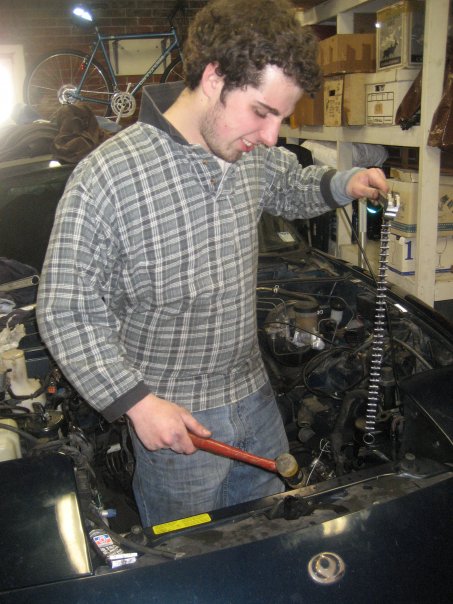
I remember another time soon after the exhaust incident when the factory MX-5 alternator failed. A friend of ours had owned a slew of Mazda RX-7 sports coupes (as those people usually do) and a garage packed with spare, leftover parts. ‘Whatever, it’s all Mazda,’ John said. He pop-started the car about eighty times en route to the garage in order to keep it running. When he arrived, however, the reality of cross-chassis incompatibility kicked in. Not to be discouraged, he (somehow) retrofitted the Wankel rotary alternator to his MX-5 using wire strippers, metal washers and several sticks of used gum. Believe it or not, it ran under that configuration for several months.
It was even crashed into a curb at one point. John had gone out on the town and had a few too many Budweisers, but compelled by the liquid bravado he’d taken to a blonde and wanted to bring her back to his house. Realizing he was far too inebriated to drive, he insisted she sit on his lap while our friend Thomas drove them home. Caught up in the moment with the top down, John demanded that Thomas do a few donuts at the upcoming roundabout.

Only one problem: Thomas was a terrible driver.

You can see imagine how that one ended. Still, smashed bumper and all, the MX-5 kept chugging.

So how did that doleful MX-5 go out? Well, one afternoon I got a call from John. He sounded disappointed and almost solemn - by his tone I was worried someone had died.

“Max?"

“Yes?”

“I need to sell the Miata.”

“Why?”

“Remember how the exhaust made it into a top-down car? And then it, like, rained and stuff?”

“Yeah. Mold?”

“Worse.”

“What could be worse than mold, John?”

“Spiders.”

Somehow, someway, the MX-5 had spawned its own unique ecosystem and a hoard of spiders hatched underneath the floor mats and burrowed into the carpet. Air horns, exhaust poisoning, front-end collisions, ill-fitting engine parts, burnouts, stunt jump, a torn top and twenty-five percent compression loss - John and the MX-5 could bear it all. But not spiders; John hated spiders. His attitude towards any type of arachnid made the Texas Border Control look like a welcoming party.

“I have to sell it, man.”

So, what’s the only thing that can kill a first-generation Mazda MX-5 roadster? Spiders - hundreds and thousands of baby spiders.

Rest in peace.

30 Sept 2013

Ode to the Volkswagen Camper Van

VW has finally put its T2 Camper out to pasture, officially ending production of the final old school microbus. Surprisingly, this has Max Prince all warm and nostalgic.


The press release from Wolfsburg read simple as a bumper sticker: The Camper Van is dead. Long live the Camper Van.

Yes, the T2-gen Type 2 - the last classically styled Volkswagen live-in trim microbus - has finally bitten the dust, set to cease production in Brazil later this year. The axing of an old car rarely tugs at my heartstrings, and the Camper Van should lend little exception; it was introduced by VW in 1951, far before my time, and the last thing a sports car enthusiast should care about is a 29hp split-window panel van. But, while never a dream car, the Camper Van was the car of my dreams.

For years, my father tried lulling me to sleep with tales of insatiable teenage wanderlust and his travels in far-off lands - a hopelessly ineffective method, given the thrilling nature of his exploits. He hiked unperturbed South American mountain passes and explored rural Sri Lanka with an outlaw journalist. He crossed Vietnam on a ’59 BMW R60, was detained on suspicion of espionage at the Cambodian boarder, then moved to Zhujiajiao and lived with a local family, all simply for adventure’s sake. Of his many stories, though, I most enjoyed hearing of his journeys throughout Mexico in a liberty blue and ivory-paneled 1961 Volkswagen T1 Camper.

For Baby Boomers, the Camper was oft-used as a tool for running away - be it from social breakdown, an unjustifiable war, or merely the pangs of adulthood - but my father’s VW was always running towards something, an important distinction to recognize. He filled its windows with the world, vast and strange from the Newark slum of his youth, two best friends in tow. My father chose the Bus as much for its ubiquity as its utility; in Mexico, he told me, regardless of direction, you were never more than a stone’s throw from replacement parts for the 1.2-liter air-cooled boxer or four-speed manual transmission. Volkswagens had been assembled in Mexico since June of 1962 and, beginning in 1970, Type 2 vans rolled out of a 2-million-square-meter plant in suburban Puebla, 80 miles southeast of the capital. Any mechanic worth his salt (and most that weren’t) could tune-up a Volkswagen Bus while blindfolded, drunk, and distracted.

Following several days of quarter-tuning and fender-kicking in Morelos during the summer of 1972, my father finally relented and limped his Camper towards Cuernavaca’s outskirts to have it looked over. The town’s blacksmith - who was also its "vulcanizadora" (fixer of flats) - agreed to do the work. Once he’d finished, the engine idled flatly and revved without hesitation; my father laid down a few Pesos, shook the vulcanizadora’s hand, and trundled off into the mountains. No more than ten miles later, it became clear that, despite running smoothly, the VW was suffering from a decisive loss of horsepower - with only 29 to account for, you notice when a few stray from the stable. Whereas the van protested hills before, it would now simply quit on inclines. Prodding around the engine compartment, it quickly became apparent to my father that his uprated carb (a $100 option) was missing, and had been tidily replaced with a standard junkyard unit.

“I think you owe me a carburetor,” he said, once back at the garage.
“I do not know what you are speaking of, señor,” the mechanic replied, grinning, “I just made it run better.”

In the end, they negotiated a trade: the vulcanizadora could keep my father’s carburetor in exchange for a tune-up, seven gallons of Mexican gasoline, and a tin of sandwiches, crusts cut off.

He drove on, engine churning confidently, along red dirt roads since paved, through beach villages now resorts, accompanied by friends he seldom sees but speaks of often, with little to his name but the pink slip to a ‘61 Volkswagen Type 2 Camper.

Article by Max Prince

You might also like:

Volkswagen Kombi Last Edition - how you can get hold of one
Brazilian barn find - a ton of old VWs 

29 Aug 2013

Head-On Collisions, Steve Jobs, and the 2014 Mercedes S-Class

There’s an old joke that goes something like this: Upon arriving home from work, a husband comes in the front door of his house and is immediately smothered by his loving wife.

“I’m so relieved you’re home safe!” she says into his ear, hugging and kissing him. “I was so worried for you. I saw a report on the news that some maniac was driving down the highway in the wrong direction!”

“I know honey,” the husband exclaims, “but it wasn’t just one car - there were hundreds of them!”

Okay, maybe not exactly the cutting edge of comedy, yet I couldn’t help but remember this punch line when looking over the new 2014 S-Class. Though I haven’t gotten my mits on one, the spec sheet is mighty impressive. Merc’s redesigned super executive sedan has features like seatbelt airbags, dual split-screen 12.3-inch digital displays, cloud connectivity to Facebook and Google, reverse-flow seat ventilation fans and a hot massage function with 14 separate air bladders, allegedly developed with physiotherapists and psychologists (seriously). It actually has something called ‘Magic Body Control’ - with a price tag north of $90,000 due at launch, it’d better pull rabbits from hats.

What has me quaking is not the 2014 S-Class’ new Night View Assist PLUS system (which shines a lamp on animals in the road, then strobe lights them into an epileptic seizure), but rather the string of half-cocked imitations that surely will follow. Mercedes’ powerhouse flagship is the oracle of automotive technology - in 1959, the S-Class was the first car with designed crumple zones; standard air-ride suspension in 1966; anti-lock brakes in 1978; soundproofed windows in 1991, and so on and so forth. This means that, within the next year or two, every automaker will be attempting to mimic these technologies into their own more affordable, more accessible models. Therein lies the problem…

It’s true that features once exclusive to those Bentleys and Porsches of the world now come standard on vehicles with a GM badge. Because of this, there exists a large constituency of car buyers and enthusiasts who now believe that the only reason to buy something upmarket is a chronic case of badge snobbery, with occasional pangs of cynicism. While I’m a staunch proponent of equal access to technology (my father was sure to impress his 1960s ‘power to the people’ mentality onto the firstborn son), the real difference between a Ford Focus and an S-Class is the not the volume of features, but whether they actually work.

Pondering this led me to watch the late Steve Jobs deliver his keynote speech at the iPhone’s worldwide unveiling in 2007. Admittedly, I am not a Jobs worshipper. Yet I was taken by how he emphasized again and again the product’s functionality, and that any features not intuitive should (and were) eradicated. The problem with other ‘smartphones’, he said, is that they weren’t ‘smart’ at all.

For more than a half-decade, scores of mobile devices, ranging from one-uppers to blatant rip-offs, have tried besting the iPhone; none have been successful.

Such has been the case for so many affordable sedans of late, with manufacturers seemingly determined to install upmarket bits into standard cars. With the limitations of price-point budgeting, sans extensive R&D, those automakers outside the premium segment have mucked up a host of innovations into shoddy imitation. Hell, even those within the upper realm have gotten a bit big for their britches on more than one occasion.

Insert obligatory BMW iDrive joke here.

This fetishizing of features only serves to appease two crowds: dealers attempting to persuade new car buyers with a spectacular (looking) sales brochure, and those in the Look-What-It-Can-Do Club who live solely on the one-time ‘oohs’ and ‘ahhs’ of their family and friends. For most consumers, badly-cloned luxury technologies merely complicate ownership, inhibit the driving experience, and leave hundreds of additional parts (all made on the cheap, of course) to malfunction and cost thousands to repair.

If Steve Jobs should be commended for anything, it was his infallible desire for functionality and merciless expectations. When Apple’s original MobileMe cloud system debuted it 2008, it was plagued with syncing bugs and characterized as being an ‘unfinished product’ by reviewers. Jobs called the MobileMe development team in for a meeting and asked, “Can anyone tell me this product is supposed to do?” The designers took turns answering.

“Then why the fuck doesn’t it do that?” he said.

The project lead was then fired on the spot.

My fear is that, with the debut of the new S-Class (and its competition, in tow), Ford will move on to copying night vision and animal strobe lamps instead of reengineering SYNC Touch into a system that actually works properly. Innovation simply for the sake of saying so is spreading entry-level cars too thin; Mercedes has the privilege to engineer hot message seats because it has already mastered the basics. Culinary students don’t take a crack at pâté de foie gras before perfecting oatmeal.

In a recent test by Automobile, infotainment systems by Cadillac, Toyota and Hyundai all failed to top 3 of 5 stars in the Ease of Use category. Analyzing the sharp decline in Initial Quality Study (IQS) last year, J.D. Power pointed to infotainment units, with ‘hands-free systems failing to recognize voice commands’ cited as the single most-reported problem. In fact, owner-reported issues with factory hands-free systems has climbed an appalling 137% over the past four years. I find this to be incredibly disturbing, and indicative of an even more disturbing trend.

No doubt, automakers have already begun tearing apart the 2014 S-Class in a mad dash to replicate some of its features for a nickel on the dollar. But what if the husband from that old joke was right, dangerously facing hundreds of cars with mediocre sat-navs that had haphazardly sent their owners the wrong direction on the freeway.

The punch line wouldn’t be so funny then, would it?

Article by Max Prince

See Max's Speedmonkey columns here and his own website (which is excellent) here

8 Aug 2013

5 Things New Cars Could Learn From Old BMWs

BMW M5

1.) Fast cars don’t have to look fast

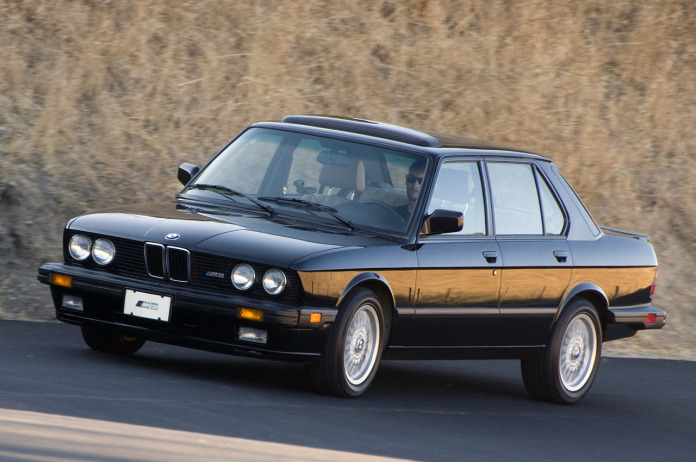
When ///M cars debuted, the vast majority of the population could not identify a motorsport-tuned variant from its base model counterpart unless tri-color badges were staring them in the face. Part of what made the E28 M5 so fabulous was its subtlety - a tweaked airdam here, a lip spoiler there, and a few small emblems. In an era of gaudy, big-face watches and fetishized ‘Type-R’ branding, it seems the coolness of a sleeper is lost on most automakers.

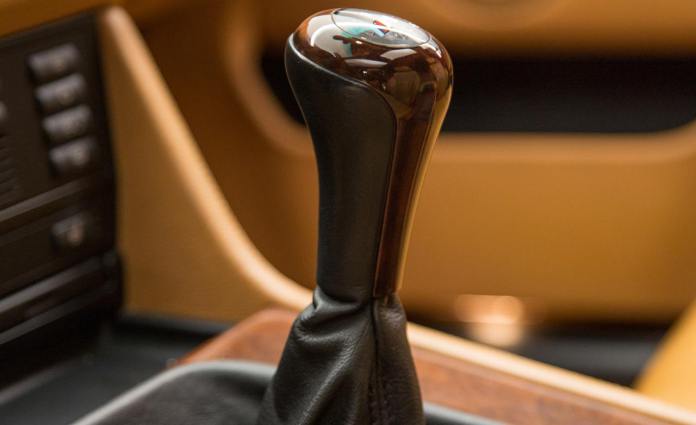
2.) Three pedals and a gear level

Though we’re fighting a losing battle on this one, but any motoring writer who actually enjoys motoring must bemoan the death of the manual transmission. By the mid-2000s, paddles were rapidly becoming the go-to choice for new sports cars. By keeping slick five and six-speed ‘boxes on life support, BMW gained goodwill with enthusiasts that is still felt today; we won’t soon forget that the M5 was available only in manual configuration until 2005

3.) Naked engine bays

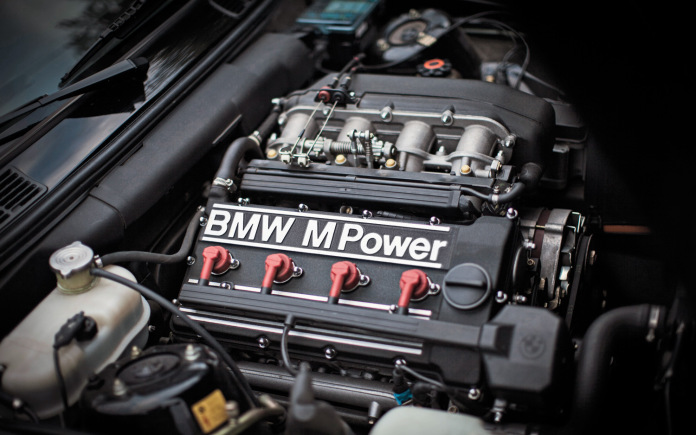
Stephen Bayley touched on this in his August column for Octane, and I think it bears repeating. Though he mainly spoke about the ‘visual drama’ in early carbureted Jaguars, BMW let its engines go relatively nude throughout the 80s and 90s. Few moments are more gratifying than popping the hood of an E30 M3 or M635CSi and being greeted by a stack of exposed individual throttle bodies.

4.) Ergonomic gauges

Never - not once - have I ever climbed into a BMW and found my view of instrumentation obstructed. Those big, clean, simple VDO gauges (especially in the E36) are absolutely spot-on. It amazes me that the dramatic (and wonderfully useful) progressive oil temperature lights across the E46 M3 tachometer during warm-up still aren’t in every sports car.

5.) Design language across model range

BMWs ability to keep solidarity across its lineup actually made each model look even better. Sure, they all had the Hofmeister kink, kidney grilles and propeller logos, but each car was distinguishable and proportionate. Compare an E30/E28/E32, or E46/E39/E65: the fluency and sport/luxury ethos across an entire lineup makes many of today’s automakers seem disjointed. Even as exotic and wild as the M1 was, it still looked like a BMW.

Article by Max Prince.  Take a look at Max's site here

9 Jun 2013

Le Mans Testing: Audi Prepares R18 e-Tron Quattro

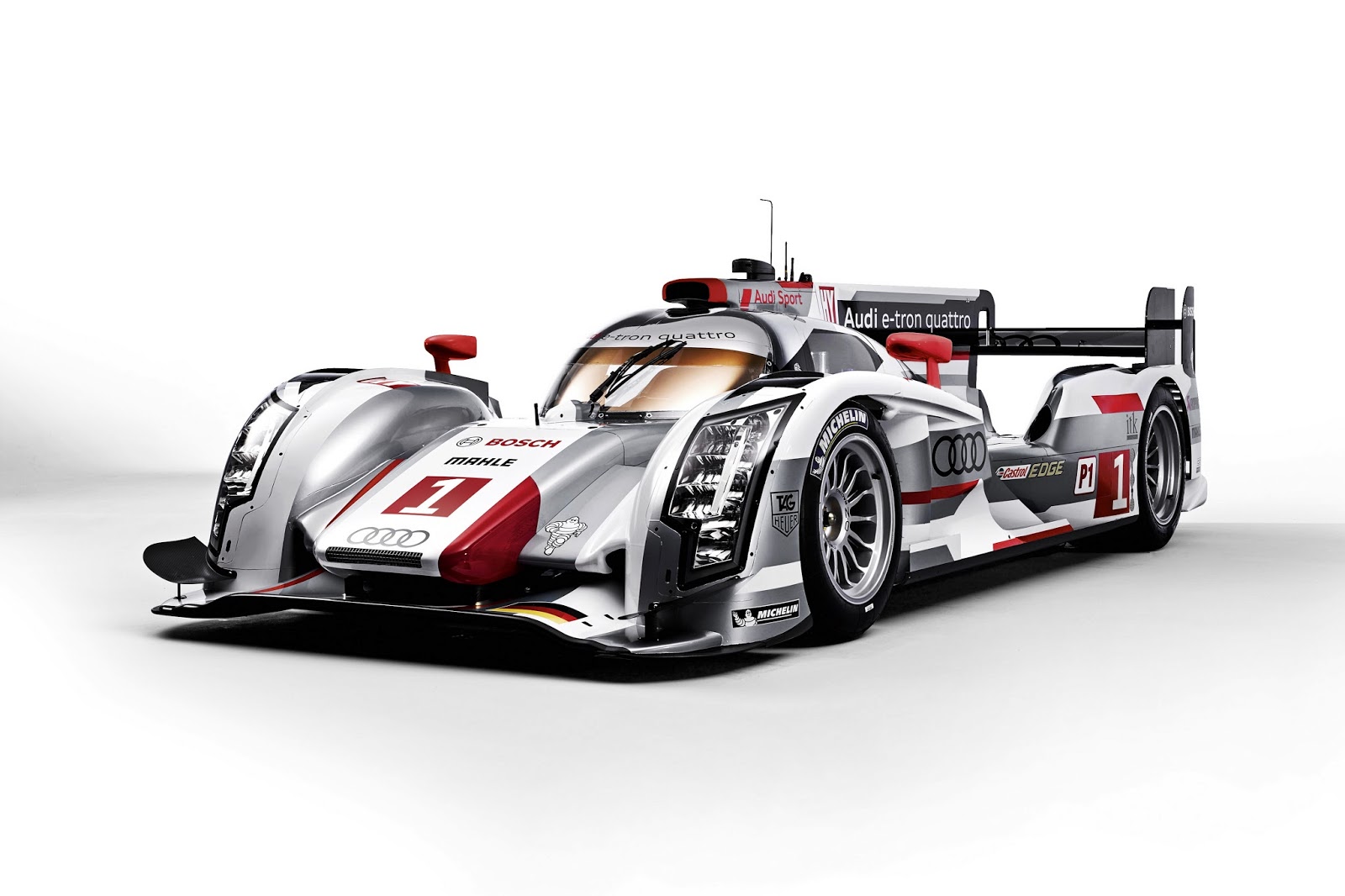
Audi is participating in testing of its R18 e-Tron Quattro today to prepare for the upcoming Le Mans 24 Hours. This preliminary session is critical as it represents the sole opportunity for on-track testing prior to the legendary endurance race, which will commence June 22nd. A trio of R18 e-Tron Quattro diesel-eclectic hybrid prototypes, including one long-tail version, are testing alongside 58 other cars invited to the single-day session in France.

Audi says the session is crucial for re-acclimating drivers to the intricate 8.4-mile track, as well as logging aerodynamics data and gathering tire information for Michelin, who supplies rubber for the works team. Team Joest, who have been tied-in with Audi Sport for over a decade, say they also want to keep a close eye on rival Toyota’s TS030 progress during the test.

Le Mans 24 is motorsport’s oldest endurance race and the third event on the 2013 World Endurance Racing calendar. Running in the top-level LMP1 class, the R18 e-Tron Quattro has been nothing short of magic this season registering decisive victories in the first two rounds, including a dominating one-two-three photo finish at Spa 6 Hours in Belgium on May 4th.

Audi is no stranger to spraying champagne on the Le Mans podium, having captured eleven victories at Circuit de la Sarthe since 1999. The R18 e-Tron Quattro will be driven by 2011 & 2012 Le Mans winners Marcel Fässler, André Lotterer and Benoît Tréluyer, as well veteran Danish driver Tom Kristensen, who has eight-time Le Mans victories on his resume.

This is an article by American writer Max Prince, who is currently living in the UK and studying for his masters degree in auto journalism at Coventry University. You can find the original article on Max's website here and all of Max's articles for Speedmonkey here

1 May 2013

Chinese Drivers, Osama bin Laden, and Tesla Motors

‘The argument of free enterprise doesn’t apply,’ my M.B.A. friend declared via email, ‘because free enterprise shouldn’t allow for government funding of private companies.’ I took a moment to consider his position. It’s a little more complex than that.

There was once a time when the typical finance manager had little automotive commentary beyond parroting the 0-60mph time of his leased Carrera 4 Targa, and when America could pinpoint its enemies with relative ease. But, alas, with the emergence of Tesla Motors and the War on Terror, both notions are all but antiquated.

Upon logging onto the Department of Defense website, I found some 21 ‘notable’ contracts (valued at $6.5 million or greater) issued in the past month. On that Friday afternoon alone, BAE Systems had been awarded $34.2 million for advanced computer units to identify friend/foe on F-16 fighter jets; Rockwell Collins, Inc. received $85.1 million for new Army helicopter tactical navigation systems; and Altec Industries won $177.5 million towards commercial trailers for the Navy, Marine Corps, and federal civilian agencies. Every penny of the $297 million is fine by me - the last thing I want is an Air Force cadet locking heat-seeking missiles on to my 6:10pm direct flight from Chicago to LaGuardia (though if it were Newark, I may reconsider…) It also occurred to me that most of these contracts were written, in some manner or fashion, for bolstering the War on Terror.

Meanwhile, the world’s largest country is becoming automobile-based. The impact of Chinese motorists is so massive that, by 2035, the ratio of cars-per-person worldwide will surge from 4:100 to 31:100 - a reality we must begin to acknowledge. Environmentally speaking it’s, quite literally, a disaster waiting to happen.

So when the DoE cut Tesla a check for $465 million to develop electric vehicles, I failed to see the problem in fighting a ‘War on Not Being Able to Breath’ alongside a ‘War on Terror’. The latter may be more imminent but, ultimately, the former is more destructive. What makes Tesla so different from Lockheed-Martin?

In case you disagree, consider that our dependence on foreign oil - a product that finances those same terrorist cells we’re so desperately attempting to eliminate - will only become more exorbitantly expensive as the East soon demands their fair share. Not to mention that said check was a loan, one which, as anyone who has driven a Model S can attest to, will be paid back long before al-Qaeda is dismantled or we’re bathed in acid rain.

Failing all of those justifications, there still remains one irrefutable fact: Over the last three years, Tesla has grown from 646 employees to more than 2,000. Is loaning out $465 million for 1,400 jobs the most cost effective method? No, but neither was spending $1.28 trillion to kill a single terrorist hiding out in Abbottabad, Pakistan.

Each a mere drop in their respective buckets, and money well spent on both accounts.

This is an article by American writer Max Prince, who is currently living in the UK and studying for his masters degree in auto journalism at Coventry University.  You can find the original article on Max's website here and all of Max's articles for Speedmonkey here

27 Nov 2012

The Return of the Buick GNX?

Max Prince looks at the history of the Buick GNX (Grand National), a cult American car, that promised so much from GM in the 1980's - and sees hope in rumours of it's revival.

I couldn't help but wear an enormous grin reading Autoblog yesterday, as they added to the ever burgeoning rumors that Buick is aiming to launch a new Grand National model, probably with a GNX variation.

Those reading this in the UK might be wondering, "Why on Earth would anybody care about a Buick?" Fair question. These days it seems the most exciting thing GM's grandpa arm could do is stop making cars. But suspend that notion momentarily and travel to the strange, warped universe of General Motors in the 1980's. Entering the fuel injection era, GM and its subsidiaries actually produced a number of rather remarkable performance engines, including a certain 3.8-liter turbocharged V6. Beginning in 1983, this motor powered the two-door G-body platform (Grand National and Regal models), steadily increasing in horsepower annually until the end of 1986, eventually settling at a respectable 245hp.
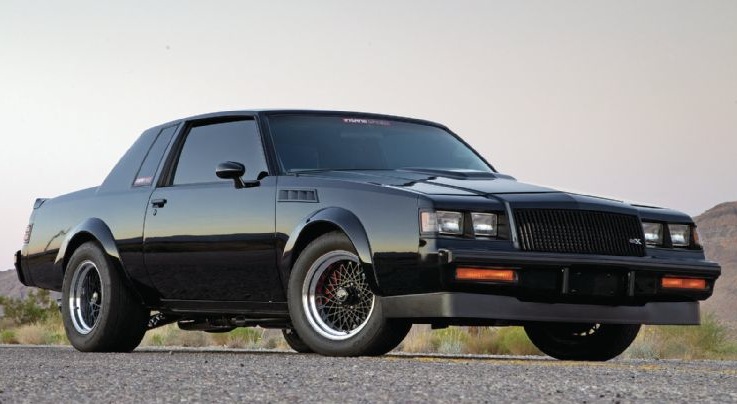
1987 Buick GNX
With the G-body facing extinction, GM decided to send the chassis off with a Viking funeral of sorts, one last 'hoo-rah!' before burying it in the history books. The Grand National was commissioned for a limited-production run of special 'GNX' models, and the 3.8 V6 was subsequently passed off to McLaren/ASC for modification, where it was not modified. Yes, you read that correctly. After thoroughly inspecting the 12-valve pushrod unit, the F1 deities did not have a single suggestion for improvement...Buick had built a performance powertrain to the standards of McLaren.

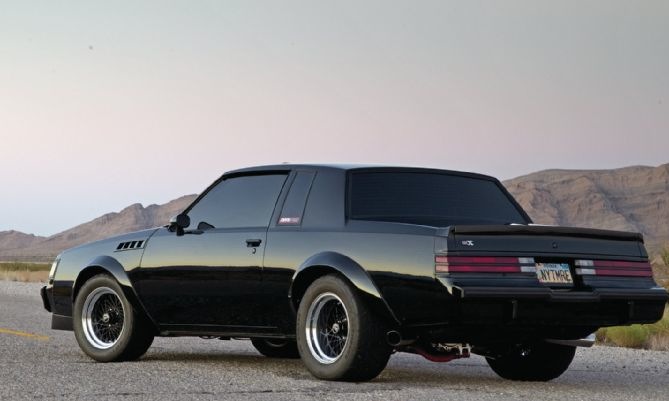
Shocking, I know. Changes at ASC were limited to external bits - a larger intercooler, quick-spooling ceramic Garrett turbocharger, retuned computer software, and a special torque converter that, from what I've seen, must have be fashioned from a industrial bank vault. Out rolled a supremely menacing coupe, widebody wheel arches bulging, with massive 255mm rear tires inspiring (false) optimism for the possibility of traction. New owners were also delighted to find that the rear control arm suspension had been lifted for a hardcore panhard rod setup, and that the car featured a bolt-in transmission cooler. To top it off, GM pulled a page from Henry Ford's book: You could have the turbocharged super-Buick in any color, as long as that color was black.

Thus, in 1987, the new Buick GNX redefined the term 'badass.'

Not wanting to upstage the flagship Corvette, GM estimated the GNX's output at 276hp and 360lb-ft of torque. Considering the 4.5-second 0-60 and 13.2-second quarter-mile times, coupled with the 3,450lbs (1576kg) curb weight, it's safe to assume those power figures were only slightly more accurate than a James Frey autobiography. Leaving behind wrinkled pavement, Buick's turbo leviathan trumpeted a novel return of the muscle car; an American big-body coupe that would humiliate any presumptuous Ferrari Testarossa owner on a two-lane blacktop. Actually, the GNX could hang with the era's performance benchmark Lamborghini Countach, while costing $100,000 less than the finest from Sant'Agata.
1987 Buick GNX
This Buick has a special cult following in the States - only 547 examples of the GNX were ever produced, thus completing the holy 'cool, fast, rare' trinity that all classic auto collectors seek out. But the iconic G-body is more than just a rare bird with dragstrip bragging rights. For American car guys, the GNX is a glimpse of what could have been had GM not slipped into front-wheel drive, pseudo-luxurious monotony. The powertrain was far ahead of it's time, outproducing almost anything, even exotics with twice the cylinders. 

This was a concept so uniquely un-American, yet bestowed unto a chassis unmistakably Detroit: futuristically fast but with a proprietary, devil-may-car swagger. So yes, I did get excited about Buick, but maybe now it's easier to understand why. And there's one last bit that makes it all the sweeter. Buick GNX #449 belonged to a young man named Mark Reuss, who is now General Motors' North American president. His father, Lloyd, was the GM executive in charge of pushing the original McLaren/Buick project through in the 80's. I'd say there's a pretty good chance the new GNX sees production.

I just hope they'll only offer it in black.

Article by American writer Max Prince, who is currently living in the UK and studying for his masters degree in auto journalism at Coventry University

All images courtesy of www.gmhightechperformance.com

18 Nov 2012

Why I'm Excited About The New Corvette (and why you should be, too...)

This is an article by American writer Max Prince, who is currently living in the UK and studying for his masters degree in auto journalism at Coventry University. It looks at the new Chevrolet C7 Corvette, which will be released in 2014.

Amongst us automotive critics, it seems that the complaints about modern sports cars are fairly consistant. Open any road test and find that, no matter the awesome 0-to-60 times or flawless design lines, there's often griping over three major aspects of nearly any new vehicle: increased curb weight, lack of a manual transmission, and concerns about technology running roughshod over the proverbial fun factor.

I think most would agree that Nissan's GTR would be (even) better if subjected to a mild diet plan, that any Mercedes-Benz AMG model would be far more engaging with a third pedal, and that iDrive - along with the myriad of sport setting buttons - is the lone blemish of an otherwise sublime BMW M5 pedigree. Rarely do I see the phrases "This car could be superb if only it were heavier" or "Thankfully, this model is only available with an automatic transmission" scribed in our favorite motoring magazines.

And yet, I don't think there is nearly enough respect for the Chevrolet Corvette and I'm often perplexed as to why. Over the last three decades, the horsepower rating for base model Corvettes has doubled from 200hp to 400hp, while the curb weight has increased by a mere 5%, gaining just over 100lbs. Show me another sports car that can mirror that claim. Save a two-year period during a generation change, not only has every single model featured the availability of a manual transmission, but a proper clutch-and-lever 'box has always been standard equipment. In fact, the Corvette utilized a modern 6-speed manual (ZF models, no less) before the Porsche 911 Carrera, Lotus Esprit S or Honda's NSX.

Climb into Chevy's super coupe and be spared punishment from a litany of buttons, settings, modes and screens. The current C6 interior is one of the most driver-centric available, with a a genuine emphasis on ergonomics and cleanliness. Is it a capsule of Thrupp & Maberly tailoring and Intel Pentium technology? No...no, no, no. Five minutes behind the wheel and it's apparent that the cabin is a place for perfecting heel-toe downshifts and conducting a smokey two-part Goodyear harmony, not checking work emails or getting a back rub. But is that really such a bad thing? I find it very refreshing.

Now, I'm not going to sit here and argue that the Corvette nameplate is free of sin - quite the opposite. Previous models were lacking fit-and-finish to an unacceptable degree, a hardhanded drive and more or less churlish in general. I once had the misfortune of driving a particularly downtrodden C4 model which, while navigating an extended pothole-ridden construction zone, registered somewhere between a fractured spine and a surprise colonoscopy on the comfort scale. The C5 was an improvement from the C4, but I guess stale bread is an improvement from starving to death. However, the C6 Corvette addresses all of those issues en route to delivering a truly brilliant automobile on many, many levels. Chevrolet managed to shore up the creak-and-rattle, panel gaps, and crucial incivilities without straying from their roots or allowing curb weight to spiral out of control. Bravo, Dave Hill. And if those monumental improvements from previous C5 models to the current C6 are any indication, the C7 will be an absolute masterpiece.

As with the current model, the new Corvette will no doubt come under attack for being 'simplistic'. But hopefully some are clever enough to realize the difference between simplicity and transparency. Will we continue to laud the Toyota GT86 for it's revival of basic driving pleasures, then turn around and slap down the Corvette as 'archaic' when it merely carries those same championed principals to a thrilling excess? This is the hypocrisy that drives me crazy. We collectively loved the MX-5, as we do now the GT86, for their purity; the Corvette is all that with the fire-breathing, eight cylinder cojones to back it up. The C7 won't be dressed up with dynamic computerized all-wheel drive, intricate side-scrolling forced induction, super intelligent electronic self-adjusting suspension, or a acronymed dual-clutch paddle-shit automatic gearbox. What it will have is a reasonable curb weight, rear-wheel drive, a manual transmission, and 450hp. Progress is virtuous, but fun is always king; let's give Chevy some credit where credit is due.


Image used courtesy of www.corvetteforum.com

1 Nov 2012

Is Jeep moving production to China? Not exactly

This is an article by American writer Max Prince, who is currently living in the UK and studying for his masters degree in auto journalism at Coventry University. It deals with Republican presidential candidate Mitt Romney's claim that Jeep will move operations to China.
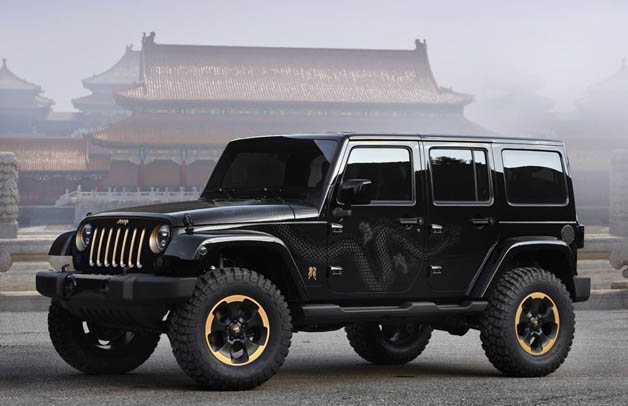
Jeep Wrangler Dragon

So, as you may have heard on the Twittersphere or Bloggerverse (or, God forbid, from somewhere with a real name, like 'newspaper') Republican presidential hopeful Mitt Romney landed himself in some hot water this past week. Following misinterpretations of a Bloomberg News story on the possibility of Chrysler reviving Chinese plants, Romney stated at a campaign event in Defiance, Ohio that "Obama took GM and Chrysler into bankruptcy and sold Chrsyler to Italians who are going to build Jeeps in China." Romney has been airing this radio advertisement (as well as a running television spot) in Ohio, a state with strong ties to the automotive industry and of critical value to U.S. presidential candidates. So critical, in fact, that no Republican has ever been elected to the White House without winning Ohio.

OK, let's stop for a moment.

Jeep is not moving to China. That is absurd. Reading through the article it's clear that the company is looking at additional production in order to meet rising demand for the Chinese domestic market; nothing more, nothing less. Not a single American job is at stake with this move. In fact, those 'Italians' running Chrysler are some of the brightest stars for autoworkers in the United States, bringing work to Detroit at an impressive rate. Now that we're all on the same page, here's a breakdown of what's really going on in this mess:
  • Terrible headline writing
Really terrible, actually. The Bloomberg article headline reads, "Fiat Says Jeep Output May Return to China" which, sadly, is not even close to being the worst title I've seen in modern publication. It does, however, leave a great deal up to interpretation. I'm sure the author, Craig Trudell, is rightly embarrassed at this point, and for good reason. The story was one carrying possible implications for thousands of workers, concerning a decidedly sensitive topic during a fast-approaching U.S. presidential election. Such mistakes, especially from a major source like Bloomberg News, are inexcusable at this point. Let this be a lesson: an ambiguous headline can be a dangerous thing.

  • Failure to read on
If the big, bold letters are in any way intriguing, the smaller ones beneath it will help explain in more detail. For most, including myself, seeing an unclear headline in any journalistic medium is incredibly frustrating. Yes, I would have read the Bloomberg article regardless of the title, since it is (potentially) important information for me to know as an auto critic. But as far as the average reader is concerned, it's a glance-and-go scenario. That's why Trundell's headline was awful. Before everyone, especially the so-called 'professional bloggers' and political advisors, fly into a panic over any story they need to take the time to read whatever source material they'll be citing. The article, although inexplicably vague at several points, does state (albeit, in the fifth paragraph) that Chrysler's plans "...adding Jeep production sites rather than shifting output from North America to China." It doesn't take long to find that. I read Trudell's piece in about five minutes, and I got held back in elementary school. Twice.
  • Inability to admit wrongdoing
Alright, so Chrysler isn't abandoning Michigan or shipping Jeep jobs off to China. I think we can all agree on that. So why hasn't Romney backed off his original comments? Stubbornness, perhaps? Or maybe he thinks the autoworkers in Ohio won't call him on his bunkum at the polls this Tuesday. I'm not sure. But apparently, some people are very upset about Mr. Romney's peculiar relationship with the truth when it comes to the automotive industry. One such person is Sergio Marchionne, CEO of Chrysler, who took the time to write an open letter about Jeep production in the United States:
"Chrysler Group's production plans for the Jeep brand have become the focus of public debate.
I feel obliged to unambiguously restate our position: Jeep production will not be moved from the United States to China.
...we are working to establish a global enterprise and previously announced our intent to return Jeep production to China, the world's largest auto market, in order to satisfy local market demand, which would not otherwise be accessible. Chrysler Group is interested in expanding the customer base...which can only be done by establishing local production. This will ultimately help bolster the Jeep brand, and solidify the resilience of U.S. jobs.
Jeep is one of our truly global brands with uniquely American roots. This will never change. So much so that we committed that the iconic Wrangler...will never see full production outside the United States.
Jeep assembly lines will remain in operation in the United States and will constitute the backbone of the brand.
It is inaccurate to suggest anything different."

Despite the firm words from Marchionne and outcry from the presidents of UAW Local 1112 and 1714 in Ohio, advertisements using misreadings of the Bloomberg article as base are continuing to air. There hasn't been any let-up from Romney on the issue. Instead of simply acknowledging his mistake, he's trying to confuse and scare Ohio voters at the expense of both the truth and the automotive industry. Romney has proved, rather blatantly this time, that he is fine with allowing a falsehood to flourish as long as it serves to benefit him, exclusively. It seems that somebody is having trouble admitting that they've made a mess, which, along with questionable reading skills, is a trait of past US presidents that I would like to avoid. But I am not an Ohioan, nor an autoworker. I am an automotive journalist living in England, far away from all of this. So why do I care? What do I want?

I want Mitt Romney to lose Ohio, and the national election as a direct consequence. And on Wednesday morning, I want the newspaper to profess:

"Lack of Respect for Auto Industry Costs Romney Presidency"

Maybe that headline will be clear enough.
Registration for Barak Obama's first new car - a 2000 Jeep Grand Cherokee


31 Oct 2012

Can Mitsubishi North America be Saved?


"New Chairman Announced, But Can Mitsubishi North America be Saved?"

This is an article by American writer Max Prince, who is currently living in the UK and studying for his masters degree in auto journalism at Coventry University. It looks at the operations of Mitsubishi Motors in North America, who appointed a new Chairman this morning.

If you haven't already noticed, Mitsubishi Motors is not doing very well in North America. Actually, they're doing absolutely terribly. Buying a Galant or Outlander in the United States is about as popular as zeppelin travel after 1937. In the most recent of a series of moves attempting to reverse this trend, the company today named Gayu Uesugi, a Mitsubishi board member and executive vice president, as the man responsible for taking over Mitsu's North American operations.
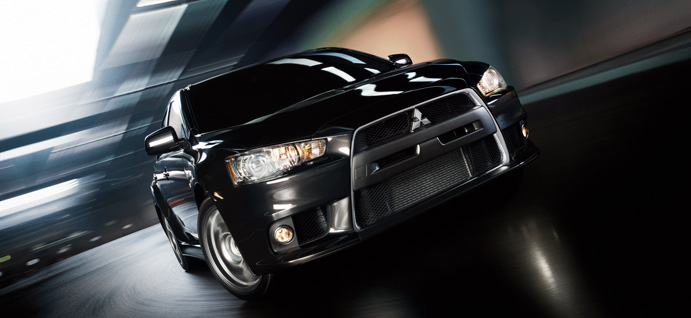
Mitsubishi Lancer Evolution

Best of luck, Mr. Uesugi. You're going to need it.

It's not that he is incompetent in any way - far from it. A quick search reveals that Uesugi is the man behind product strategy in Russia, a market which represents one of the only bright spots in the Mitsubishi storm cloud. Recent news that the Pajero Sport will be produced in Russia during 2013 will no doubt help the company, whose sales in the Motherland during 2011 skyrocketed. Unfortunately, their success in Russia only alleviates a portion of the massive losses elsewhere, like North America, where Mitsubishi looks like an aimless buffalo rapidly approaching the cliff of relevancy.

This year has been another disastrous one for the company, according to James B. Treese of Autonews.com:
  • In North America, [Mitsubishi] lost $14.5 million, vs. a year-earlier profit of $29.3 million, as revenues fell 39 percent to $419.4 million. 
  • Other data for the fiscal first half showed the deterioration of Mitsubishi's position in the United States. Mitsubishi's dealership count dropped to 386 from 397 a year earlier, its market share fell to 0.4 percent from 0.71 percent, and the percentage of nonfleet sales that were financed by Mitsubishi's finance arm slipped to 30 percent from 36 percent. 
  • Fleet sales fell sharply, to 13.6 percent of Mitsubishi's U.S. sales in the latest six-month period from 31.8 percent a year earlier.

But believe it or not, there was a time when North America was Mitsubishi's golden goose. Between 1999 and 2002 sales for the company grew by a remarkable 81%, posting massive gains each year. How did they do this? By controlling the youth market. Just a decade ago, Mitsubishi actually had the largest percentage of under-35 buyers in the United States, more even than the mighty Volkswagen. At the beginning of 2003, Mitsubishi set a lofty goal to increase sales from 348,000 to 500,000 by 2007. 

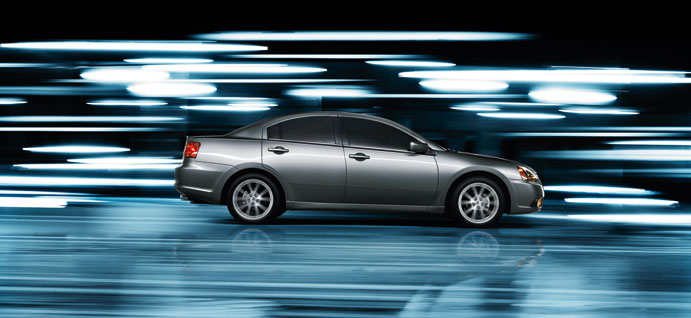
Mitsubishi Galant SE
At the time, that didn't seem so crazy. What followed was a string of baffling financial moves, including throwing advertisement funds around like Somali shillings and giving preposterous loans to any Generation Y'er without a credit rating or facial hair. North American operations tanked, posting losses every year, finally sinking to a paltry 87,000 sales in 2009; about 0.6% of the regional marketshare. After shooting themselves in the foot, the company simply laid down and bled out in North America. Tracking the automotive astral of the 2000's, one could point to Mitsubishi and say, "Hey! Look kids! A falling star..."

But instead of continuing to blunder around, the company should remember how they originally succeeded in North America. The huge youth following that ushered Mitsubishi into significance was captured by producing fun, affordable and sporty cars with mass appeal. The company moved over 68,000 original Lancers in the US circa 2002, but slumped to just 27,861 one year after the slower, heavier revised model was introduced in 2007. 

Despite the sheer brilliance of prior versions, let's be honest, the $40,000 Evolution X now looks more like an old, bloated King Kong than a baby Godzilla. It doesn't feel like the cult icon of previous generations, and I'm glad the Evo will be phased out after 2013. Good riddance. The most obvious example, though, is the once best-selling Eclipse. With each compromised iteration of the model, sales plummeted. After releasing the supremely un-enthusiast third generation Eclipse in 2002, sales of the model fell from 72,041 to 4,282 by 2010; a decrease of about 95%.

As of now, there is no planned replacement for the Eclipse. To me, this is yet another head-scratcher. Why not bring back the Eclipse nameplate in a totally new version more faithful to its enthusiast roots? Since North American sales began this May, the Subaru BRZ/Scion FR-S model has sold more than 10,200 units. In that same period, the entirety of Mitsubishi Motors North America sold a little over 33,000 cars. 

In the United States, sales of the BRZ/FR-S alone matched 42% of all Mitsubishi model sales. Clearly, there is a market demand. If they can build a quality vehicle for the segment (and resist the temptation to pass out loans like old AOL discs) I see no reason why the company can't compete in North America, as they used to. 

If Gayu Uesugi wants to keep his new job and Mitsubishi wants to avoid being consigned to oblivion, I highly recommend that they start making smaller, exciting, sporty vehicles once again, starting now. Like, this moment. If they're lucky, it isn't already too late.

27 Oct 2012

Mazda - Why the Wankel must not return

This is an article by American writer, Max Prince, who is currently living in the UK and studying for his masters degree in auto journalism at Coventry University. It deals with the possibility of Mazda resurrecting the rotary motor, as reported at the Australian International Motor Show in Sydney yesterday.

An Entreaty To The Winged M
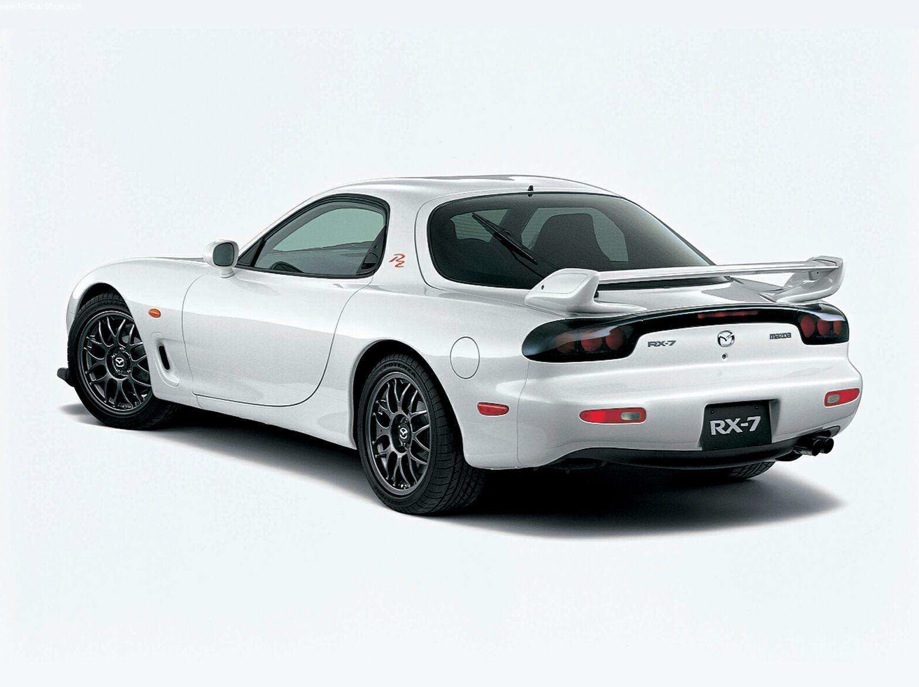
Mazda RX-7
Last night, I read an article on the New Zealand Herald website in which Mazda CEO Takashi Yamanouchi asserted his desire to integrate a rotary motor into future models.

I was absolutely horrified, and I want to explain why.

In my lifetime, I have never had the misfortune of witnessing a grown man reduced to tears over an automobile, but I can recall one specific instance where I honestly believed it was going to happen.

It was during autumn some years ago, deep into the morning hours, sitting in an overwhelmingly silent garage. My roommate Ted and I had spent the better part of two days and nights covered in grease, slaving away on The World’s Most Infuriating Car. After swapping two different engines in the past year, each of which had grenaded in dramatic fashion, we couldn’t get the third one to start. No matter what we did, being able to enjoy a spirited drive the next day was out of the picture. Moreover, it was quickly becoming clear that the premise of ever driving this vehicle was simply an illusion, one too good to be true. Ted slumped over. With a hollow, defeated thud, he let his forehead drop onto the steering wheel.

If you haven’t already drank a litre of drain cleaner as a result of that utterly joyless premise, you may be wondering what The Worst Car In The World is, and what engine could be capable of such torment.

It is the Mazda RX-7, powered by a 13B rotary.

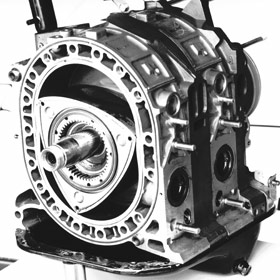
To begin with, let me familiarize you a little more with the modern automotive rotary engine. It's the brainchild of Dr. Felix Wankel circa 1954, presumably with input from Lucifer and/or a band of drunken sadomasochists. Wankel’s creation is a pistonless monstrosity where triangular engine internals spin on a shaft, thus eliminating the lost energy of a reciprocating cylindrical motor. In the most basic terms, imagine spinning a stale doughnut on a pencil - with very little effort it will rotate very quickly. The hypothetical benefit of this design is far less parts, and therefore less weight. But how could Felix create internal combustion with this new idea? His answer was to fit the triangular engine internals (rotors) into a circular enclosure to create three chambers.

And that’s it. That’s the problem, right there. The entire concept of this motor is based around the notion of fitting a triangle into a circle. After trying to make this work for hours myself, I gave up and never tried again. The difference is that I was four years old and playing with colored plastic blocks, not a mechanical engineer with a doctorate from Technische Universität München.

What resulted from this geometrical abomination, as Ted and I learned through endless hours wrenching, was the least user-friendly piece of mechanics ever put into mass production.
A rotary engine

The issues were innumerable. To begin with, it turns out that no known material can actually seal a rotary triangle/square chamber, so they tend to lose compression anywhere from 5,000 to 150,000 miles. Who knows? It could happen at any time. To lubricate the seals that break anyway, this motor has a system that extracts oil to mix with the fuel before being injected. In addition to the purchase of an extra pint every 1,000 miles, this nifty feature assures a semi-constant odor of burning oil. At one point, Mazda had to recall every rotary motor (yes, every one) because of oiling problems.

Oh, and nobody really cared about fuel consumption in 1957, including Dr. Wankel. Unfortunately for us living in this century, getting 15-20 miles to the gallon (which most rotary cars will do in real world application) is more expensive than a moderate cocaine habit. It will even drink plenty of fuel simply idling, which is continually required, because cold driving (or shutting down before operating temperature) will flood the engine and lock it.

To be fair, in the right conditions, the motor will produce some impressive horsepower figures and is able to rev higher than most piston engines. But will you be able to feel it? No. Because of the engine design, rotaries produce torque in the same quantity as Honda four-cylinders. And, as an added compliment, some models (like the Mazda Ted owned) come with a complex turbocharger system rather than a bottle of scotch and a handgun, which is what rotary owners really need.

The average car buyer does not know any of this, and will eventually destroy the motor through improper use. The enthusiast car buyer knows all of this, and will eventually destroy the motor through normal use. Either way, you can inevitably find both of them riding a bicycle to work on Monday mornings.

But for some reason, as with any automotive niche, there is a strange group of people who love these motors. These people are like some strange cult, insistent on drinking the rotary Kool-Aid no matter what it does to them.

I can somewhat relate to similar cases of devotion, like the British roadster fanatics or classic Alfa fans - at least those cars are enjoyable for the three weeks of every year they actually run properly. But a fuel-guzzling, oil burning, torqueless money pit that sounds like a gardening tool? No thanks.

Eventually, Ted decided to get a different RX-7, this one with a racing engine assembled by one of America's best rotary builders. We traveled 596 miles to collect the car, which lost compression the following morning during our return trip and died 100 miles from his house. After that, Ted swore them off. He realized, as Mazda did around this time last year, that the premise of a super-efficient, lightweight, high-revving engine is marvelous - who can disagree? But we’ve now seen numerous iterations of the automotive rotary for half a century, and it just isn’t translating.

Please Mazda, stop making rotary-powered cars, for all of our benefit. It's over.

Communism works in theory, too. Maybe we can let that one go next year.

24 Oct 2012

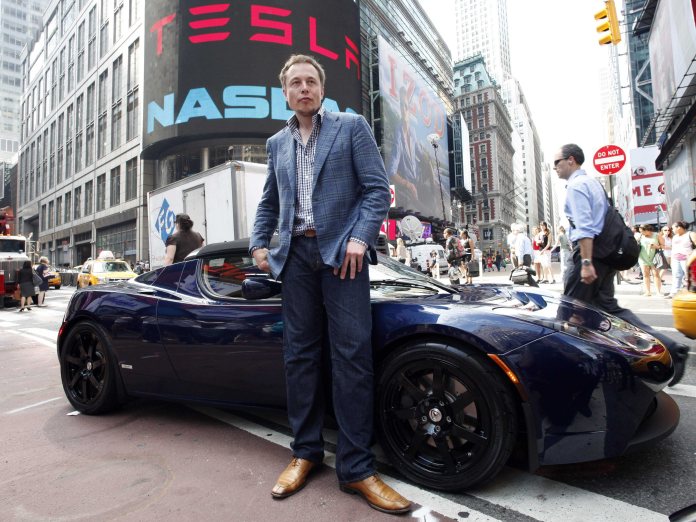
Tesla - Why U.S. Auto Dealers Are Blowing a Fuse


This is an article by Max Prince, who is currently studying for his masters degree in auto journalism.  It deals with Tesla in the US, the way they sell their cars and their current battle with American car dealerships. 

"Tesla has never been profitable." 

Those were the first words from Edmunds.com senior editor John O'Dell's mouth during an interview this summer. He's right. That's not to say that the company will never be financially sustainable, or that their electric car aspirations are some naïve apparition. But at this point, Tesla is running on United States Department of Energy loans and CEO Elon Musk's checkbook, along with hopes and dreams. To offer some perspective, Tesla happily sold 89 Roadster models in the entire fiscal Q2 of this year; General Motors sold 210,245 vehicles in September alone.

Saying that Tesla is getting closer to being a major automaker is true...in the same way that finding a nickel makes you closer to being a billionaire.

Yet, according to a report from Amy Wilson on October 8th:

"In Illinois, the Secretary of State's office told Tesla officials in a meeting on Sept. 28 that the EV manufacturer is breaking Illinois law...

In New York, the association representing New York City metro dealers is exploring options to challenge Tesla's store in Westchester, which opened in May...

In Massachusetts, the state dealers association will continue to challenge the legality of a store that opened in the Boston suburb of Natick on Sept. 28...

In Oregon, the state dealers association informally asked the Oregon Department of Transportation's Driver and Motor Vehicles Services Division to review the validity of the dealer license granted for Tesla's Portland store..."

Musk responded via blog post on Monday, and now dealerships in Montana are joining those in New York to fight Tesla's retail scheme.

These roadblocks are being put up by the National Automobile Dealers Association because of the strict rules concerning auto franchises in the United States, struggled over in court numerous times. Essentially, auto manufacturers can't operate their own dealerships. If allowed, this scenario would undermine competition as dealers pay wholesale for their stock, while manufacturers could sell their product at cost, effectively undercutting any profit margin for franchises. Legally, car dealers are entitled to a fair amount of autonomy, in some cases not even having to comply with manufacturer standards of building appearance and logo representation. Each state has it's own state auto dealers association, packed with lawyers, to protect their interests.

These associations are challenging Tesla on the grounds that their shops are, technically, owned by Musk, the CEO of the manufacturer, and therefore illegal.

When I initially looked over a few reports on the story, I was shocked to find that nobody is pointing out the writing on the wall. Something here doesn't add up.

Tesla stores have no way to jeopardize auto dealer sales. Employees in the shops are not trained salesman, nor working on commission. They are modeled from the early tech boutiques, as George Blankenship, a former executive at Apple, is now in charge of building Tesla's retail network. And if you've never seen a Tesla store, you're not missing much - they're merely small showrooms, wedged in shopping malls, to attract attention to the brand. In fact, these suites don't even carry stock because, that's right, every Roadster is made-to-order and, if the past is any indication, will take several decades to actually arrive. So why on earth is Tesla being sued by car dealerships in the United States over their retail practices?

Because they're gearing up for a war.

Flying under the radar of this story is a different, more important one. It began unfolding last year, when BMW reported that sales of their new electric i3 and i8 models would be sold online, direct-to-consumer. They added that the i-line will be available to dealerships, with the caveat that they meet manufacturer imposed criteria for sales participation. As of two weeks ago, only twenty percent of dealerships will be able to carry the new electric models. Even in Germany, where the company has domestic oversight, only forty-five of the two hundred BMW dealerships qualify. Selling over the internet allows BMW to cut their traditional distribution costs by over fifty percent, allowing them to price the i3 or i8 online at between five and seven percent less than a dealership. Presumably, BMW is doing this to recoup the cost of developing the i-line, which has been estimated at an elephantine $3 billion. Considering the financial and brand image stakes, getting the i3 and i8 profitable as soon as possible is their chief objective. As such, they're willing to bypass dealerships.

Even more intriguing than the complaints in New York, Massachusetts, Illinois and Oregon is where the other states will stand. Nineteen states offer financial incentives for buying an electric car, such as the i3 and i8. For instance, California offers a $2,500 tax credit in addition to the $7,500 United States federal government credit for the purchase of a hybrid or electric vehicle, making it by far the most incentivized state in America. By law, manufacturers can also own dealerships in California, provided they're outside a ten-mile radius of all privately owned, same-brand franchises. How in the world do you go about defining a ten-mile bubble if the manufacturer-operated dealership is an internet browser? Is it a percentage of sales from certain areas? The proximity to the nearest BMW server?

I don't have the slightest clue where even to begin, and there is a lot dealership money to be lost on the new BMW i3, which will be priced around $50,000.

Really, it's a shame that Tesla is quickly becoming the sacrificial lamb in this scenario. It's obvious that the NADA and various state dealership associations are securing precedent for future battles with BMW when the i3 launches next year, as the Bavarian's internet strategy could actually damage franchise profit margins. While I root for Tesla to succeed from an undying love of the underdog, I have no illusions about the company. They're a well-intentioned organization with a young CEO doing the best that they can. If they succeed in convincing fashion, the impact on automobiles in our society could be historical. But for now, to most people, Tesla is a single hair on the English Mastiff that is the auto industry. Is it really necessary to pick on them over retail permits? Why not take a stand against BMW internet sales now, instead of hassling Musk and his whopping seventeen dealerships? The state dealer associations are being childish, and this story is getting more and more absurd by the day.

Specialist automotive dealership lawyer Leonard Bellavia said this summer, “The idea that they’re [Tesla] reinventing automotive retailing is somewhat laughable.”

Meanwhile, eight months prior, UK BMW managing director Tim Abbot stated, "I don’t think the car industry has changed very much at all in the last 30 years... Electric vehicles give us [BMW] an opportunity to look at the way we sell cars and do it completely differently."

Now you tell me who's really threatening the NADA.


Copyright © Max Prince 2012. Max Prince asserts the right to be identified as the author of Tesla under section 77 of the Copyright, Designs and Patents Act 1988. First British Serial Rights offered, unless otherwise agreed. All other rights reserved.


Copyright © Max Prince