Showing posts with label Colin. Show all posts

23 Jan 2015

Driven - Mercedes-Benz GLA45 AMG

Colin Hubbard reviews the Mercedes-Benz GLA45 AMG, a sort of super hot hatch/crossover.

Mercedes-Benz GLA45 AMG

Typically Mercedes' have been bought by the more mature driver but when the new A Class was launched it appealed to a whole new and younger market. It has been a huge success, not only because it's great looking in base spec but also because it's a very capable front wheel drive car. The market is constantly evolving and now SUVs and more importantly mini-SUVs and crossovers are selling like hot cakes.

The Evoque, Kuga and Q3 have stolen many sales from the hatchback market, even with their inflated list prices, and Mercedes has hit back hard with the GLA, a mini SUV based on the A class.

At a first glance it looks like an A Class on raised springs and fitted with bigger wheels but have a good look at the body and you will notice they are completely different.

Starting at the front the headlights dip into a deeper front bumper and the front side air intakes are enlarged to highlight the taller front end. The bonnet features an extra pair of ridges running equidistance to the outside ridges, a nod to the 300SL Gullwing of old, which give an aggressive stance when viewed in a rear view mirror.
Mercedes-Benz GLA45 AMG

At the sides the wheel arches are widened and increased in diameter to be able to the swallow larger wheels and tyres fitted to GLAs. The side profile appears to be bulked out like an A Class on steroids.

Black plastic wheel arch trims are fitted along with some black nobbly effect side skirts to create the impression of an off roader's extended wheel arches.

The A Class's lower body crease that kicks up from the front door to the rear light is now more restrained and runs a lower line to the top of the wheel level. The rear door window line kicks up at the rear to highlight the more curvaceous body.

At the rear the lights are much deeper and are split in half by the tailgate but add to the aggression in the bodywork.

The GLA45 AMG is fitted with the attention grabbing aero pack consisting of 'flics' on the front bumper, a deep front splitter and a rear aerofoil which give it a look like it's after a fight with something exotic.

The test car is not front wheel drive, instead all wheels are driven, not because it wants to go off road but because this is the range topping GLA45AMG. This means the car is fitted with the same rip-snorting 4 pot motor from the A45AMG, a 2 litre 4 cylinder unit but with a weapons-grade turbo-charger and some very special AMG engineering. The little 4 pot creates a staggering 177bhp per litre giving a total output of 355bhp.

It is a very special engine and an in AMG tradition is built by just one man and fitted with a plaque on top of the engine cover signed off in this case by Tobias Rohler. This restores confidence in the highly tuned motor in that is isn't simply a highly boosted, small capacity engine but a hand built unit designed to operate under extreme pressure but with everyday reliability.
Mercedes-Benz GLA45 AMG

Front wheel drive wouldn't cut it with all that power and 332 ft/lb torque so it is fitted with a Haldex all wheel drive system. It's front wheel drive until it detects slip then a clutch in the rear axle engages and up to 50% of the power is sent to the back wheels. Sounds complicated, it is, but it works effortlessly and so quickly you just don't know it is anything other than all wheel drive.

The gearbox is a 7 speed twin clutch unit. Sadly there's no manual option but it is all is forgiven when you experience the full power upshifts and rev matched downshifts. The ratios are well stepped for hard acceleration but 7th is a good cruising gear keeping the engine revs low.

The suspensions is fixed rate, there is no adjustability but this works just fine, the set up is fairly hard but perfectly damped with the larger tyres helping go soak up bumps in the road. It is extremely well balanced so B road stability is fantastic and will give a supercar a hard time in these conditions.

Tested back to back with the A45 AMG and on the same roundabout the GLA is actually the more stable car. I found it gripped and controlled itself better than the lower car. This is strange as the higher centre of gravity should have the opposite effect but the larger alloys and taller tyres with a longer rolling radius and a wider track offer greater balance and control.

What it gains in traction it loses slightly in outright agility as the A45 can dart about changing direction quickly and easily whereas the GLA takes that nano second longer to register your inputs.

Inside and the cabin shares only the dash with the A class and the whole interior feels that little more elevated. The front seats look amazing with fixed headrests and flashes of red and polished alloy detailing but also hold you in really well without feeling too tight. A little like a baseball glove in that they are comfortable but hold you in place millimetre perfect.
Mercedes-Benz GLA45 AMG

The dash is a quality affair with a stitched leather top section and real carbon fibre panelling on the front with Mercedes' tablet style multifunction display in the centre. I wasn't a fan of the tablet protruding from dash design when it was launched in the A Class but with time it grows on you, like a Bangle 5 series or the Audi A4 (B7) with the large chromed front grille, now they look great and completely natural.

The steering wheel is a thick and feelsome, and nicely trimmed with leather and Alcantara but with polished alloy on the base so through corners as the wheel moves in your hands you feel the cool sensation of the aluminium between fingers and thumbs.

In the back and it feels about the same size as the A Class but the tall front seats and deep doors with rising rear edges make it feel quite claustrophobic. The additional height means a bigger boot area so it has a useful 140 litres over the A Class's 341 litres.

On the road the GLA45 is a bit of an animal, but not in the same way as the A45 is; they are quite different cars altogether. The A45's perfect habitat would be a race track or some deserted roundabouts in Milton Keynes where it can go dart around flat - it's a little headbanger of a car. The GLA is the more car refined car and would be as happy outside Selfridges as it would be on a gravel rally stage.

The shells are structurally different and it is obvious when driving the two cars back to back as they  have identical power trains and engines with the sports exhausts fitted but the GLA is a little more muted and stable than the A45.
Mercedes-Benz GLA45 AMG

When I say muted I don't mean Prius quiet, there's still the same smile-generating snap, crackle and pop from the rear end like, Mercedes have fitted a popping candy dispenser in the backboxes but it is less manic. Part of this could be the GLA's higher ground clearance but I also suspect there is additional sound deadening fitted.

The performance is only marginally dulled over the A45 with 0-62mph taking only 4.8 seconds and stopping only at 155mph on the limiter. That's only part of the picture as the engine is a real gem, not a laggy unit like highly-tuned 4-pots of old but a reliable, smooth, tractable powerhouse that feels like a much bigger capacity lump.

The gearbox keeps the engine nicely on the boil when in sport mode by keeping the revs high and bounces off the rev limiter with ease at full throttle which in turn releases quite an explosion from the exhausts. Gear changes are snappily quick as the second clutch has the next gear pre-selected.

The other modes on the gearbox are Manual, for use with the wheel mounted paddles, and Controlled Efficiency for everyday driving, which helps achieve the combined 37.7mpg. It's much more relaxed in efficiency mode and just the hard ride reminds you of the true potential of the car.

It is telling that manufacturers are now producing smaller cars with big car rivalling performance and interior quality so no longer do you need to buy a big car to get glorious performance and a luxurious cabin. Cars like the GLA and Audi A1 are showing what's in store for the future when there will less room to park and less fuel to use so nobody actually needs that big car anymore.

As a package it's a great all rounder, just high enough to satisfy the types who want something more of an elevated driving position for security yet small enough to be able manoeuvre around and park easily. Combined with that brutal engine and well set up chassis it is a really entertaining and enjoyable car to drive.

In 45 AMG guise the GLA is a stunning piece of kit combining aggressive rally car style looks, touring car performance but with a stylish functional interior. If you get the opportunity you should try one.

Stats


Price - £44,250 (as tested -  £53,080)
Engine - 2.0 litre, inline 4, turbocharged, petrol
Transmission - 7-speed dual clutch auto
0-62mph - 4.8 seconds
Top speed - 155 mph (limited)
Power - 355 bhp
Torque - 332 lb ft
Economy - 37.7mpg (combined)
CO2 - 175 g/km
Kerb weight - 1,585 kg
Mercedes-Benz GLA45 AMG

Mercedes-Benz GLA45 AMG

Mercedes-Benz GLA45 AMG


17 Dec 2014

The Top Ten Cars Of 2014

Best new cars in 2014

2014 has been a busy one for Speedmonkey. Colin and Matt drive the press cars, sometimes on loan and sometimes on media days - sometimes on the road and sometimes on track. Between us we've driven around 100 new cars. Here we each list our top five cars, and explain why.


Matt's Top Five


1 - Volkswagen Golf R


Hot hatches are the everyday, accessible performance cars. They're quick and practical, front wheel drive and heaps of fun. The Mk7 Golf is a great looking car that handles well and is packed with kit (although satnav is still an expensive option). The Golf R adds four wheel drive, 296bhp and cocks a snoot at every other hot hatch that's gone before it. It's as fast as a supercar and as practical as any other Golf, oh and it doesn't cost the earth. An amazing symbiosis of performance, practicality and price.

2 - Porsche Cayman GTS


The Cayman has long been regarded as a better driver's car than its big brother, the 911. The Cayman GTS adds just enough va-voom to an already brilliant package to ensure that it not only obliterates the 911 in the handling stakes but everything else as well. Slide it into a corner, turn in on the brakes, apply the throttle sooner than you'd have thought possible in a road car and the hairs on the back of your neck will tell you how perfect the GTS is.


3 - Volvo V60 Polestar


2014 will be remembered as the year Polestar emerged into the mainstream. AMG and M-Sport are now engineering divisions of big car companies but Polestar is still a race team who fettle the odd Volvo. This mentality shows in the way the mighty V60 Polestar performs. They could have made it more powerful but chose to concentrate on handling and ability. Expect many more Polestar Volvos in the future, and if they're all like this the partnership will flourish.

4 - Jaguar F-Type Coupe V6 S


How could the Jaguar F-Type get any lovelier? Simple, get Ian Callum to design a coupe version. The F-Type coupe is the best looking Jaguar in a generation, and arguably the best looking car on the road today. The V6 S package provides the best balance of power and ability.

5 - Audi S1


The Audi S1 is essentially a VW Polo in a frock with masses of power and four wheel drive. As with all of these cars it adds a massive dollop of je ne sais quoi that transforms it from a humdrum hatchback into a manic ball of fury with razor sharp steering and oodles of agility on our horribly paved roads.


Colin's Top Five

1 - McLaren 650S


A development of the MP4-12C but better in every way. Breathtakingly fast and everyday usable the 650S has been built with huge attention to detail so every aspect is perfectly finished, with the instruments having a lovely tactile ‘feel’. It’s so fast it makes hypercars look a little pointless. If Apple were to make a car it would be a lot like the 650S.

2 - Alfa Romeo 4C


A brand new sports car engineered with the focus on lightness. Using a carbon tub and lightweight but powerful 4-piston, turbocharged engine it has a kerb weight of just 895kg yet provides big league performance. Capable of 0-62mph in 4.5 seconds and 41.5mpg the mid engined layout, light weight, wide track and well set up chassis means it handles like a ballet dancer. Shows the way forward for sports cars.

3 - Mercedes-Benz S63 AMG Coupé


Mercedes' new S Class Coupé is both a continent and Continental eater. In AMG format its performance is devastating yet refined as the cabin brings S Class luxury and toys to a proper driver's car. Launched with one of Mercedes finest innovations, Dynamic Curve ride control is a system that tilts the car into bends for superior handing and traction. The drivetrain and interior quality along with stunning looks means it is a genuine Bentley Continental alternative.


4 - Audi RS Q3


Audi have put the SPORT into SUV with an elevated car with genuinely sporty performance. The first RS Q car is huge success in that it takes the roomy upmarket interior of a Q3 and injects it with sizzling performance courtesy of a TT RS 2.5 litre 5 pot motor. 306bhp and the latest twin clutch gearbox help achieve 62mph in just over 5 seconds and more importantly excellent overtaking ability. The RS Q3 is a fantastic everyday fun and family practical car.

5 - Peugeot RCZ R


Peugeot has reinstated its mojo with Peugeot Sport's thorough reworking of the RCZ. Race-spec engine internals, a mechanical LSD and serious chassis tuning have turned a handsome car into a seriously entertaining drive with genuine driver appeal. Even the RCZ’s well trimmed interior has received an upgrade courtesy of the best looking, comfortable and grippy seats this side of a Lamborghini.

By Matt & Colin Hubbard


15 Dec 2014

Driven - Peugeot RCZ R

Colin Hubbard reviews the Peugeot RCZ R

Peugeot RCZ R

Peugeot has bragging rights to one of the finest hot hatches ever made, the 205 GTI. Blessed with pretty looks, a chassis brimming with feedback and perky little power plants it was a brilliant little car and a halo for the rest of the range.

Since the 205 went out of production Peugeot lost its way for the spirited motorist and only recently started to regain its mojo in the form of the 208 GTI which is real corker.

Now they have just launched their fastest ever production car with a surprisingly small engine - just 1.6 litres and 4 cylinders.

Welcome to the RCZ R. Based vaguely on the RCZ Coupé, Peugeot Sport has absolutely gone to town to ensure that the car is a genuinely capable and thoroughly enjoyable drive - ignoring the accountants every step of the way.

The engine is a development of the 1.6 found in other cooking Peugeots but it has been treated to some fairly serious upgrades to not only boost power but also retain long term reliability.
Peugeot RCZ R

The engine block is heat treated and reworked for improved circulation and cooling and the standard pistons replaced with high performance Mahle Motorsport items. Uprated con rods and bearing shells with a polymer coating withstand high pressures and operating speeds so the 170bhp per litre is safely within limits.

A twin scroll turbo has been fitted so that it provides strong power from lower revs and at higher revs provides very high boost levels.

A sports exhaust with twin round outlets finishes off the power element and should provide the voice the standard car cries out for.

The result is a power output of 270bhp along with 243lb/ft torque but the more astonishing figures are the combined fuel economy of nearly 45mpg and the CO2 rating of 145 g/km. By making the modest sized engine work harder they have made it more efficient so it's cleaner and more fuel efficient than the standard 1.6 turbo engines in the range.

Power is laid down by the front wheels via a crisp, 6 speed manual gearbox and forward motion balanced by a Torsen mechanical limited slip differential.
Peugeot RCZ R

The chassis has been lowered by 10mm on shorter, uprated springs with more aggressive damper settings and, unique to the R, 19" lightweight alloys which were designed to channel cool air to the brakes.

This has not just been a quick lower and harden exercise, many man hours have gone into the development of the R's chassis - tweaking and fine tuning bushes, roll bars, dampers, springs and suspension arms until the desired set up was achieved.

From the driving seat it is obvious this has been honed on a racetrack and engineering to the nth degree. This has massively increased wheel control over the standard RCZ so it feels much more solid and accurate through the steering wheel.

Braking has been heavily uprated with 380mm diameter and 32mm wide front floating discs which ride on aluminium pins. These are clamped by 4 piston calipers which look purposeful behind the alloys.

On the outside Peugeot didn't really need to do much as the fabulous RCZ shape remains, instead they have tailored the look so you can see where your £32k has gone.
Peugeot RCZ R

The main external change is a fixed rear spoiler increasing downforce and stability at speed. The roof 'arches' are finished in matt black and the Nera Black paint scheme on the test car extenuates the double bubble effect from the roof down to the fixed rear back windscreen.

The R is also available in Opal White, Pearl White, Mercury Grey, Moroccan Red and Charcoal.

There are other subtle little touches like red Peugeot lettering on the grill and titanium tinted headlights which all combine to create one of the best looking cars in its class.

On the inside and it's the seats which first get your attention. Seriously supportive and perfectly comfortable they look like they have just been lifted straight out of a Lamborghini. I drove 428 miles in one day on a combination of motorways, fast A roads and hideous B roads and at the end of the day got out of the car feeling ache free.

Both the front and rear seats are trimmed in Alcantara and leather. They've been cleverly designed to provide grip in the right places so you can move around to reach within the cabin but come to a corner and they grip you in the right places.

The steering wheel is slightly fatter than the standard RCZ's which is a good thing as it provides just the right grip to hold onto when all 270bhp through the front wheels start to beg for your attention.
Peugeot RCZ R

As per the base RCZ the leather trimmed dash and door cards bring an upmarket air to the cabin but here there's red stitching on black leather which is a great looking combo. Add in an almost erotic 208 GTI polished alloy and red trimmed gear knob, carbon style trim to the dials and piano black dash trim and it's a pretty special place to be.

This car is fitted with a banging JBL speaker system which is a £420 option but well worth the paying for as the sound is great and in keeping with the head banging chassis.

The only let downs on the inside are a sat nav which won't take UK postcodes and a clutch pedal which is set too far high and too left so you sometimes fumble to get onto the clutch if wearing boots.

On the road the RCZ is an absolute joy to drive, a proper driver's car that ticks all the boxes a spirited driver would want.

Considering the engine is fitted with a sports exhaust it sounds almost weedy at tickover, even at 2,000 revs it's surprisingly quiet but as the revs increase the gruffness deepens then hardens and sounds like a proper sports car.
Peugeot RCZ R

The chassis works brilliantly on twisty B roads - make no mistake it is a firm ride but not at all crashy, almost elastic in feel and it quickly inspires confidence to push harder. Peugeot's plan to use a small,  tuned, light-weight 1.6 engine makes for a chassis which is finely balance front to rear providing little understeer and which flows nicely through meandering corners. Not once in a week's driving did I feel out of my comfort zone, it just turns in to a corner, grips and flies out of the corner.

The tyres are enormous for the size of the car, at 235/40/19, but the suspension coped really well. Some over-tyred cars suffer when hitting undulations and quick direction changes but the R's lightweight alloys and thicker roll bars keep them in check.

From a standing start it does suffer from torque steer at higher boost levels but it adds to the enjoyment of the drive, I wouldn't say it is anything to worry about unlike my old 250bhp Astra Coupé which would go seeking hedges but it is felt nevertheless. Just a small tugging motion is experienced through the wheel as the front wheels fight for grip but the LSD manages to keep the R in a straight line and without lighting up the tyres in the process.

Once up to speed all is good, all is secure and it's proves to be a very quick, enjoyable car. Overtakes are handled quickly and efficiently helped loads by a sweet manual gearbox with well picked ratios so YOU choose which gear you need, wait, wait and then go for it safely past said car or two.

The race-spec motor likes to rev all the way to six and a half thousand revs then change up and it drops nicely into the sweet spot with the sports exhaust acting almost like an aural rev counter. The engine really is a cracking unit, almost docile at low revs using part throttle but wind it up and it goes all banzai on you. Just brilliant.

Knowing what has been done to achieve these power levels is good to know so you can feel confident that it won't self destruct within a few thousand miles - this is a proper job just like the rest of the chassis.
Peugeot RCZ R


After a week, in fact after a day, I absolutely loved the RCZ R. The overall package has been thoroughly engineered and fine tuned to create a proper sports coupé with no single area being skimped on. Yes, £32,000 is a lot of money but will be worth it for the rarity factor which may help retain the resale values, but also in that it is a seriously good car and very different to the competition out there.

The Peugeot Sport team has done an excellent job and thoroughly regained Peugeot's mojo to 1980's levels so once again Peugeot has a halo car for the range.

If you are looking for a fast accomplished classy coupé then look no further, the RCZ R is an absolute hoot.

Stats


Price - £32,000
As tested £33,180
Engine - 1.6 turbocharged, petrol
Transmission - 6-speed manual
Drive - front wheel drive
0-62mph - 5.9 seconds
Top speed - 155mph
Power - 270 bhp
Torque - 243 lb ft
Economy - 44.8mpg (combined)
CO2 - 145 g/km
Kerb weight - 1,355 kg


12 Nov 2014

Über Luxury Estates - Where Are They?

You can buy a car in almost any niche, but you can't buy an über luxury estate


Everywhere you look there are niche cars, every avenue seems to be filled with sometimes seemingly pointless infill cars in the manufacturer's range.

You want an SUV with a coupe style body you go and buy an X6, you want a front wheel drive convertible but don't want 4 seats go get a Mini Roadster Convertible or if can't decide on a saloon or an estate you trot off and buy an Audi A5.

They're all at it and why not if they sell in suitable numbers? But I think all the car manufacturers have all missed a trick and here's why.

I recently tested a new S Class saloon, the range topping Mercedes dripping with tech and oozing with luxury and the rear seats were a pretty special place to spend some time. The seats themselves featured reclining backrests and hinged heel supports (like you see in the DFS sofa ads) while also featuring side curtains, a real fridge for your bubbly and walk on air ride comfort.

Then I drove the new S Class coupe - 577bhp of twin turbocharged luxury muscle coupe, nicknamed 'The Weapon' by a few on the day.

So this got me thinking, Mercedes has gone luxury in the Coupe direction but not considered the needs of those who own a Labrador or like to walk around a field in daft clothing chasing a little ball. 

Where's the luxury estate?

Okay we have the CLS Shooting brake which is a swoopy, prettier, slightly less practical version of the fine looking CLS saloon but I can't think of a single manufacturer that has gone all out luxury estate.

Now at this point there may be a few people with hands up shouting, "Err hello, what about the Range Rover?" Well, yes, good point, but it is slightly compromised as Rangie owners expect their car to be able to drive across a field (actually kerbs outside schools in Cheshire) so it needs a sophisticated all wheel drive system and good ground clearance to clear all those rocks and streams ( puddles in Wilmslow).

This adds weight and raises the centre of gravity which does compromise the ride quality and ability to react quickly to varying road surfaces so the physics will never let it ride quite the same as say an S Class, A8, XJ or even 7 series could.

In addition SUVs can be considered crass in some circles and their association can be slightly off putting for some. Plus if you're getting on a little then you might not want to have to climb into your luxury vehicle.

There are some frankly awesome estate cars on sale and I have been lucky enough to drive most of them but the emphasis has been placed upon performance over luxury and so they are designed with 21 inch wheels and a hard ride, even if they do have air springs and magnetorheological dampers.

Examples of such are the RS6, XFR-S Sportbrake and both the E Class estate and CLS Shooting brake in AMG 63 format which are estate cars capable of pretty devastating performance but are not super luxury estates in the same way an S Class is to an E Class.

Bentley realised that there is a vast amount of money in a luxury car with a large boot and their SUV is on its way and yes it will have the same potential compromises in ride quality with heavy underpinnings and the ability to rock slide.

So, I would urge the big German three and the bold Brit to fill the luxury car niche. I for one would love to see a 7 series Touring, an S Class Shooting Brake, an A8 Avant or XJ Sportbrake.

These would bring a new alternative to cumbersome SUVs which are the only current luxury cars capable of transporting four adults and four labradors to the races.

They could also develop a new design language and flair with the taller rear end and extra door; maybe even utilise some wood in the design to reflect back to the woodies of old.

In addition it would give the guys at Mercedes S division a new avenue of technology to explore. How about a golf bag holder that disappears into the boot floor like the umbrella in a Phantom's side door, an automatic doggy washer or a folding picnic table out of the end of the side hinged tailgate. The list is endless and potentially very daft but great fun.

On the inside the extra space at the back could be utilsed so the rear seats could recline even further than an S Class's seats can which are restricted by the hard line of the body.

My luxury estate wouldn't be performance orientated and the wheels shouldn't be so big that Dr Dre would want one.

Engine wise it doesn't need a massive powerplant, a smooth V6 twin turbo petrol combined with hybrid power would supply plenty of power to maintain a steady pace and voltage to supply the technology onboard.

The ride and feel of the car should ooze waftiness and feel special in every area.

The boot wouldn't sport a small opening and a feature a teak boot floor where your shopping will turn into an omelette at the first sign of a corner but it would be accessed via a side hinged tailgate where the window can be dropped electrically. Inside the boot would be a shag pile lined cave with segregated compartments and James Bond style draws.

As the owner is probably a dog lover it should feature a Brita filtered dog water bowl and automatic air fresher when it detects a whiff of dog too much. The last essential is the air conditioned boot area powered by a solar roof so Lassie can be left in comfort should the owner need to nip into the shops to replenish champagne in the fridge.

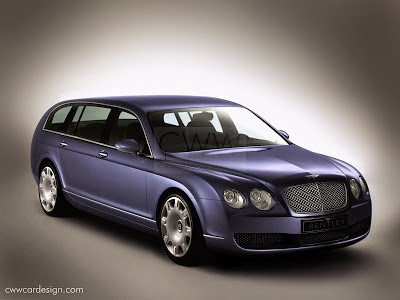
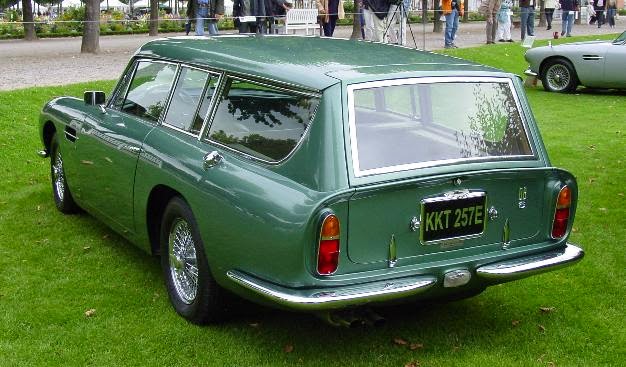
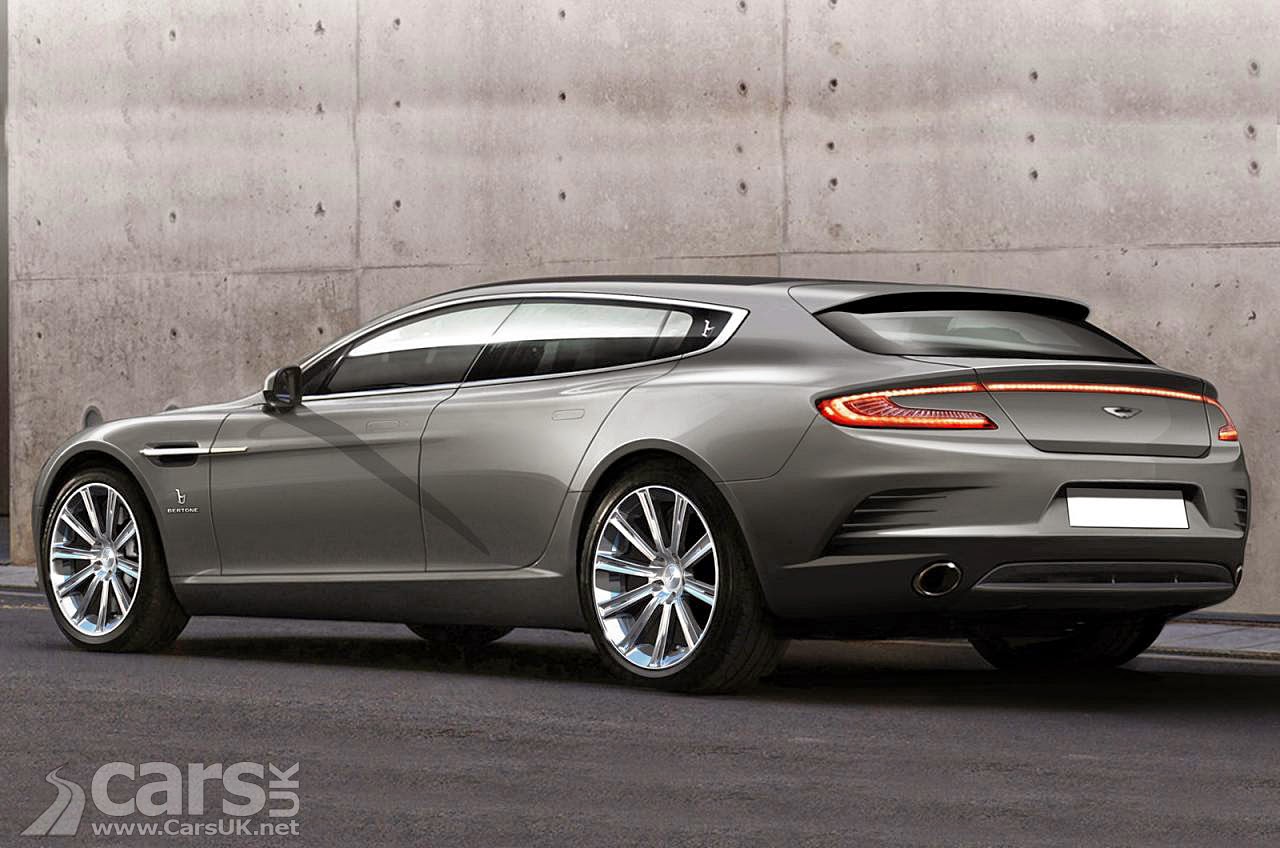
Just take a look at a few of the photos below of one off specials, they all manage to get my automotive juices flowing and I think an Uber Luxury Estate could go be the next big thing.


By Colin Hubbard


6 Nov 2014

2014 Audi S3 Cabriolet Review

Colin Hubbard reviews the 2014 Audi S3 cabriolet

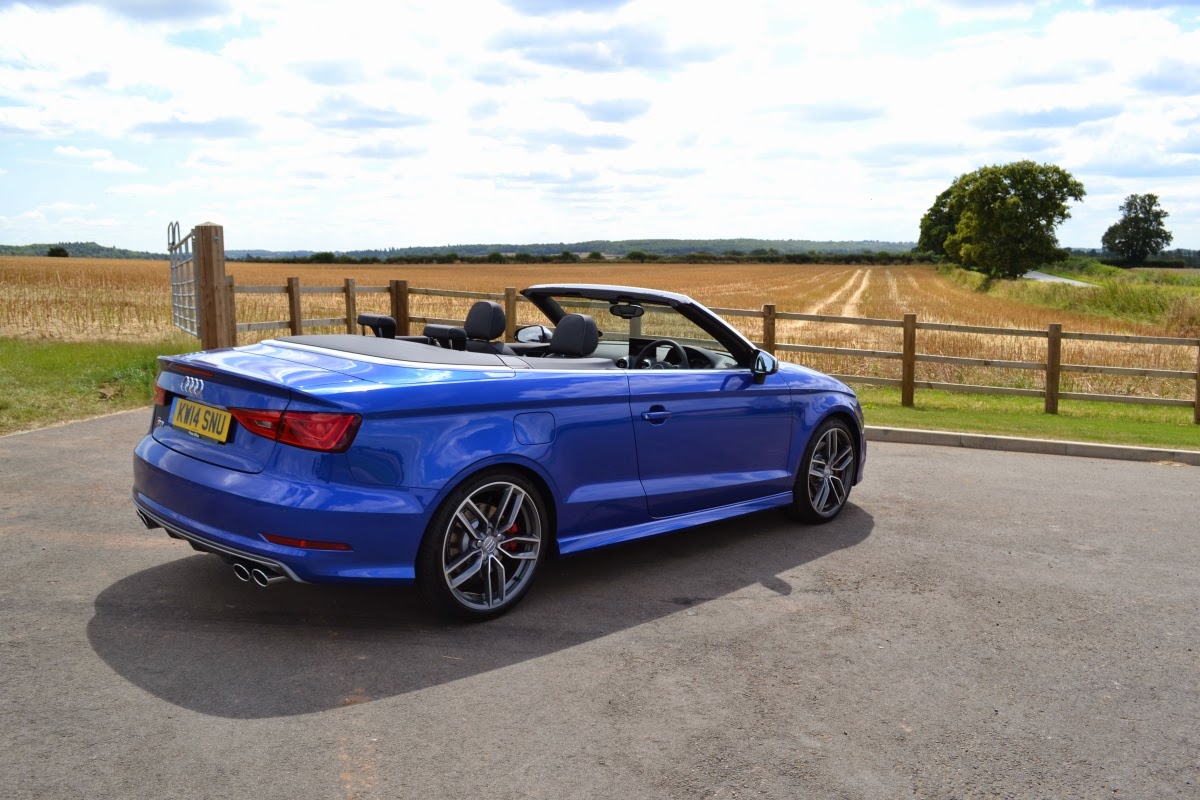
2014 Audi S3 Cabriolet

Speedmonkey has driven both the S3 saloon and A3 cabriolet but now Audi has combined the S3 engine and chassis with the S3 cabriolet body to create the S3 cabriolet.

Power comes from the same 296bhp 280lb/ft 2 litre turbocharged 4 as featured in the S3 and Golf R and doesn't fail to impress in this application.

Drive is via a 6 speed twin-clutch gearbox mainly to the front wheels with a Haldex rear diff feeding in power when required. An electronic pseudo limited slip diff brakes individual wheels as and when called for to keep the car in a straight line so forward motion is progressive, not pointlessly spun away.

The suspension has been uprated to cope with the additional power and features Audi's renowned magnetic dampers along with 25mm lower springs.

The chassis is finished off with 19 inch twin-spoke star design alloys finished in two tone anthracite and polished alloy with 235/35 Continental tyres.

Visually the A3 Cabriolet body is already a good looking car with a long, almost saloon style bootlid but it gets more presence in S3 guise. Changes include a deeper front bumper with larger air ducts with the depth continuing down the side with sharp side skirts and extended rear bumper. At the back end a rear diffuser adds some muscle aided by a pair of chrome oval tailpipes either side.

There's plenty of body bling with double chrome bars on the front grille, rather menacing LED headlights, signature S3 aluminium look mirrors and led rear lights.

The fog lights have been removed from the front bumper and replaced with air intake ducts.

Finished off in Sepang Blue pearl effect paint the S3 is one of the most attractive convertibles on the market.
2014 Audi S3 Cabriolet

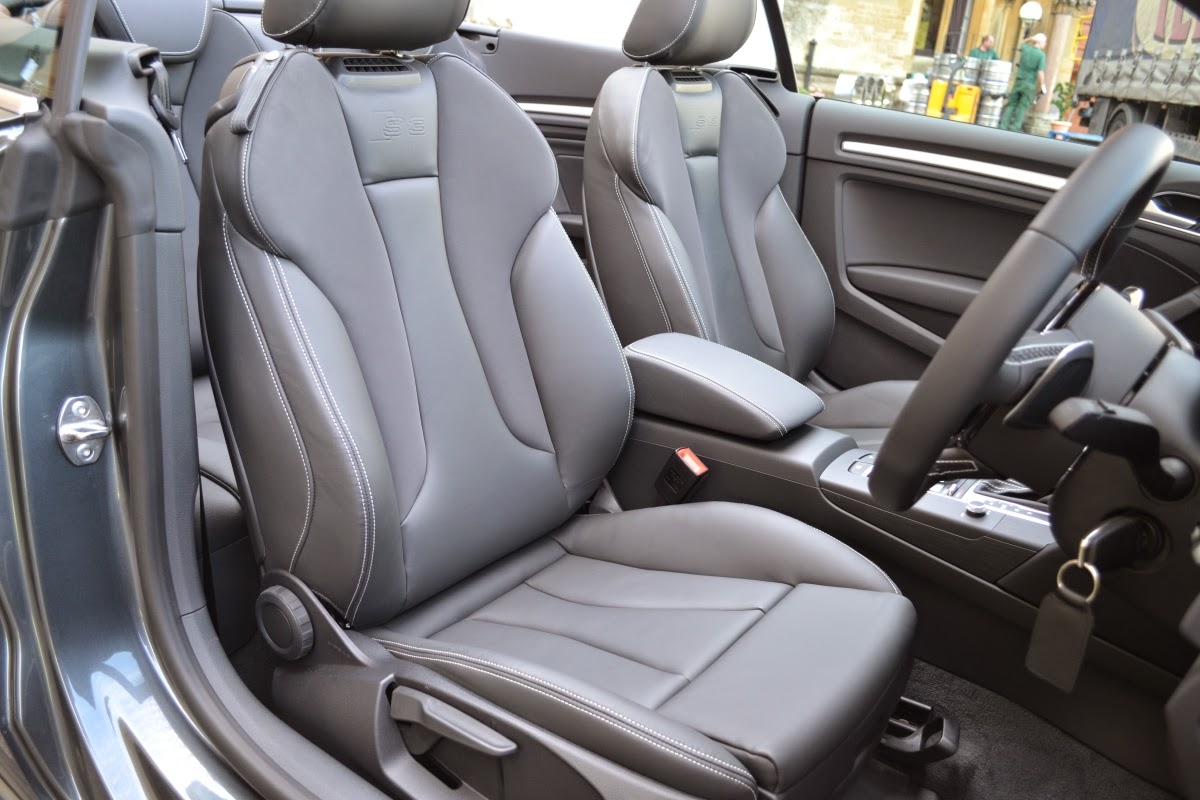
On the inside the cabin is trimmed in Nappa leather with silver stitching with little to give away sporting pretentions other than a pair of sports seats with S3 embossing and a fat rimmed, flat bottomed steering wheel.

The front seats are fine for adults, hood up or down, as you would expect but the rear seats are a little cramped for adults. Short journeys would be fine if the front seats are moved forward sufficiently but long journeys four up would be uncomfortable after a while.

In the driving seat and all feels very 'Audi', meaning very clean, tidy design in a well trimmed thought out package but not overtly sporty.

The engine ticks over quietly at idle. You'd be fooled into thinking this is a lowly 1.6.

On the go the ride is surprising compliant and, I suspect, aimed at families who want a kiddy chariot for the school run but with the ability to drive like their hair's on fire on the way home.

Given it's not such a harsh ride and combined with quattro drive it grips surprisingly well on country roads whilst bumps and undulations in the road simply do not phase it - it remains planted and stable. You can press on without fear of bouncing around so it only takes a few miles to get an enormous feeling of confidence in the car.

Just as in the Golf R the engine is a cracker, it needs a healthy dose of revs to really get going but when there it's fairly relentless, noticeably more so in dynamic mode when the twin clutch gearbox holds onto lower gears longer to keep you in the optimum rev range for instance acceleration.

The main central screen lets you select from the drive functions offering individual, efficient, comfort, auto and dynamic modes. I tried them all, efficient was extremely slow witted to react to the throttle and changed up at 2,000 rpm so I kept it in dynamic for the rest of my time with the car and found it spot on for my driving style.

At easy throttle settings there is just a deep cough from the back end but as you get more confident and use more revs the exhaust flaps open and it lets you know this is no feeble powered 4 pot.
2014 Audi S3 Cabriolet

With the roof down your ears are treated to the full turbo range of 'voices', from the down-change throttle blips to the urgent full-throttle gear changes as the fuel supply is cut as the next gear is selected.

Turbo lag is present but controlled, from 1,000 to 2,000rpm there's not much punch but stick with it and get up past 3,500rpm and then it really goes with more than the kick of an early Escort Cosworth.

The brakes work well providing a nice firm pedal feel and good stopping power despite the extra weight over the standard hatch.

While it is a four wheel drive car I did note some front wheel squabble when exiting junctions while the rear takes a millisecond to catch up. Maybe in the next generation Haldex it will automatically feed power to all 4 wheels when the steering wheel isn't straight.

Talking of steering it is electrically assisted and feels a little remote at times through the lovely fat steering wheel. Yes it's accurate enough to judge the position of the car inch perfectly but they could take note from VW as the Golf R's steering is pretty much perfect.

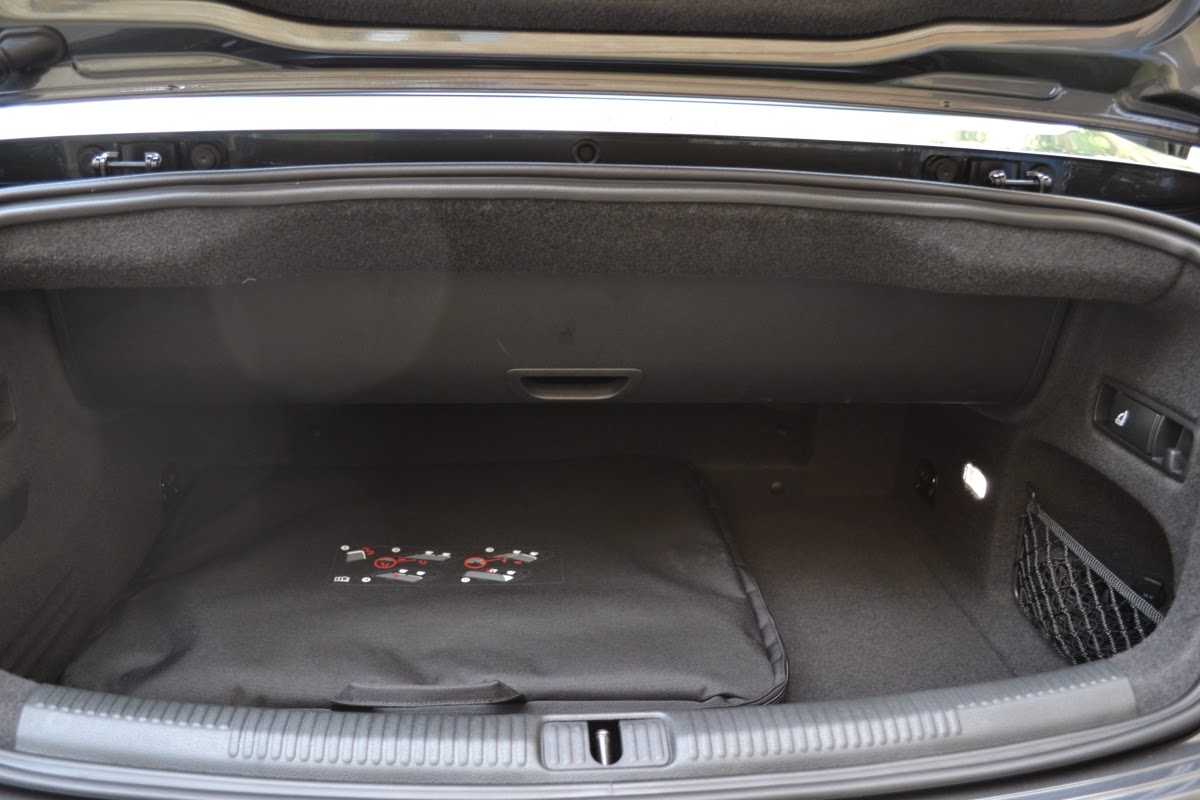
The cabriolet roof is well engineered so it's nice and quiet when up and when down it makes for a great looking car with just a small loss to boot space. There is some chassis flex evidenced through the steering wheel and scuttle shake visible is evidenced in the rear view mirror but I haven't driven another cabriolet that hasn't suffered with flex. Considering it's a 4 seater it's really quite good as the distance the hood has to travel is much greater than in a 2 seater.

In the front and there's very little buffeting, no doubt aided by the wind deflector which is located over the rear seat, but take a seat in the back (with the wind deflector moved to the boot) for any period of time and you will exit the car with hair like Worzel Gummidge.

Overall it's a quality product with very lively performance, great handling and jaw dropping looks.

There is little in the way of competition for the S3 on the market at present. Vauxhall's Cascada and VW's Golf Cabriolet and EOS don't get close to the S3's performance leaving the closest real rival as the BMW 435i convertible which starts at £45k, some £7k more than the S3.

The S3 cabriolet is a unique, fast and enjoyable way to enjoy the sun with your friends.

Stats


Price - £38,085 (as tested £43,465)
Engine - 2.0 litre, inline-4, turbocharged, petrol
Transmission - 6-speed twin clutch auto
Drive - 4 wheel drive Quattro with electronic diff lock
0-62mph - 5.4 seconds
Top speed - 155 mph (limited)
Power - 296 bhp
Torque - 280 lb ft
Economy - 39.8mpg (combined)
CO2 - 206 g/km
Kerb weight - 1,666 kg
2014 Audi S3 Cabriolet

2014 Audi S3 Cabriolet

2014 Audi S3 Cabriolet

2014 Audi S3 Cabriolet


12 Sept 2014

Driven - Audi R8 V10 Spyder 5.2FSI Quattro

Colin Hubbard reviewed the hardtop Audi R8 V10 back in July.  Here's his review of the convertible R8 V10 Spyder

Audi R8 V10 Spyder 5.2FSI Quattro

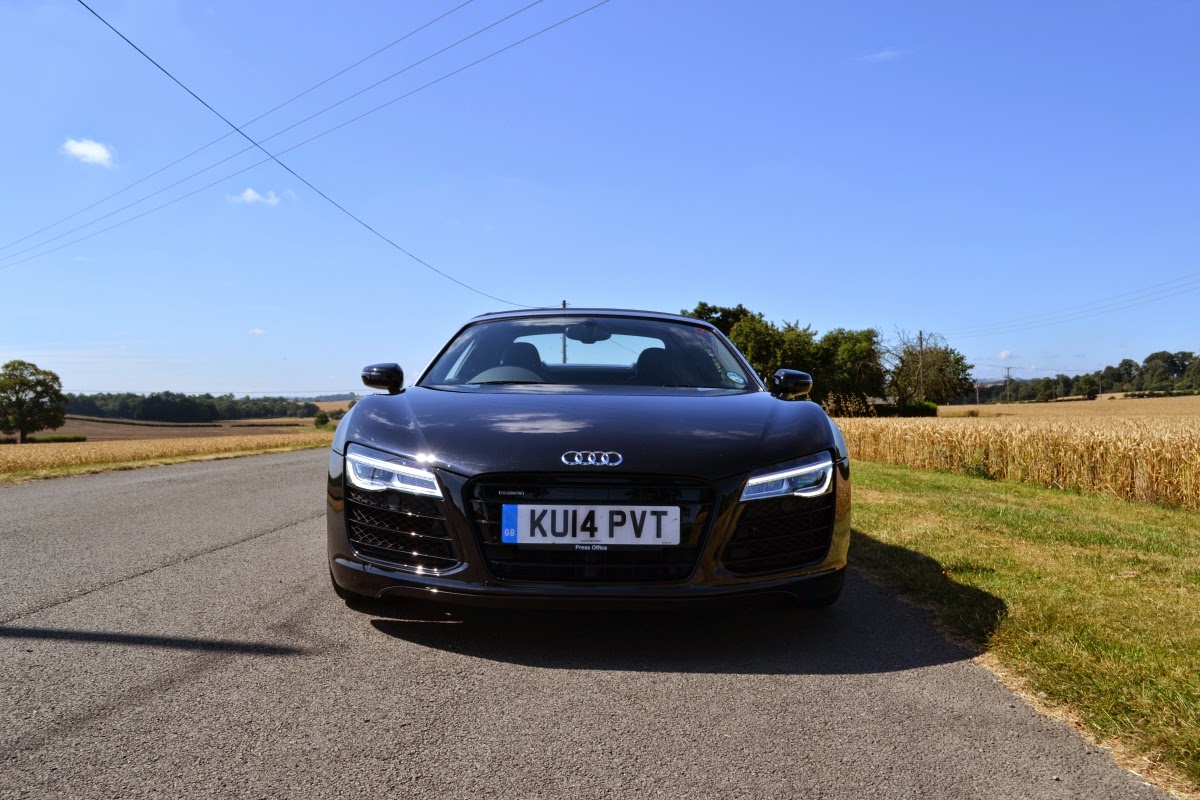
The test car was finished in pearl effect phantom black and, along with titanium-finished double arm 19 inch alloys, looked staggeringly good with the hood up or down.

The other staggering item is the price - nearly £130,000 on the road - some £10,000 more than the hardtop but it does come with everything you need or want in a supercar.

And supercar this is, not only does it have the performance to back the name up but the open cockpit amplifies the driving experience.

Power is supplied by the same Lamborghini derived 5.2 V10 as the hardtop but the spyder carries an additional 75kg from its electrically folding soft top, additional bracing and a powered rear glass window. Magnesium in the roof structure helps save a little weight but performance is still marginally blunted, taking half a second extra to 62mph  - 4.1 seconds - and with a top speed of 194mph it only loses 1mph to the hardtop.

The chassis is quattro equipped so is all wheel drive with a varying split of power to the front and rear wheels depending on conditions and traction. The suspension is electromagnetic dampers and coil springs which feels as fresh today as when the R8 was originally launched, magic carpet to tight and taut at the touch of a button.

Thankfully the test car was fitted with steel disks - Audi's new cross-drilled wavy disks in this instance, to save unsprung weight. Not only do they look great but along with the multi-piston calipers they slow the car's 1,645kg down with ease and offer excellent modulation.
Audi R8 V10 Spyder 5.2FSI Quattro

From the outside it looks very classy, black really suits the Spyder and highlights the curve on the engine cover nicely. Unfortunately due to a complicated folding soft top the R8 loses the glass engine cover but all is forgiven as the overall shape is stunning.

Even with the hood up it retains its good looks although the hood arches down unnecessarily toward the rear to retain the sleek lines, while the vertical rear window is electrically retractable and can be operated independently of the roof.

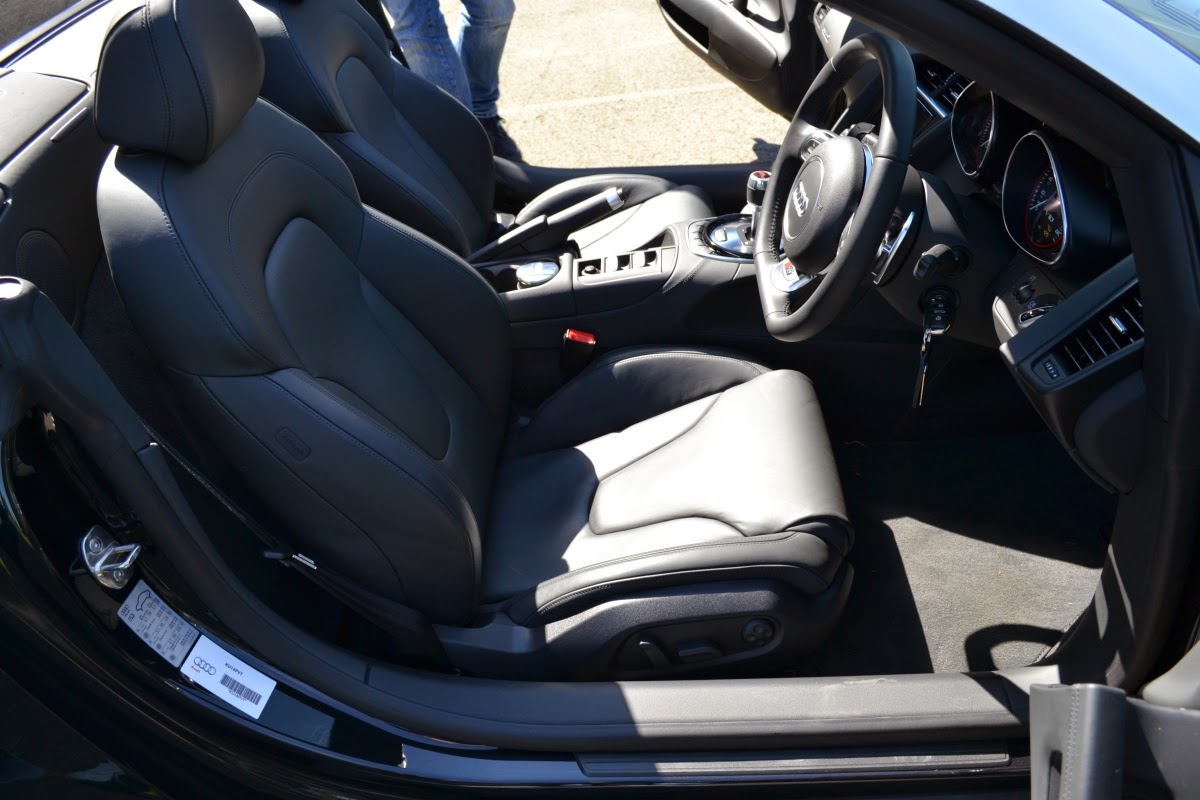
Inside is familiar R8 territory being classy rather than shouty unlike its Italian sister. To be honest the new R8 will be welcome as it hasn't changed since it was launched in 2006 but time has been kind and it's still a nice place to be.

The obvious benefit of a soft top is the infinite roof height and the wind in the hair driving experience but what you get in the R8 is the sound of that glorious V10 engine mounted just inches behind you.

Prod the starter button to wake the engine and it barks loudly at you, the cloth hood not insulating your ears the same way the tin top does. As it's a gloriously sunny day the hood is lowered straight away (in 19 seconds) although it can be lowered at up to 31 mph.

Out of the launch venue and the R8 rode the speed bumps easily. Even though it's a low car it is still everyday friendly and as I hadn't pressed the sport button yet the dampers were still in their softer setting.
Audi R8 V10 Spyder 5.2FSI Quattro

Once on the open the road the Spyder comes into its own. You can hear and feel the V10 howling and popping as if it's in the cabin. When you experience the sound and feel the wind rushing around you the small dent in acceleration from the hard top is instantly forgotten and it feels just as fast.

There is a little chassis flex, even though the aluminium spaceframe chassis features some elements of carbon composites this supermaterial can't quite match the rigidity of a hardtop when the roof is cut away. It's acceptable though and doesn't affect the overall driving experience.

As it was a dry day and the R8 is all wheel drive grip is predictably impressive. On curvy roads the back wants to push out a little under hard acceleration and the front end is light but digs in well

Now it's time to press the sport button which turns the hard top V10 into an animal. No change in the Spyder and it quickly drops a couple of cogs of the S-Tronic gearbox. Now the howls and pops are more HOWLS and POPS which wake you like a glug of energy drink.

The metal particles in the dampers are charged,  thickening the viscosity of the fluid so the damping is firmer. The beauty of this system is that they are still constantly adjusted many times a second so while the ride is firmed up the chassis is not bone jarringly hard. The ride is now excitable and also a little jumpy, but not brittle so it flows with the road, finding traction where a firmly damped car would skip.

The changes in sport mode transform the experience and the whole car comes alive like a child on its second bag of Haribo. Suddenly that extra £10,000 seems like money well spent and on a sunny day I can't think of another car I would want to be in.
Audi R8 V10 Spyder 5.2FSI Quattro

As the roads twist and turn and the Spyder gets into its groove and covers ground incredibly quickly and competently, the 10 fizzing cylinders just behind you with little in the way of silencing, you feel like you are in your own exotic amphitheatre.

Part of the driving route is on the motorway so I raised the hood to test the sound deadening properties at speed. At a steady 70mph on a busy road sound is muted and quiet enough for a conversation without shouting.

As I exited the motorway I opened the rear window which reveals an entirely different character to the car. Instead of the wind whistling in your ears and rushing past your face all is now calm, the engine note clearer but no less loud.

I also noted a whirring sound like a belt driven supercharger with the back window down that I didn't notice with the hood down. It's a strange noise but one I liked and which added to the driving experience.

As I passed into a built up area where the speed limit reduced from 60mph to 30mph I was still in sport mode so the 7 speed gearbox changes down 3 gears - with each change it auto blips the throttle - thrum, thrum, thrum. It's too much for urban areas so I pressed the sport button to put it back to the default setting to avoid looking like some attention seeking footballer.

After a few more miles I gave it one last blast, with the sun beating down on my face, the wind in my stubble and the hairs on the back of my neck tingling from the high pitched V10.

As I parked up I thought back to the price and wonder if Audi is asking too much for this ultimate incarnation of the R8. It only takes a nanosecond to answer and it's an absolute no. Yes it's not as flamboyant as the £60,000 more expensive Lamborghini but it is a hell of a lot classier instead, being a car for the restrained type. More Bond than Beckham.

Stats


Price - £124,650 (£129,005 as tested)
Engine - 5.2 litre, V10, petrol
Transmission - 7 Speed S-Tronic
0-62mph - 4.1 seconds
Top speed - 194 mph
Power - 517bhp at 8,000rpm
Torque - 391lb ft
Economy - 19mpg combined
CO2 - 349 g/km
Kerb weight - 1720kg
Audi R8 V10 Spyder 5.2FSI Quattro

Audi R8 V10 Spyder 5.2FSI Quattro

Audi R8 V10 Spyder 5.2FSI Quattro

Audi R8 V10 Spyder 5.2FSI Quattro


11 Jul 2014

All Geared Up - How To Choose The Right Motorcycle Gear

In 20 years on and off riding a motorcycle I have probably ridden 20,000 miles, but 10,000 of those were in 2012 when I decided to take the car off the road to hone my riding skills in all weathers.  If it rained or shined I had no option but to get togged up and onto 2 wheels to get to work or wherever I needed to be.

This experience teaches you a lot a lot about vehicle control and very importantly about what gear is required to keep you warm, dry or cool depending on what the weather has thrown at you that day.

When you first take your test or indeed any additional training which I have done (IAM course is well recommended!) they don’t give you any advice about what to wear or how to wear it.  I have found that reading bike magazines can help a little.  Ride magazine regularly carry out long term detailed and scientific tests on all sorts of gear.

Whilst this is helpful you also have to remember that every human is a different size so even when ordering recommended clothing off the internet it might not fit and you end up living with it - either too big or too small, thinking it will ‘give’ a little when used. In addition it's very expensive to kit yourself out in recommended gear and to buy all new, you could easily leave a shop having spent four figures on your credit card.

Motorcycle clothing has two main purposes;

1 - to protect you should the unthinkable happen and you end up sliding down the road at 70 miles per hour, into a kerb, or even under a car, so it is generally made from leather, which has excellent abrasion resistance, and armour, to cushion impacts on vulnerable parts of the body, or parts that will take an impact such as shoulders, elbows and knees.

2 - to protect you from the elements by keeping you warm and dry so your mind is focused on your riding rather than cold/wet parts of your anatomy.

It is regarded that motorcycle clothing should be a snug fit so the armour doesn’t move in the event of a fall.  It is worthless if it is not positioned in the area it is intended to protect.

Let’s start with your helmet, which serves to protect your most important commodity, your brain.  Without your grey cells working propely you fail to operate.  In an impact your brain moves in your skull. The helmet shell protects your skull from impact and the padding stops your head moving within the helmet.  You need to cushion your skull from impact and stop your brain moving too much in your skull which causes brain damage. Scary stuff hey.  Do it right and do it properly.

First off always buy new and always ensure it fits right. Go to the motorcycle clothing shop.  Try many different makes on as they all fit slightly differently.  Take advice from the salesperson to ensure it fits properly as it’s better to be tighter and give a little than slightly loose and loosen up too much. 

At this point you will end up with red ears from trying on lots of helmets but believe me it’s worth getting it right.  If it’s not comfortable move on to the next. Remember, a better fit is vastly more important than an expensive helmet but try to get the most expensive you can afford as generally the more you spend the better quality materials and testing it has had. 

If you like a specific helmet from the larger manufacturers such as Arai and Shoei they can sell different padding to ensure the one you like fits properly. If you still want to save money go find and buy the same helmet you like on the internet, knowing it will fit.

Now you have it look after it.  Don’t drop it as the shell gets damaged easily so if you do have an off it will not do the job it was designed to do. Even if it drops off your bike seat a helmet will lose strength.  Think of an egg shell breaking - once damaged it is visibly damaged and weakened but a motorcycle helmet doesn’t show its shell is weakened - another reason for not buying secondhand as you do not know the history. So don’t leave it on your bike seat or tank when on its side stand and keep a location at home or work where it's flat, dry and safe. I keep mine in my top box when out as it can’t fall from there.

Next up is the jacket and protecting the second most important item on your body - your core. You need to be warm at all times otherwise you could ultimately lose concentration and experience numbness, pain, drowsiness and weakness which will massively affect your ability to ride safely. 

Leather or textiles are your down to personal choice.  I have both and use the textiles for cold wet weather as leather isn’t waterproof. Ensure there's armour in the shoulders and elbows and you can move around freely in it. Your choice of bike can also dictate what you wear, not just in fashion but in design. For example a sportsbike with bars and seat at pretty much the same level is the perfect environment for one piece leathers as if you were to wear separates you might get plumber's crack and rain running down your undies.

For a leather jacket try to keep it a tight fit so the armour stays where it’s designed to and just enough room for a couple of light layers underneath. For textiles I bought mine with a slightly bigger fitment so I can get some more layers underneath as I wear this when it’s colder. The armour's still in the right place but I am warm.

In warm weather leather jackets have vents to open to let some cool air in and you can open the main zip a little, not a lot as you want it to stay on you in the event of a tumble.

Note - outside pockets aren’t waterproof so don’t put phones, wallets, cigarettes in them if you want to keep them dry.  Instead use an inside pocket, which should be waterproof.

For trousers try to buy the same make as your jacket so that they zip into each other at the waist.  This makes a massive difference for keeping in the heat and also safety as they hold together in the event of an off. Again look for armour on the knees and also the shins and look for some padding on the hip. I wear my leather trousers all year round and use overtrousers if it rains.

Motorcycle Boots offer protection not just to your feet but your ankles and calves - areas which could get injured very easily by a car or low wall. Firstly ensure they are not too big for you and could come off in the event of an accident when the socks you are wearing would end up being your only protection. 

As with most items of clothing try these on at the shop.  Whilst motocross boots look mean they are very rigid and make changing gear on a sportsbike very difficult. I bought some Alpinestars size 9 off the internet after trying some size 9’s on in a shop.  When I put them on they were very tight. It turns out I bought the waterproof ones with a gortex liner which made the boot a tighter fit. A good tip to break boots in is to go for a walk in them.  I walked the dog out in mine every night for a week and they soon gave a little. It took 6 months to get them to a comfortable fit though.

You can buy the best boots in the world that have been proven to be 100% waterproof but you must remember that there is always a large hole in the top where you put your feet in. I have been caught out many times in heavy rain when the water runs down your leg and into your boot and they act like a tank to collect water. Not fun. Now I carry some simple overtrousers and when I suspect it may rain I pull over and put these on, their main purpose being to divert water over the top of the boots so my feet remain 100% dry.

For any bikers out there who have struggled to put on waterproofs quickly and with your boots on at a bus stop ensure you keep a plastic shopping bag with you. Simply step into the bag with one boot and hey presto the waterproofs slide over your boot like a warm knife through butter, transfer the bag to your other boot and in 60 seconds you have your waterproofs on. The bag ensures theres no abrasion on the rubbery boot surface for the grippy inside of the overtrousers to catch on and you stay upright rather than tripping up and ending up sat on the floor. Been there done that!

Gloves, you can’t have enough pairs of gloves as they get dirty, wet and you often try different ones depending on summer or winter in a bid to keep your fingers from freezing or overheating. I try to look out for ones with some carbon or Kevlar protection on the knuckle, not just do they look purposeful but they also offer good protection to your knuckles which is the most likely place you will get any injury as you cling to your still beating bike flying sideways down the road. As I ride through most months in varied weathers I look for gloves that are longer in the wrist area which offer more weather protection as you don’t want to get your fingers wet as the padding starts to go out of shape and the seams move so they are uncomfortable.

My top tip for gloves is to ensure they are positioned inside your jacket whenever it’s looking like rain, when it rains the water pours down your arm and into you gloves and they fill up like a balloon under a tap and you lose what feel you had over your minor controls. Unless you ride a chopper with huge cowhorn handlebars you are always better off tucking your gloves inside your coat and zipping it up to ensure a snug fit, I have never experienced wet arms from water going between gloves and coat this way. On a personal note my right coat sleeve is harder to fasten so I do zip the right one up first and then the left using my right gloved hand. It’s trial and error to whatever suits you.

For anyone out there who doesn’t have a snood I would recommend the next thing you do is get on line or to your nearest shop and try one. They bridge the gap between your coat collar and helmet and act as a plug to stop wind getting down your jacket and making you cold. In addition they stop the rubbing you get from abrasive coat collars. When it’s really cold I use 2 to really keep the drafts out. I have an Oxford one which is better made than the other non-branded one and keeps its shape better. As mentioned I have 2 and rotate them weekly, washing when not in use to regain their elasticity, oh and also smell nicer.

With regards to waterproofs it’s best to wear proper textile tested to destruction and monsoon type weather clothing but not everyone has the funds to have both leathers and textiles. My experience has shown me that normal waterproof overtrousers and waterproof overjacket over your leathers can work well to keep the wet away and keep you dry until you get home. The main places where you get wet are in the boots from the rain running down your leg, in the crutch from water running off the tank and collecting just in front of you and your neck where the top of your jacket meets your helmet. I tried a 1 piece rainsuit on numerous occasions which was a nightmare to put on over leathers and in the end bought a simple 2 piece oversuit which is perfect as a temporary measure.

The last item of clothing on the list and is easy to forget is undergarments - thermals, mid layers and base layers. The base layers are designed to draw sweat from your skin, known as wicking and also act as an insulating layer. These are generally a thin elasticated long sleeve top and separate ‘long johns’ and cost circa £25-30 each. Mid-layers are a thin compacted fleece material which offers wind proofing and heaver insulating properties and are long sleeve tops with a slighty higher collar. You can also get ‘Long-Johns’ as midlayers but these are for more severe conditions than we have in England. The final layer top is a fleece to add extra insulation to your core and help keep the wind off the base layers. The beauty of the laying system is that its not too bulky to wear under you existing coat and trousers so you can be comfortable and not too hot.

So now you have bought all the gear you now have to decide what to use on the day. Depending on your journey you should always think about how long you are out for, what the weather will do, where am I going and where can I stop. If its dry then it's leathers, and your choice of under layers.  If its dry but you expect rain, why not put on your leather trousers and textile jacket and take some over-trousers in a tank bag. If its rain then it’s the full monty of waterproofing and I even put on my tankbag as it keeps the rain from running off the tank and pooling in the crutch region.

Now think about how you wear the items.  Do I need to open the vents, close the vents, do the main zip all the way up or leave open a little for fresh air?  Do I need to open my helmet vents to let in fresh air or is rain due and the rain will get into the helmet, it then stays wet and can get mouldy.

If you have a black visor for really sunny days (when it’s quite frankly dangerous to ride with a clear visor) then always carry a clear visor in case the weather turns or the police pull you over. Black visors are illegal for road use even though you have better and safer vision that wearing sunglasses so be on your guard and keep the excuses at the back of your mind ‘well officer it is a perfectly clear sunny day and I thought it safer to wear this visor than my clear one to protect my eyes from the sun.  If the weather turns I can quickly swap to my clear visor which is here in my top box!’

Note I experience misting up issues last year and found the pinlock system on my Shoei (or a fog insert product) to be a fantastic solution, it works by keeping a screen of plastic about 1mm away from the visor inside and it acts like double glazing, it simply doesn’t mist up. My black visor steamed up in cold weather, mornings, and in the rain as it didn’t have a pinlock or fog-guard. No matter what products I used on the inside it steams up in certain conditions if you do not have a fog insert. Seriously consider getting a fog insert or pinlock system if you ride a lot, it really could save your life.

Riding in the rain can be tricky and on the subject of visors I would heavily promote a rain repellent so that the rain beads off your visor. Light mist can be difficult to see in but with the rain repellants sprayed and wiped clean regularly on your visor you simply turn your head and the water runs off.

Often when I go on a journey there’s something which annoys me.  Maybe my jacket isn’t done up enough, I have left a pocket open or I didn’t put on overtrousers when it was looking like rain. At this point I think WHY DIDN’T I just do this or do that?  Now at the start of a journey I think WDI before it happens, then think about the weather, where I’m going and then look at buttons, vents pockets, zips, visors and then set off happy that I’m going to be happy. Why don’t you try that next time you go out!

With all of the above put into practice I hope you can stay warm and dry but I have listed below a few additional tips:

1 - When you buy new gear, always keep the old gear in case of emergency. If for example the heavens open and you get soaked to the skin, if you have kept your old gloves, boots, leathers you can wear them the next day whilst your wet gear dries out. Wet gear can take days to dry out.

2 - Don’t dry out motorcycle clothing on radiators.  Leave to naturally dry in the house over the back of a chair or window sill. Heat dries out and causes cracking which in the  long term damages leather.

3 - If you really can’t keep your hands warm with just gloves then try heated grips.  They can be bought from just £40 and are fairly easy to fit and make the world of difference when the weather is freezing or just when wet.

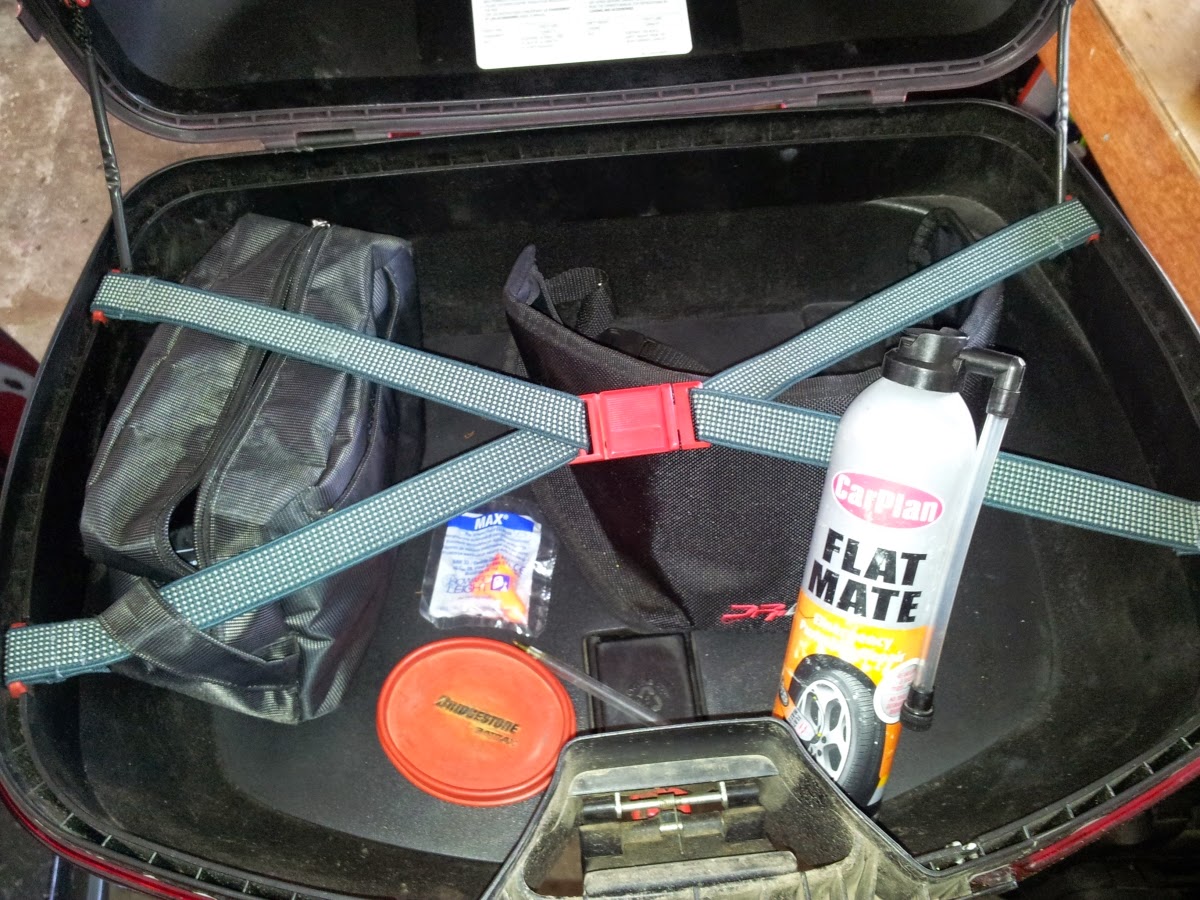
4 - If you ride on a daily basis seriously consider a top box, they allow you to safely and securely take items/shopping with you and at the other end store your helmet, gloves etc so you don’t have to walk around with them. In addition put a toiletry pack inside and keep essentials such as a tin of tyre weld, a pen, baby wipes and a side stand plate to stop you sinking in the mud when you haven’t got an old beer can.

Thanks for reading and if you have any tips please add as a comment.

Article by Colin Hubbard