Showing posts with label Sports cars reviewed. Show all posts

4 Dec 2016

Review - BMW E90 330i M Sport

BMW E90 330i M Sport

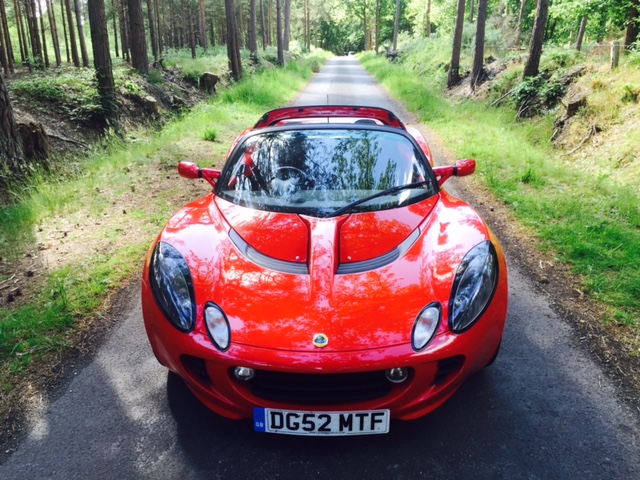
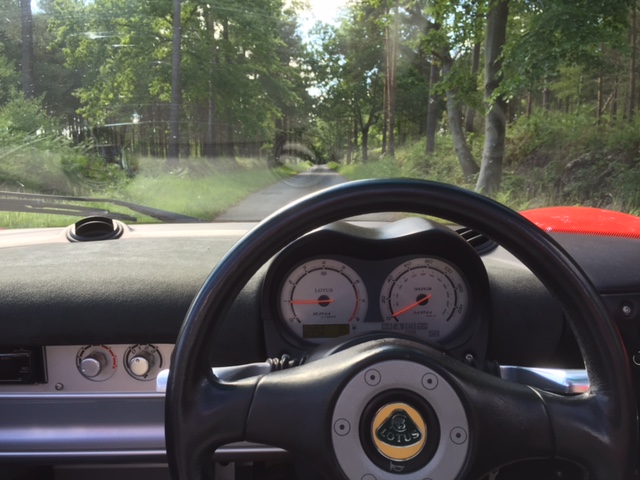
This past couple of years have been quite ruinous ones in terms of me and cars. At the start of last year I owned an Audi TT 3.2 V6 coupe but that got sold and I bought an Elise. Now the Elise was a good car but was so ridiculously impractical I quite soon got bored of having to clamber in and out, and having nowhere to put anything in it, and getting 70mph rain in the face whilst on the motorway in a storm.

So I sold that at a four figure loss and bought a 911. The 911 was a 2000 3.2 Carrera 2 with a reconditioned engine. It was everything a 911 shouldn't be - automatic, convertible, 996. The engines in 996s have a habit of exploding but mine had a reconditioned engine fitted two years earlier so was safe.

It lasted 3 weeks before the engine exploded at 60mph and 6,000rpm. 22 litres of coolant and oil were thrown into the air as the engine locked up and we coasted to a halt. In the 3 weeks of ownership I had spent a small fortune on a new battery, alternator and sound system. I sold it for less than half what I had spent on it.

Oh, I bought a new bike too. A brand new Triumph Tiger 800 XCx.

Through all this has been my trusty Volvo XC60 D4 R-Design. It's a car I love for its ride, quality, tech, ease of use and general familiarity and comfort. But it's not exactly a dynamic vehicle. It's not one you'd take for a drive for the sake of it.

The Volvo is leased and the lease comes to an end in early 2017.  I'd been thinking about what to replace it with since...ooh about Easter.

99% of our village owns a new Land Rover Discovery Sport. It's a lovely looking thing, especially in red with black wheels. I've looked at buying and leasing one but the finances just don't stack up for me. I like a discount on a car and Disco Sports are expensive for what they are. Evoques are cheaper but I haven't the urge to start a mobile hairdressing business yet.

So then I started looking at VW Golfs. If lease deals on Golf Rs were dirt cheap I would have signed up for one. But they aren't at the moment. So I started looking at buying a GTi. It's around £27k specced how I'd like it but you can get one discounted to about £23k if you know where to look.

But I had various conversations with my son (who I trust on these kind of things) about buying or leasing new vs buying used. One thing the Volvo has never been is mine. Any new car wouldn't ever be mine. Even if you're buying one it would be on a PCP deal and with that you give it back at the end of the term. And son reckoned owning a car would be better than not. And I agreed with him.

So I started thinking about budgets and monthly payments and decided I would buy a Mk6 Golf GTi. The Mk6 is the best looking Golf, is quick, has all the tech I want - heated seats, cruise control, bluetooth, is practical enough for us and is good to drive.

Decision made I gave myself a couple of months to find and buy the best I could find.

But then one week I thought about BMWs. Now me and BMW don't have the best history. I've had an E36 320i SE, an E36 323i Touring, an E46 318i SE and an E39 525td Touring. I didn't really like any of them. None were quick and the driving position was compromised in all the 3-Series I'd owned. The throttle pedal was too stiff in the 323i. They all annoyed me in some way or other.

The only BMW I ever liked was a 435i M Sport Coupe. That was pretty good.

I need a four or five door car so Kes, my border collie, can ride in the back. I also fancied an auto this time. Given a choice I'd rather have a bigger naturally aspirated engine than a smaller turbocharged one.

I did my research and could afford an early 320i F30 or a later E90 with a higher spec and decent engine. I pored over the online ads. I preferred the shape of the saloon E90 than the F30 which looks big and bloated in comparison.

I narrowed it down to wanting an E90 330i M Sport saloon with the auto gearbox. The M Sport not only offers a higher spec than lower models but looks much better with it's bodykit and 18 inch wheels. I didn't want to buy from a dealer so looked at the private ads only. A few looked good.

One Saturday I was headed to the Motorcycle Live show at the Birmingham NEC. There was a particularly good looking 330i only a few miles away so I went to have a look at it on the way.
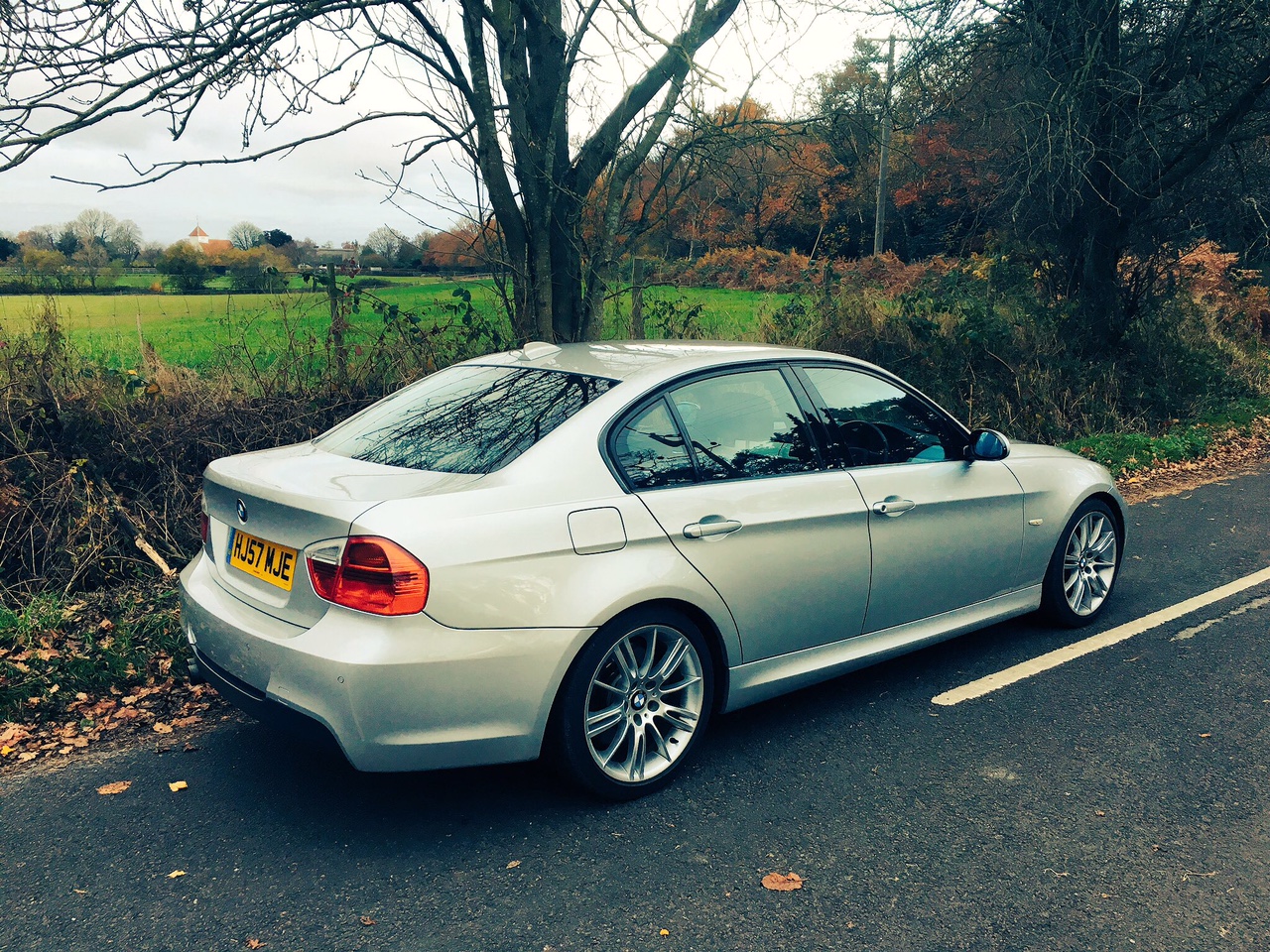
BMW E90 330i M Sport

As soon as I saw it I was hooked. Great looking in silver it was a 2007 car with only 53,000 miles on the clock and a full service history. I could have afforded a newer car but this one wanted for nothing and would save me a few quid over a later one. I left a cash deposit and returned the next day with the balance.

I was the owner of a 2007 330i M Sport with auto transmission. Since then I've put a good few miles on it, done some motorway work, driven into London and gone for a couple of drives purely for the sake of it.

I love its looks, its sharp, clean lines and its lack of vulgarity. I also love the fact it feels solid, a quality motor that belies its age. Stick a modern infotainment system in it and it could pass for a much newer car.

The drivetrain is almost perfect. The engine is the N52 3-litre inline 6-cylinder which produces 250hp and 230lb ft of torque. It's a thing of wonder. It sounds fantastic and has a decent spread of torque across the range with none of the lag or low rev weakness of a turbocharged engine. The gearbox is a 6-speed automatic with sport mode for later changes and allies well with the engine.

The car looks good outside and in. Previous BMWs I've owned have had quite slabby and not very supportive seats but the seats in this car are comfortable and supportive, and body figure hugging. They're comfortable on a long drive and sporty when you're pressing on.

The interior is light years ahead of that in older BMWs. With flourishes of aluminium trim and improved design and layout it feels as good as it looks. The steering wheel is chunky and the dials clear - although I would have preferred a digital speed readout.

It has almost all the tech I've got used to in the Volvo and other new cars but falls over in the infotainment area.

My 330i has iDrive. iDrive was an early attempt to remove some functionality from buttons and dials and embed it in a screen based system. Some climate controls, almost all the entertainment and most of the car's dynamic controls are accessed via iDrive. It works from a single rotary knob and a button. It also contains a satnav which, because it's a few years old, is pretty hopeless.

Yes it is easy to use whilst on the move but no it is not intuitive. It does not have DAB radio and it does not have a USB connection (although it was available as an option at the time) or Bluetooth for music, although bizarrely it does have Bluetooth for phone calls.

To play music I either have to play CDs or plug my phone to the Aux in socket, which is OK for longer journeys.
BMW E90 330i M Sport

Those in the front are quite cosseted with plenty of room, a pair of cup holders, decent door pockets, heated seats and individual climate controls. Those in the back have less room but still much more than in older 3-Series. The boot is quite big and the floor surprisingly low for a rear wheel drive car.

Ah yes, rear wheel drive. The 3-Series' dynamic masterstroke. So what is it like to drive?

I've driven everything from a BRZ to a 911 via a Rolls Royce Wraith. I've driven a Lotus Evora around the track at Hethel, I've chucked a Cayman R around the Porsche track at Silverstone and I've wrung the neck of a Radical SR3 RS around the Grand Prix track at Silverstone. I've got to know rear wheel drive cars in front, mid and rear engined forms quite a lot over the years.

The 330i M Sport makes a damn good show of itself. On the motorways and A-roads it's a comfortable cruiser that's quiet and refined. But find somewhere more challenging and it becomes a different beast.

You forget the rear seats and boot. You forget you are in a saloon. You sit low in the car and you drive it like a coupe.  The engine is strong and the gearbox fast moving - as long as you've selected sport.

The front end of the car has slightly less feel than I would have liked but the rear makes up for it. After a bit of practice you can lean on the rear and feel it moving, leaning on the suspension as it powers round a corner.

If the road is slightly unsettled or if you drive it like you have hooves instead of feet the traction control button flashes like a Christmas light. Turn it off and the rear wheels lose grip quickly.

Yet the front never loses grip.

Some cars are more than the sum of their parts and this is one such. When driving you can feel its fluidity, the chassis giving great feedback, allowing you to position it on the road just as you would like.

At high and low speeds and with short and long radius bends it feels superb to drive. And it does this without commotion. Its feathers never feel unruffled. It stays refined even when the driver's eyes are on stalks and his palms sweating.

It does have its faults. The gearbox is a bit hesitant to change down when not in Sport mode and the wheels can follow tracks and ruts in the road.

I set out to buy a car that was both practical and fun to drive, and I succeeded. They say that the sign of a great car is that when you pull into your drive and walk toward your front door you turn and look back at it. I do this every time I drive mine.

By Matt Hubbard

6 May 2016

2016 Ford Mustang 2.3 EcoBoost Review


Ford has just launched the latest version of its iconic Mustang. In recent years the Mustang had lost its way. The 80s and 90s weren't kind to it in terms of looks and dynamics and the 2005 Mustang was still a bit too big and basic for European tastes. And the steering wheel stayed stubbornly on the left.

Enter the sixth generation Mustang. This is the first Mustang designed to be sold the world over. It is the first Mustang with independent rear suspension, the first Mustang available in right hand drive and the first Mustang available with a 4-cylinder engine. 

Unlike most Mustang reviews you'll read I paid for mine (well, rented it) and I drove it 3,800 miles in 11 days.

My son and I decided that over Easter 2016 we'd drive from Miami to San Francisco and that we'd do so in a convertible - hopefully a Mustang. In terms of trips to the US I'd only ever been to New York for a weekend before and had never visited southern America or hired a car in the US before. I had heard stories that the choice available at airport rental centres was often limited to whatever was left at any particular time of day.

I was dreading turning up to find that the only car left was a Pontiac Grand Prix or something similarly dire.

As it turned out American car rental is a huge industry that runs extremely smoothly. The rental place at San Francisco airport is a short (free) train ride from the terminal and is located in a massive multi-storey car park. When we arrived we were greeted by a bunch of men wearing shiny jackets, one of whom looked at our paperwork and said we could pick any car from aisle 32.  

Aisle 32 consisted purely of Chevrolet Camaro convertibles and Ford Mustang convertibles. Result. The bad news was all of them were powered by 4-cylinder engines. Oh well. My son picked out a bright orange Mustang and we headed into downtown Miami.

First impressions were given over to getting used to driving on the wrong right side of the road in a left hand drive car. My left elbow had a door in the way and my right elbow had nowhere to rest.

Day 1 involved driving 300 miles north, in the direction Daytona Beach - whilst stopping over to take some photos in front of a very distant Kennedy Space Centre.

As soon as I got used to the excitement of driving on the left side of the car on the right side of the road I started to focus on the car itself. It was a brand new model with only 3,000 miles on the clock. The 2.3 litre inline-4 is shared with the Focus RS where it has garnered much praise. In the Mustang it produces 310bhp and 300lb ft of torque and does 0-60mph in 5.4 seconds and has a top speed of 154mph.

So it's fast. And it feels it.

Our car was fitted with an automatic gearbox. In the best tradition of the muscle car this is not a high tech flappy paddle 'box but a normal 6-speed automatic transmission. Unlike many old-school auto-boxes the Mustang's unit felt tight and quick and didn't feel like it lost any power in between its cogs. 

Even with the supposedly weedy (and derided in the UK press) 2.3 EcoBoost engine the Mustang is a seriously fast car. Put your foot flat to the floor and it gathers its skirts and takes off down the road in a very dramatic fashion. On more than one occasion the satnav, which sat on the dash on a bean bag type thing, flew off the dash.

The Mustang looks the part too. It helped that ours was orange but its designer (a Scotsman called Moray Callum (brother of famed Jaguar designer Ian Callum)) has a fine eye for this kid of thing and has managed to combine traditional muscle car looks and stance with a finer European finesse. 

UK petrolheads love the Mustang but so too do Americans. We were told at gas stations in Florida, Alabama, Louisiana, Texas, New Mexico, Arizona and California that our car looked great, or even "purdy".

The interior is pretty good too. I had expectations of horrendous elephant-hide plastic and overly shiny leather but we mustn't forget that this 'stang was designed with Europeans in mind, and the interior lives up to our expectations. The leather is tolerable and the plastic almost of Volvo standards.

The seats are very comfortable. On our longest day we drove 700 miles in 10 hours, from Dallas to Santa Fe, and I had more trouble from sun burn on the back of my neck than the seats.

The twin dials are big and clear with revs in one and speed in the other, although I do prefer a nice big digital speed readout in these days of nasty electronic policing. There is plenty of room for accoutrements in the cabin with a decent sized glove box and a big bin under the arm rest - which is too low and nowhere near your arm or even elbow.

Whilst the front seats are comfortable the rear seats are only any good for small children and legless adults, although they are fine for storage of rucsacs, multipacks of water (in case of breakdown in the desert) and general junk that two people accumulate over two weeks.

The roof is fabric and will only fold up or down whilst stationary. It doesn't take up much room in the boot, which is big enough for two suitcases with plenty of room either side. The interior is quite quiet with the roof up but noisier and windier than many euro cars with the roof down. We often drove for a few hours and then both agreed the roof should go up to give us a rest from the buffeting. 

The new Mustang has to be up to date in terms of electronics and happily it is. There is a USB charger port under the armrest and two 12v points (which are more useful as they charge iPhones much quicker)  - one near the radio and one under the armrest.

The entertainment system features FM and satellite radio in the US and digital radio in the UK. You can also Bluetooth music from your phone or play a CD. We used the Bluetooth streaming option for up to 7 hours a day every day and it worked almost without fault - dropping out about 5 times in 70 hours of driving.

So that's the specs, looks and interior. How is the new Mustang to drive?

Well, it's damn fine. As mentioned previously it is a fast car - but it doesn't really feel like a sports car, more a grand tourer. I once drove 200 miles in a Porsche Cayman 981 and ended the trip feeling tired and sore but in the Mustang we averaged 350 miles a day for nearly two weeks. The Porsche would be the better car round a track but the Mustang is better for day to day distance driving.

It does have a potentially serious problem though. It generates a kind of hum from around 40mph to 60mph. It's not a really vibration and it's not engine related as it doesn't alter with engine speed but it does seems to come and go depending on conditions. It gets worse when the engine is laboured - say on cruise control at 50mph when the gearbox is in top gear and the engine labouring slightly. But, as I say, it doesn't seem to vary with engine speed. Over nearly two weeks it stayed with us, on and off. I never could put my finger on what caused it. It did get annoying at times but sometimes I didn't notice it. It's certainly not something I've encountered in a car before.

Notwithstanding that the Mustang is a seriously smooth driver. The suspension is plush, which means it does allow a certain amount of lean in corners, and the whole droving experience feels laid back.

What the Mustang has, in abundance, is character. Whether shooting down a dead straight highway through the badlands or crawling along the Las Vegas strip it feels like it has star power and charisma. When in Los Angeles we drove it along Mulholland Drive, where many of the old school Hollywood Stars live, and the Mustang felt right at home.

Many reviews conclude that the 2016 Mustang is a fine car but that the 2.3 litre engine should be ditched in favour of the V8. I haven't driven the V8 but I can tell you that even in its own backyard the 4-cylinder performs superbly, even if it doesn't make the right, or indeed any, noise.

If I were to repeat the trip I would definitely choose the Mustang again. It's a fantastic car. As a convertible I'd choose it above many European models such as the Mercedes E-Class and BMW 3-Series.

I couldn't imagine driving any other car through those vast desert vistas, along crowded Dallas freeways, crawling down characterful New Orleans streets or even splashing through huge thunderstorms in Florida. The Mustang looked after us every step of the way and in return we loved it, despite the odd foible.

The Mustang is a relatively cheap proposition. It's also very good looking, fast, practical, comfortable and easy to live with on a day to day basis.

I just hope Ford look into 'the hum' and come up with a solution.


By Matt Hubbard 


19 Feb 2016

2003 Mini Cooper S (R53) Review (And How I Came To Buy It)

After an absolute age I sold my Lotus Elise. My reasons for selling it were outlined here and once I'd decided it had to go I got slightly more annoyed with it as each day passed unsold.

One horrible day in early February I went into the garage to load the tumble dryer. My Triumph Tiger is a fair bit longer than the Street Triple which preceded it. The Tiger was at the back of the garage and the Elise in front of it but shuffled really far forwards so there wasn't much room between it and my workbench - and the tumble dryer adjacent. I caught the edge of my kneecap against the Elise's number plate and swore loudly.

After two months on sale it had become just a lump that was in the way. I'd never really bonded with it and its state of unsoldness (someone call Oxford - I invented a new word) was wearing really thin. Four people had viewed it and taken it for extensive test drives and had taken up many hours of my time - and then not bought it. The day before the kneecapping incident a young man had spent two hours poring over every last detail and then proceeded to piss me around with a series of offers with catches attached. He wanted me to take it to a Lotus expert for an independent inspection as well as service it and MOT it. In polite terms I let him know he could Foxtrot Oscar.

"Will the damn thing ever sell?" is not what I was thinking when I received a phone call the next day at 8.30am whilst still asleep. "Yes?" I barked as I answered the unrecognised number. "I'm calling about the Lotus," said the voice. I snapped to attention. We spoke for thirty minutes. I tried to hide my just having woken-upness. He sounded genuine. He sounded sane. He did not sound like your typical Lotus-buying arse-merchant. He would visit the next morning.

They next morning I walked round the car to give it a check over and noticed the front number plate was hanging off.

On an Elise the front plate is stuck on with industrial-spec double sided sticky tape. I did not have any in the house and it was too late to go shopping. 99% of Elise buyers want a car that is 99.9% perfect and a hanging off number plate is reason enough to walk away from a sale - after having spent  five hours asking the seller questions that would flummox even Lotus' longest serving employee.

I tried to stick it on with a piece of normal sellotape folded back on itself but this did not work. Obviously. I was desperately trying to make it stick in place by mind power alone when the prospective buyer turned up.

As it turned out he was a normal person rather than the usual Lotus time-waster buyer and after just half an hour he bought the car. He paid me the money and drove away in it, very happy.

I immediately paid off the loan which I had taken out to buy the Elise - and  which was the over-riding reason for selling it.

However I did want another second car. I love my XC60 but I lease it and I've overshot the allowed mileage by nearly 50% and rather than pay extra for the privilege of driving it more than I should I wanted to buy a second car.

Eagle-eyed Speedmonkey readers will remember that in November last year I declared I needed a "Don't Give A Shit Car," and that that would be a 2004 Mini Cooper S.

I set myself a budget of £2,500, which I could afford without taking out a loan, and spent hours looking at the classifieds for the perfect Cooper S.

I ignored all those sold by dealers who at that budget I consider (through experience) to be cowboys. I found one for sale in Cornwall. I texted a mate and asked if he fancied a trip to Truro that Saturday (yes he'd like that he said) and texted the seller. Unfortunately she was away for the next weekend.

I didn't really like any others. Missing service history, horrible colours, horrible condition, horrible places, horrible sellers.

Then one Friday I was working from home. Whilst making a cup of tea I checked the Autotrader app and a new private ad for a Cooper S popped up. It had done 105,000 miles, had a full service history, one lady had owned it for the past five years and it was only ten miles from home.

I called the seller and asked if I could see it on Saturday. "You'll be lucky," he said, "...the phone's been ringing off the hook."

I knew why. At £1,750 it was around £750 cheaper than anything else of the same spec and condition.  "OK, I'll be there at lunch," I said.

I ignored every one of my own rules for buying a used car, primarily because the seller was obviously a decent bloke (and that counts for a lot when buying used) and because at the price it was a complete steal. After a short inspection and an even shorter test drive I offered the full asking price, paid a deposit and shook hands on the deal. I couldn't afford to haggle or muck him about because the usual second hand dealer ghouls were phoning him every few minutes offering him close to the asking price.

The next morning my mate who was going to come to Cornwall came instead to Wokingham and we picked the car up.

I drove to Halfrauds to buy a Pure DAB digital radio to replace the analogue unit in the dash as well as 5 litres of 5W30, an oil filter and four Bosch spark plugs.

Once home and with a large cup of tea I set about servicing my new (to me) Mini Cooper S. It had only been serviced six months previously but I wanted to get to know it and give it a good start to my ownership of it.

The servicing was ridiculously easy. The engine is well packaged and everything was easy to get at.

Afterwards I filled it up with super unleaded (not necessary but I wanted to treat it) and took it for a proper test drive.

A 2003 Mini Cooper S has a 1.6 litre, 4-cylinder engine and is fitted with a supercharger. For those who don't know this is similar to a turbocharger but instead of being fed by exhaust gases is driven by a belt from the engine.  The supercharger is cooled by an intercooler which sits behind the scoop in the bonnet - so it is there for a reason.

The car has 163bhp, 155b ft of torque, does 0-60mph in 7 seconds and weighs around 1,140kg.

The driving position is great. The bulkhead sits quite far forward so the footwell is relatively deep which means you can sit with your legs out like you would in a rear wheel drive sportscar. The interior is nicely designed but the seats in mine are part cloth (in an eye-watering shade of Smurf blue) and part leather.

The steering wheel feels chunky as does the gear lever. The switchgear is designed for maximum retro effect but looks and feels of a decent quality.

Some people told me the Mini is a girl's car but a) it looks good, b) it's fast, c) I don't care. And it really does look good, inside and out.

My own car misses some options I would have liked, namely full leather seats, heated seats, twin dials (we'll come to those in a minute) and cruise control but it makes up for all those because it has the glass panoramic roof. This is so big it makes the car feel like a Targa. Full epicness (another new word!).

The only real let-down inside the car is the fact the speed readout is in the middle of the dashboard. If the original owner had specced satnav this would have been housed in the centre of the dash and instead of just the rev-counter being located above the steering column two dials (speed and revs) would have sat just below the driver's view of the road. Instead working out the speed means briefly looking down and to the left - which is silly.

Driving the Cooper S is an absolute hoot. The engine has a lot less low-down torque than I imagined and the gearbox is less than smooth. My main driver this past year has been my Volvo XC60 which has one megaton of torque and the smoothest gearchange outside of Madonna's wardrobe.

But once used to these twin foibles I drove the Mini as it should be driven. Hard. And by god it rewards. You'll notice in the photos the overhangs are absolutely tiny. This means you can chuck the car this way and that and it'll comply. It turns like a Jack Russell on carpet and it goes like the proverbial clappers as long as you change gear right in the red zone. And it refuses to understeer no matter what you do.

The ride is less than relaxed but the upside is you feel the road and what is going on with the wheels. The power is linear which means you don't really get torque steer but it's still a good idea to turn the traction control off because it does cut in far too early if, for example, you corner quickly and get the inside front wheel spinning slightly.

For less than two grand I can't think of another car with four seats that'll deliver so much fun. I suppose a Renault Clio 182 might do but once you've bought one you'll realise you have bought a Renault and this will make you annoyed.

By Matt Hubbard


2 Oct 2015

Lotus Elise S2 Review


My day to day car is a 2015 Volvo XC60 which I love dearly. It's comfortable, sips diesel as if from a thimble and has a crystal clear and extremely powerful sound system. But when it comes to thrills n'spills it's only average.

I also have a motorcycle, a Triumph Street Triple, which I bought brand new in 2011 and which has 8,000 miles on the clock. 2,000 miles a year might not seem much but it isn't bad for a bike. I love the Triumph and ride it often, and it provides thrills n'spills in ample quantities.

But I'd been hankering for something else. I'd been hankering for a Porsche 911.

The 911 had always been my dream car. The object of my affection. My ultimate driving machine (to pinch a phrase from another of ze Germans). And 911s of the 90s era are seriously cheap.

You can bag a 996 911 for £8,000. Eight grand! That buys you a dark blue, rear engined speed machine with fried eggs for headlights, no glove box and an interior the colour of baby shit.

I wanted one. But then I remembered that 911s of that era come with a special engine that explodes itself to pieces unless you take it to a Porsche specialist and pay him many thousands of pounds to take the engine apart and build it as Porsche should have done in the first place.

So I didn't want a 911 any more.

And anyway my son said I was stupid if I didn't buy a Lotus Elise. He said the Elise is the best looking car ever made and that Lotus is the best car company ever. My son is 13 and when he was 11 he was driven round the Lotus test track at high speed in an Exige by a man called Darren, who is Lotus's senior engineer. He may be somewhat biased.

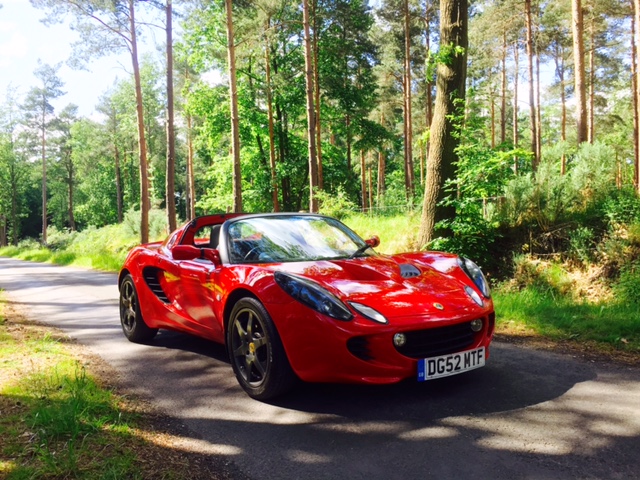
But he was right. I bought a Lotus Elise and it is the best car ever made.

The reasons for this are many but can be summarised in just one statistic. If you were to strap my motorcycle on to my Elise the combined weight of the resulting six wheeled monstrosity would be less than one single, measly Mazda MX5.

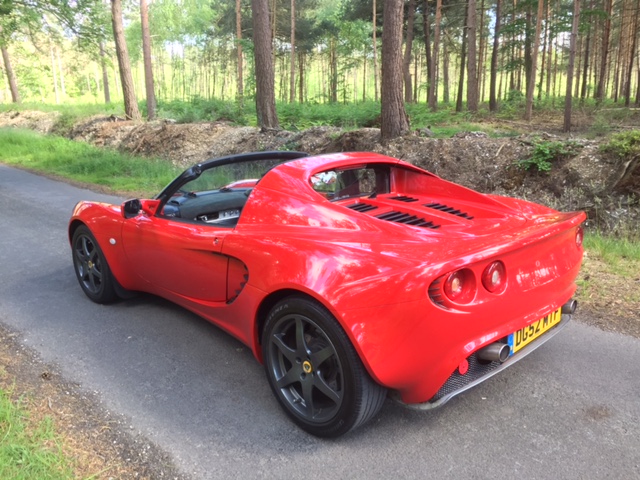
My 2002 Elise has the bog standard Rover K-Series 1.8 litre engine, manually winding windows, a passenger seat that is bolted to the floor and an accelerator pedal modelled on the head of a pin and as such it weighs 720kg.

The Street Triple weighs 160kg. A Mazda MX5 of any age weighs more than 1,000kg. Fat, lardy bastard thing.

A bog standard £8k Porsche 911 weighs 1,350kg. That's almost double what the Elise weighs.

This lack of weight is felt everywhere. For a start it is felt whilst sitting in it. It is felt in the extremely thinly cushioned seat, which adjusts about 4 inches backwards and forwards - and that's it.

The seat is supportive and lends itself well to spirited driving, which is something the Elise excels at. The cast aluminium Rover 4-pot chucks out a measly 115bhp but this is plenty enough as it hurls the Lotus from 0-60 in 5.6 seconds.

You need to be good at changing gear to match that though. The gearbox is the Elise's worst feature. It doesn't like being hurried. Get it right though and acceleration is supremely swift.

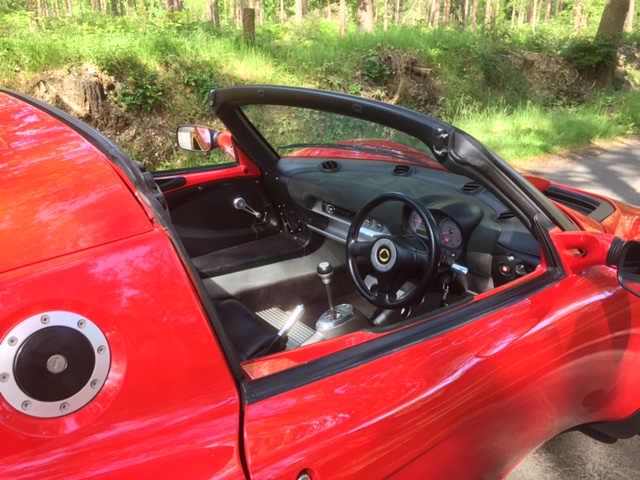
The driving position is snug. The car is essentially an aluminium bathtub chassis on to which a GRP body is glued. The chassis dictates everything about the shape of the car and where you fit in it. The sills are high and wide (which makes getting in and out comically difficult) and the footwell narrows to almost nothing where your feet should go.

You need to be friendly with your passenger as your elbows will overlap, and neither of you had better bring any luggage. The boot (behind the engine) is tiny and the storage space in the cabin pretty much non-existent.

The steering wheel doesn't adjust (did you really think it would?) but it, the pedals, the gearstick and the seat align themselves in such a way you wouldn't want to change any of them - unless you were quite tall or quite short in which case the Elise isn't the car for you. Go buy a lardy old Porsche, freak.

Fire up the engine and you realise it wasn't tuned to make a great noise. It's just there and sounds about as good as  the same unit in a Rover 45.

The first time you pull away you drive like an 89 year old with arthritic feet who's forgotten his glasses. The throttle needs a hefty push, the clutch bite point is hard to find.

Tune yourself to the car some more and getting away from the line becomes easier, but expect a degree of pogoing when in a traffic jam.

The steering has no assistance but doesn't feel like it needs any. The front tyres are quite narrow and did I mention how light the car is? The brakes don't have any assistance either, but you do sometimes wish they did.

Aside from pulling away from a standstill driving the Elise is a doddle - as long as you aren't an 89 year old with arthritis, or aren't freakishly tall or short. Or aren't too fat to fit in it.

The steering is light and wonderfully fluid. The Elise is legendary in this regard and with good reason. Quite simply it is sensational. You feel every undulation of the road yet the compliant suspension irons out irregularities. Darren did an amazing job when he engineered Mr Chapman's legacy.

The engine doesn't make much noise or power but it doesn't need to. The Elise is fast everywhere. Visibility is great and the controls are the most intuitive of any car I've ever driven.

The brakes are wonderfully competent and deliver great feel, although you need to push hard on the pedal to make them work. The discs are drilled and never give up their bite, even after many miles of hard driving.

The roof is a canvas affair that rolls up and lives in the boot when you're not using it. Putting it in place takes around 2 minutes. It is a bit of a pain in the arse. With the roof off the Elise feels light and airy and wonderful and lovely and fun. With the roof on the Elise feels very, very snug. Almost claustrophobic if you suffer from that kind of thing.

You remain dry until it rains. You'll stay dry if you drive at under 50mph. Above that and the roof's limitations are revealed. Water enters at the top of the windscreen - the traitorous roof lifts to expose your dry head - and proceeds to pelt you in the face with water at high speed. This is funny the first time it happens. After that you resolve not to drive your Lotus in the wet.

I bought my Lotus Elise as a plaything. I do drive it whenever I can. It is impractical but it has proved to be reliable. I have as much fun driving it as any car I've driven (quite a lot). I like it a lot and so would you if you bought one, and weren't built in such a way as you couldn't fit in it.


By Matt Hubbard


29 Jan 2015

2015 Jaguar XFR-S Review

Matt Hubbard reviews the Jaguar XFR-S, a 543bhp, £80k saloon with a great big spoiler on the back

2015 Jaguar XFR-S

The Jaguar XF is now getting on for eight years old, although it received a facelift in 2011. It's available as a saloon and estate and the vast majority are sold with a 2.2 litre diesel engine. The base model costs £33,445. This, the top of the range XFR-S, costs £79,995.

The XF in vanilla trim is a large, great looking, spacious saloon with a fab chassis. It still looks fresh and relevant to the point the new, smaller, XE follows the basic shape and design elements. A new XF will be launched later this year. Spy shots suggest it won't look a great deal different.

The interior of the XFR-S just about stays tasteful, although the blue piping and carbon fibre effect leather panels do their best to make it feel a tiny bit garish. The Ultra Blue paint and the massive carbon fibre spoiler tip the exterior over the edge of tasteful and just about into garish territory.

Mind you, why order a big, fast, loud, £80k Jag in a sombre colour? You can - black, white or silver. Red is also available. Order red or blue. It suits the car's character. Anything else is trying to hide the nature of the beast.
2015 Jaguar XFR-S

The rear seats are capacious and the front seats are very comfortable and electrically adjustable (obviously). I also appreciated the heated seats and steering wheel in the week I spent with it. Night-time temperatures never rose above 1℃ (33.8℉ in American-speak) so the heated windscreen was also something of a bonus.

The interior is trimmed in such a way as only Jaguar knows how. Yes the carbon leather and blue piping is a bit over the top but the leather is soft and the stitching fine, the aluminium looks great, the buttons feel great, the layout is still best in class and the Alcantara that lines the pillars and headlining is sensuously pleasing.

I'll finally admit the infotainment system is showing its age. It does everything perfectly well but takes a while to fire up. The graphics still look good and the satnav and various menus and function work well though.

The Meridien sound system is epic as 825W though 17 speakers should do. The sound is super clear and will keep audiophiles happy. Turn it up loud and, with the bright blue paint and spoiler, you'll be at risk of looking like a very rich yob.

Rich because you'll need to be to buy an £80k saloon that isn't a Mercedes or Porsche, although the nearest Panamera in terms of price is the V6 with a mere 414bhp.
2015 Jaguar XFR-S

The engine in the XFR-S is the same 5-litre supercharged V8 that's seen service in almost all modern Jags and Range Rovers and is on its way to being thought of as one of the best road engines of all time. In this guise it has 543bp and 502b ft of torque and sounds brilliant - with a deep, bassy soundtrack peppered with the occasional spit and crackle.  The XFR-S might weigh 1,987kg but by heck it's fast.

Really, seriously fast. In a straight line and in perfect conditions it'll do 0-60mph in 4.4seconds but introduce any degree of bend or anything other than a perfect road surface and getting all that power down is almost impossible without a hell of a lot of restraint.

Cruise at 60mph and put your foot flat to the floor and it'll spin the rear wheels, find some traction and catapult all the way up to 186mph in the blink of an eye and on a wave of torque and good old fashioned horsepower.

But the challenge of the XFR-S is not driving at insane speeds, which you can't do on the road. It's in taming such a powerful car in everyday conditions.  Drive it briskly time after time, corner after corner and you'll begin to appreciate the true character of the thing.
2015 Jaguar XFR-S

You'll find that the front end is communicative and allows you to feel what the front tyres are doing, producing properly perfect placement. It takes patience and practice but the rewards are plentiful.

The back end requires more patience. By dint of its weight and size, and despite having a bespoke rear subframe, the XFR-S's back wheels can feel distant, which doesn't always inspire confidence.

You feel this every time you drive it, the front end feeling fully under your control but the back having a life of its own. Mind you, the traction control is quick to bring things back into line if you really do make a hash of it.

It's this character that makes the car so appealing. Yes it looks good and the interior is wonderful but the experience of driving it is its raison d'être. 15 grand is a lot to pay over and above the similarly spectacular XFR but the added frisson of power and performance helps make your mind up.

It's not something you'll experience on a test drive though, or even over a weekend with it. It takes time to fully explore the XFR-S in terms of its capabilities, and yours.

Yet it is possible to drive with restraint and enjoy the ride in a relaxing and refreshing way. Despite having 30% stiffer springs over the XFR the XFR-S cruises in as refined manner as you'd expect from a gentleman's express, soaking up the road's imperfections as it goes on its way.
2015 Jaguar XFR-S

I haven't mentioned the gearbox yet. It's the same 8-speed ZF unit found in all XFs and changes when you would expect it to. It doesn't sit in a high gear, engine revving away, when you don't want it to yet it changes down through the gears quickly when you put your foot down.

Over a week with the car it returned an astonishing 15mpg. Perhaps, though, given the XFR-S's capabilities that figure isn't such a surprise. The engine is fantastic but it is very thirsty.

It is a car you'd choose because you fell in love with it rather than by viewing the stats of it and its competition. If you're looking to spend a ton of cash and are in the mood for a super saloon that takes no prisoners you should take one for a whirl. You may just be entranced.

Stats


Price - £79,995
Engine - 5 litre, V8, supercharged, petrol
Transmission - 8-speed automatic
0-60mph - 4.4 seconds
Top speed - 186 mph
Power - 543 bhp
Torque - 502 lb ft
Economy - 24.4 mpg
CO2 - 270 g/km
Kerb weight - 1,987 kg
2015 Jaguar XFR-S

2015 Jaguar XFR-S

2015 Jaguar XFR-S


By Matt Hubbard


9 Dec 2014

Maserati Ghibli Diesel Review

Matt Hubbard drives the Maserati Ghibli Diesel

Maserati Ghibli Diesel

In 2013 Maserati stated that it wanted to sell 50,000 cars a year. This seemed fantastical for a company who's models started at £80k and had only shifted a shade over 2,000 units in 2012.

But they had a plan. Building on the GranTurismo/Cabrio, a gorgeous coupe/convertible, and  Quattroporte, a vast executive saloon, the company launched the Ghibli, a smaller, more affordable saloon.

The Ghibli sold well and in October Maserati announced it was on course to sell more than 35,000 cars in 2014 with a view to reaching 50k in 2015 and on to a targeted 75,000 by 2018.

In 2015 we'll see the company's first SUV, the Levant, and in 2016 the Alfieri concept will be available to purchase. Beyond that the GranTurismo will be revised. The Ghibli will remain the company's baby - no more smaller, cheaper Maseratis are planned.

To hold up its side of the bargain the Ghibli has to be very good to compete against the Jaguar XF, Mercedes E-Class, Audi A6 and BMW 5-series.  At £50k it commands a price premium over all three to the tune of around £8k. Scratch that - it has to be very, very good.
Maserati Ghibli Diesel

The Ghibli is a four door saloon but it's a cracking looking one, all stylish curves and swoopy lines in just the right places. I think as a piece of art it works although some Speedmonkey readers said it looks too restrained, too conservative when they saw my photos.

This wasn't helped by the fact the test car was white. The first Ghibli in the UK, shown at Goodwood 2013, was painted metallic bronze, a colour which highlighted the car's contours much more than plain old white.

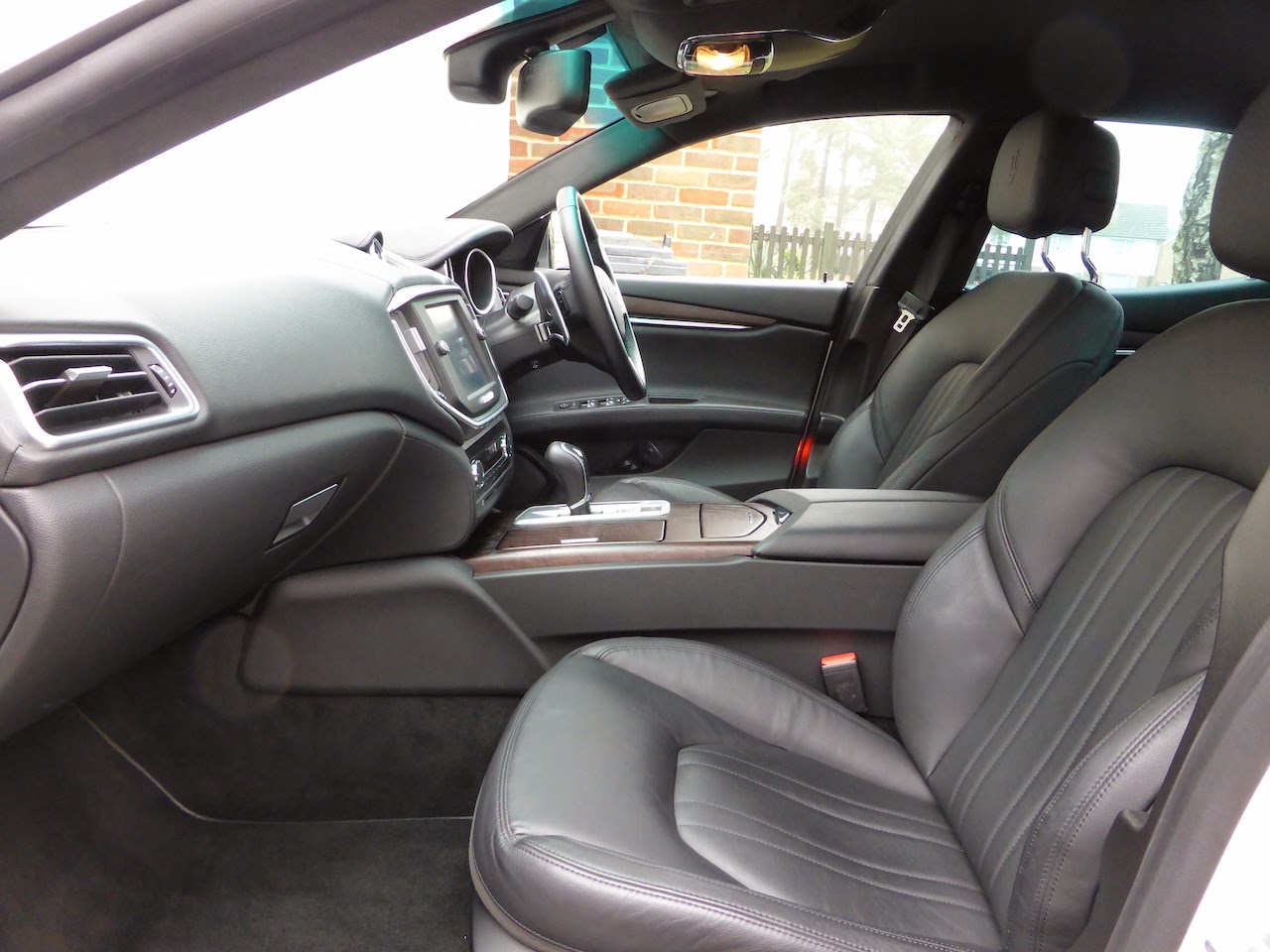
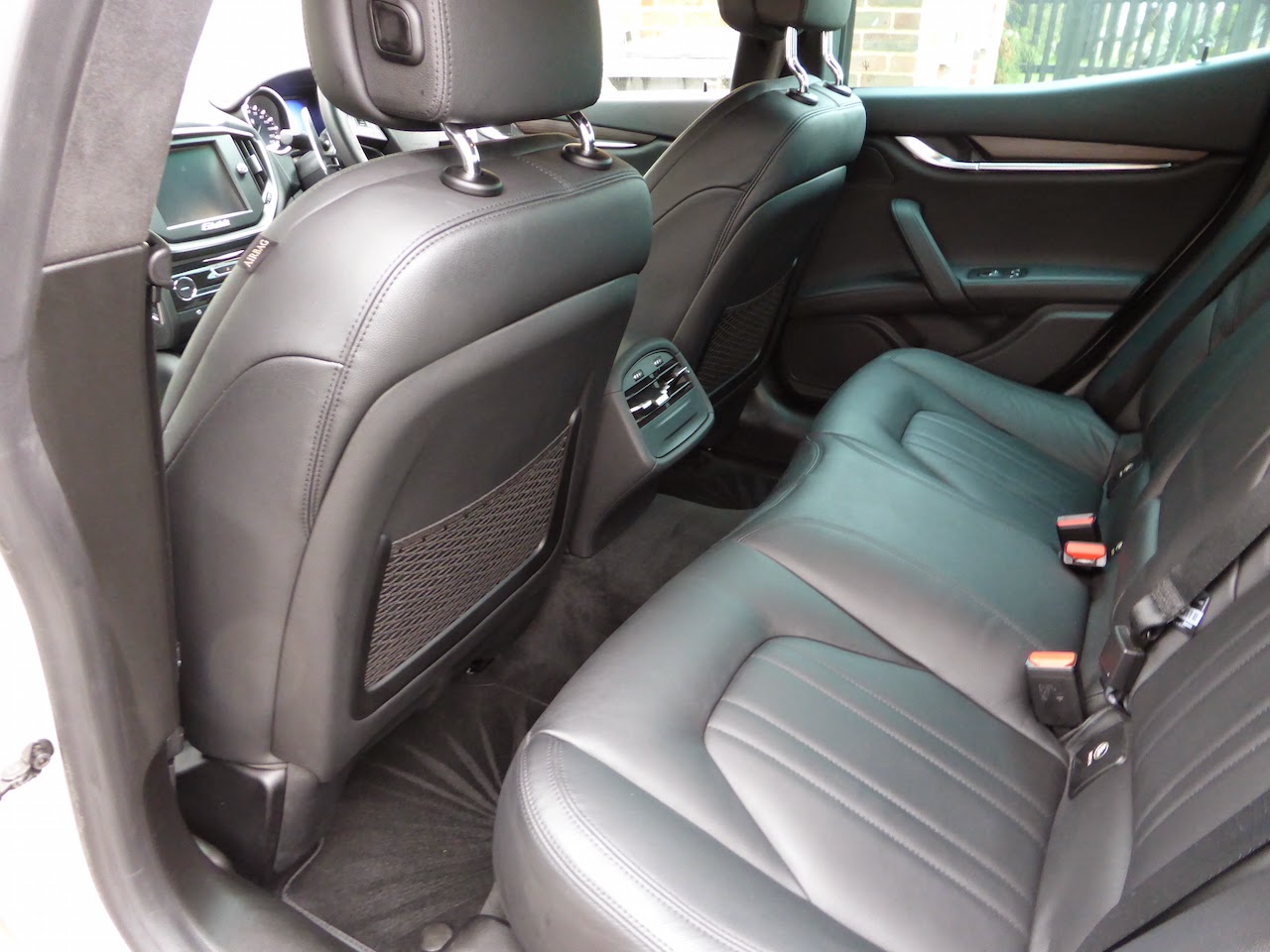
Step inside and the Ghibli is one of the more stylish executive cars on the market. I'm a huge fan of the Jag XF's effortless luxury and the Audi's sheer class but the Ghibli adds a touch of Italian style with some glorious brushed aluminium trim highlighting a clean, clear and functional interior.

You'll be disappointed when you look too close though. Some of the materials used are not what you'd expect in a £50k car.  In particular some of the leather, especially on the doors and dash top, doesn't look or feel like fine Italian leather, and the wood effect plastic on the centre console is pretty poor.
Maserati Ghibli Diesel

This is a shame because Maserati is more than capable of crafting some of the best interiors in the business - that in the GranTurismo is amazingly good.

The infoscreen is a good one. It's a touchscreen with just two physical knobs. It's fast, intuitive and controls the entertainment system, satnav, climate and a few other systems.

The satnav is acceptable although I'd have liked to see more trip data available. The entertainment features cover FM, DAB digital radio, CD, USB and bluetooth - all of which are easy to control.  The sound system is fine although I have heard a better quality of sound from some slightly cheaper cars.

My only grumble about the infoscreen is that I'd like to see a standalone button to access the heated seats, just as Porsche has done in the Macan.

There's a load of storage space in the cabin. The door pockets and glovebox are of a decent size and you get three compartments around the gearlever - a pair of cupholders next to the 'stick, a phone storage area with USB recessed in the bottom behind the 'stick and a big box under the armrest (with another cupholder inside).
Maserati Ghibli Diesel

The phone/USB space is not well designed. Charge a phone via the USB and the USB plug and associated cable prevents the phone sitting in it without flopping around all over the pace.

The seating position and chair is wonderfully comfortable and relaxed. The steering wheel is electrically adjustable and the seat has plenty of adjustment (although not as much as the XF) but it takes just a few seconds to get comfortable.

There's only one stalk, on the left, which controls indicators, wipers and lights. It takes 30 seconds for everything to become second nature.

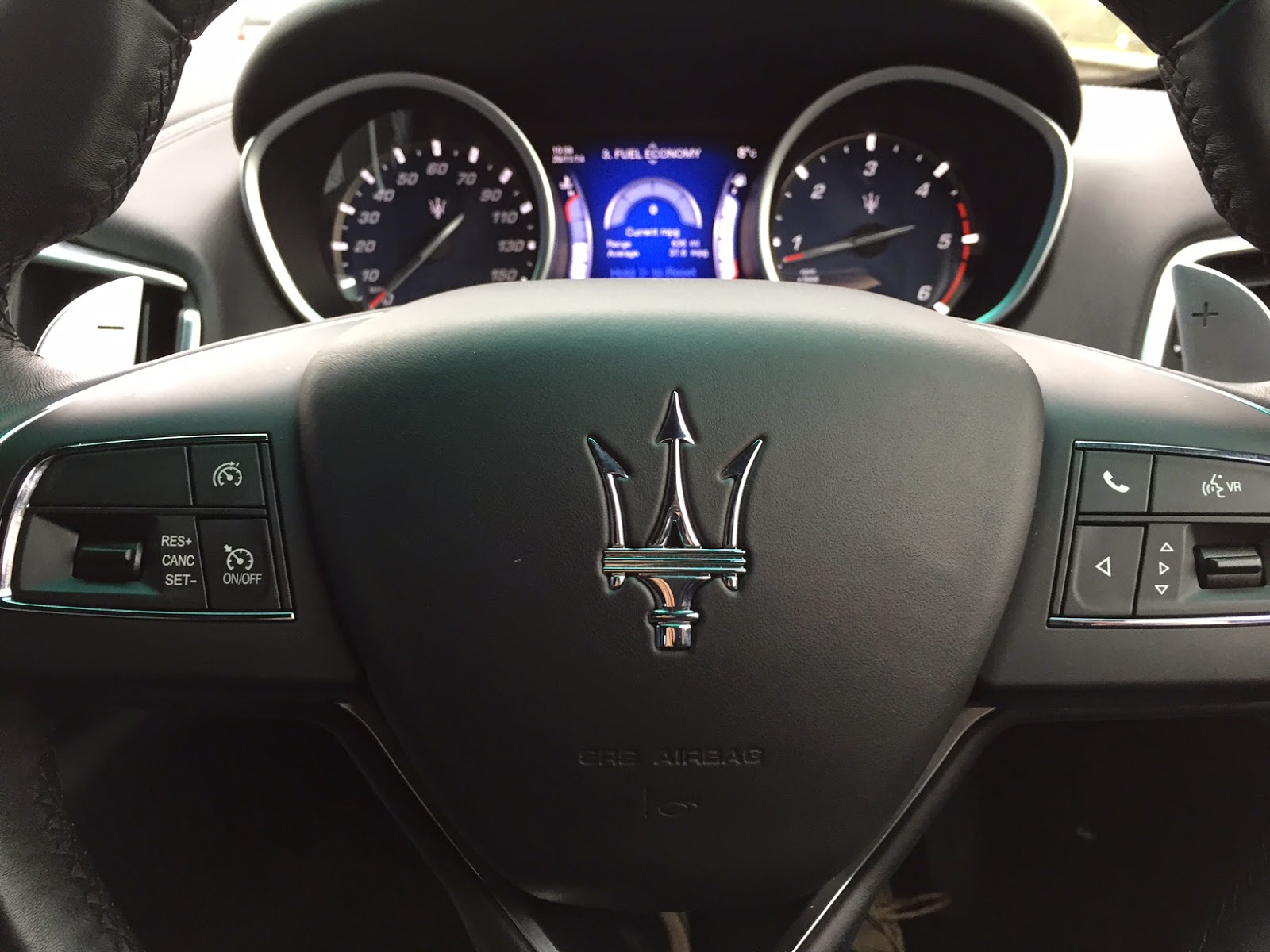
The cruise control and menu selectors on the steering wheel are too small and fiddly. They are relied on for quite a few functions and should have been slightly easier to nonchalantly flick up or down whilst on the go. Instead you have to check that you have actually pressed up or down.
Maserati Ghibli Diesel

The gear selector paddles are big, chunky aluminium items and feel great but they are mounted on the column, rather than the wheel itself, and get in the way of the indictor/lights stalk. You'll find the same paddles in the GranTurismo and similar in the Ferrari 458.

Any criticisms of the cabin melt into the background when you fire the engine up and drive the Ghibli.  Any brownie points lost are quickly regained when the diesel engine is fired up and you realise it doesn't sound like an oil burner.

Maserati's engineers have done a wonderful job of tuning the note from the engine and the exhaust. It sounds like a particularly deep and throaty twin cylinder motorcycle engine - up to 4,200rpm. Check out my video for proof.

The diesel's trump card, though, is its masses of oomph. Oomph is a technical term which means a healthy dose of horsepower and a gargantuan helping of full-fat torque.

The standard-issue 8-speed ZF gearbox transfers this oomph fluidly to the road so power is available, after a small initial hesitation, from 0 to a limited 155mph with nary a hint of let-up.
Maserati Ghibli Diesel

Add a sharp corner into the equation and traction will be lost, and the resulting slide will be easily controlled by the Ghibli's finely balanced steering until such point as the traction control grumpily intervenes to spoil the party and save on an insurance claim.

Despite weighing 1,830kg the Ghibli Diesel displays a finesse around corners more suited to a lower, lighter car. Its light steering and easy access to power make flowing roads a delightful playground for those who like to drive their car rather than just be conveyed in it.

The only disappointment in the driving experience is the brakes which have lots of stopping power but not much in the way of feel.

I drove more than 300 miles in the car and achieved around 30mpg. It's a cracking cruiser on the motorway, with not much noise intruding into the cabin. The cruise control is not adaptive but the lights and wipers are automatic.

If you have a budget of £50,000 you may seriously consider the Maserati Ghibli Diesel. It is more stylish than the competition and the brand is arguably more exclusive than any of Audi, Mercedes, BMW or Jaguar.

As for the day to day living with and driving experience I imagine any one of the Germans or the British car would be easier to get on with and just more pleasant to spend commuting time in.

But if you value image, style, a ton of oomph and the pleasure of driving you won't be disappointed if you plump for the Italian. The Ghibli is a flawed but fundamentally fine car.

Stats: 


Price - £49,160 
Engine - 3-litre, V6, turbocharged diesel 
Transmission - 8-speed ZF automatic 
0-62mph - 6.3 seconds 
Top speed - 155mph 
Power - 275hp 
Torque - 443lb ft/600Nm 
Economy - 47.9mpg 
CO2 - 158g/km 
Kerb weight - 1,830kg 
Maserati Ghibli Diesel

Maserati Ghibli Diesel

Maserati Ghibli Diesel

By Matt Hubbard


4 Dec 2014

Porsche Macan Review

Matt Hubbard reviews the new Porsche Macan, the Cayenne's smaller,  sportier sibling

Porsche Macan S Diesel

Back in 2002 the Cayenne took all the 'why the hell is Porsche making an SUV?' flak, and then doubled Porsche's worldwide sales.

The deed was done, Porsche was no longer purely a sports car company, it was a manufacturer of sports cars but also of off-roaders and luxury saloons. The Cayenne introduced the concept of a large SUV to Porsche's customers, and made the company a pot of money. So much so it made sense for a smaller SUV to accompany it in the model line-up, alongside the Panamera, 911, Cayman and Boxster.

The Porsche Macan was launched earlier this year. It is sportier but less able off-road than the Cayenne. But it still looks like an SUV with five doors, the engine at the front and an elevated profile that still has that slightly odd front end that tries to look like a 911 and doesn't quite succeed. We've kind of got used to the concept with the Cayenne but it succeeds more so in the Macan.

Elsewhere the look is purposeful and muscular with a steeply sloped rear window atop which sits a small roof spoiler and huge air-gulping gills in the front quarters.

Interior space is quite reasonable and no worse than in an Evoque. The overall shape and feel of the interior is similar to the more expensive Cayenne but somehow feels better, more luxurious. The devil in the details and the details abound in the stitching, quality of materials and look and feel of the switches and dials. It says class, it feels quality.
Porsche Macan S Diesel

It comes at a price though. The Macan S Diesel which I drove on the road (I took the Turbo for a spin on track) costs £43,300 but the leather interior costs £1,052, electric sports seats cost £1,214 and heating elements for those seats costs £219. Even cruise control is a £348 option.

The driver is cocooned in figure-hugging seats, with a tall centre console festooned with chassis and exhaust buttons. You sit relatively low for an SUV - the steering wheel sits in your lap and the pedal box is deep.

It's meant to feel like you're sitting in a sports car - and it does.

The touchscreen and controls are pretty much the same as they are in all Porsches, which is to say efficient, ergonomically constructed and with an expensive feel.  The steering wheel is trimmed in a lovely, soft leather and has the usual buttons and dials, although cruise control is dealt with via a lever below the indicator and is not as intuitive as in many other cars.

I tested the Macan S Diesel and the Turbo. The Turbo costs £59,648 and produces 400hp and 400lb ft from a 3.6 litre V6 petrol.  It is seriously, properly fast.

The S Diesel gets a 3-litre V6 with 258hp and a mighty 428b ft of torque.  It is also no slouch.
Porsche Macan S Diesel

Both engines are more than up to the task of propelling the Macan in a straight line very quickly.  The  7-speed PDK gearbox is honed for road use but also works fantastically well on track. You hardly need to use the paddles.

The Turbo sounds great and the S Diesel is, thankfully, dead quiet and smooth - on the road you wouldn't know it is an oil-burner, aside from the masses of torque.

Power is delivered to the road by four wheel drive. The rear axle is in constant use and power can be sent to the front wheels if required - the opposite of many four wheel drive systems. A display in the instrument binnacle shows the proportion of torque going to each axle. Under hard acceleration or cornering it normally sits at 66 rear 34 front.

The Macan drives in a manner that belies its shape and bulk - the diesel weighs 1,880kg.  Fair enough the engines provide lots of power but it feels sprightly.

Turn into a corner and the transition from 5-seat SUV to sports car is startling. The Macan really does handle. The steering set-up provides for great grip and neutral turn-in whilst the wider rear track and rear-biased power delivery helps give it a push rather than pull in the corners.

The ride is good too, although not quite as good as in an Evoque.  Its off-road ability is also not quite so good - the handling and general abilities are more suited for on-road work, where it beats the Evoque hands down.
Porsche Macan S Diesel

The Porsche Macan is one of the best all-round cars on the market. It's spacious, practical, fast, fun to drive, good value (unless or until you start speccing it with expensive options) and, in diesel form, economical.

The only real problem with the Macan is that you can't get your hands on a UK model until the end of 2015. Porsche GB has already used up it's allocation for 2014 and 2015 right through 'til the autumn. For those lucky enough to have ordered one and taken delivery there's not much to beat it.

Stats:


Car - Porsche Macan S Diesel

Price - £43,300
Engine - 3-litre, V6, turbo-diesel
Tranbsmission - 7-speed PDK automatic
0-62mph - 6.3 seconds
Top speed - 142mph
Power - 258bhp
Torque - 428lb ft / 580Nm
Economy - 46.3mpg
CO2 - 159g/km
Kerb weight - 1,880kg

Car - Porsche Macan Turbo

Price - £59,648
Engine - 3.6 litre, V6, turbo
Tranbsmission - 7-speed PDK automatic
0-62mph - 4.8 seconds
Top speed - 165mph
Power - 400bhp
Torque - 406lb ft / 550Nm
Economy - 30.7mpg
CO2 - 216g/km
Kerb weight - 2,000kg
Porsche Macan S Diesel

Porsche Macan S Diesel

By Matt Hubbard


25 Nov 2014

2014 Porsche Cayman GTS Review

Matt Hubbard drives the Porsche Cayman GTS on track at the Porsche Experience Centre at Silverstone
Porsche Cayman GTS

Since I was young I've almost idolised the Porsche 911. To me it was the definitive sports car in terms of looks, performance and balance between road and track use. Last year I drove a 911 Turbo and was blown away by it.

Recently I drove a 911 Carrera 2S and was again blown away by its handling, poise and agility but also its ability to be the best sports car on road and track.

But then I drove the Cayman GTS at the same track on the same day. For all my love for the 911 the Cayman GTS proved to be the better car on the day. Oh dear. Dreams not exactly shattered but certainly slightly disturbed.

I'd previously driven the standard Cayman. It was fast and handled magnificently, the chassis and seats were firm and the manual gearbox's ratios were a bit long for the road but ultimately I said it was, "...balanced, focussed, confidence inspiring, practical and fun."

The Cayman costs £40k, the Cayman S costs £49k and the Cayman GTS costs £55,397. You may think that hike is a bit steep but, to put things into perspective, the 911 C2S costs £83k and the Jaguar F-Type V6 S costs £60k.  Even a VW Golf R with a few options can cost as much as the base model Cayman.  In that context it's a bit of a bargain.

The GTS is essentially a fully optioned S. It is powered by a 3.4 litre boxer engine and produces 336bhp (15bhp more than in the S). The gearbox in the test car was a 6-speed manual.

Other goodies include 20 inch alloys, PASM as standard, Sport Chrono with adaptive engine mounts, sports seats, a sports exhaust and bi-xenon lights. Oh, and a new spoiler and steering wheel.
Porsche Cayman GTS

Fire up the engine and it barks into life. Porsche engines sound über Germanic (if that is yet a thing) and the GTS's exhaust note, aided by the active exhaust, makes a lovely, crisp noise.

The driving position is perfect for most heights and shapes. The seats are body hugging, legs are outstretched and the steering wheel is in the driver's lap.

The gearstick sits in just the right place, atop a busy centre console with buttons for the various driving modes aft and the climate controls fore - see my Cayman review for a more thorough explanation of the infoscreen and driving modes.

What we're interested in here is the driving experience.

It starts with a heavy clutch. Not too heavy it'd be a pain in traffic but heavy enough you know the Cayman GTS means business.  A sturdy clutch for track abuse - good oh!

The gearbox is slick and accurate, and has a bolt-action feel. Porsche makes the best manual gearboxes in the business, and the GTS's is no exception.

The steering is light but can be firmed up by selecting Sport mode. It's electrically assisted but feel and feedback has been tuned in by some of the best engineers in the world, and it shows.

Pull away and the engine feels lively. Low speed manoeuvring is a piece of cake.  Mash the throttle and acceleration is very quick. If such a thing exists the engine has character - some engines feel lifeless whilst some feel fast but a bit too binary, the 3.4 flat-6 in the GTS provides meaty, analogue power in a big woosh of noise and torque.
Porsche Cayman GTS

0-60 takes around 4.7 seconds which is fast but not brutal. The engine note rises like a heavy metal solo to a peak at 7,500rpm, change up and start again.

Find a corner and the Cayman turns in like a dream. The steering is the sharpest and most direct there is. The engine in the Cayman sits behind the passengers and ahead of the rear axle. This makes for the poise of a ballet dancer as the rear faithfully follows the front round an apex with a hint of lean on the rear tyres.

It is a flattering car in the same way a Lotus is, but whereas you'd be sweating buckets after 20 laps in an Exige S you're ready for 20 more in the GTS.

Of course you should drive it properly to extract the most from the Cayman GTS but cack it up and the PSM (Porsche Stability Management) takes over and sorts things out.

You can drive lap after lap, improving your lines, leaving the braking later and acceleration earlier and the GTS remains neutral. It never throws a spanner in the works, staying faithfully accurate at every turn.

I normally stay dead silent when at the wheel on a race track but I was chattering away to my bewildered passenger - such is the measure of the car, it's confidence inspiring and allows you to use more brainpower to drive it than worry about what it might do next.

The 911 is a similarly finely-tuned track weapon but the Cayman GTS is marginally more tolerant and easier to drive due to its superior balance (the engine not being in the boot) and as such rewards the driver more.

The Porsche Cayman GTS is one of those rare beasts - a car that is more than the sum of its parts. A Cayman S with all the options the GTS has as standard costs £55k but the GTS is a much better car.

It is the best new sports car in 2014.

Stats:

Price - £55,397
Engine - 3.4 litre, flat-6, petrol
Transmission - 6-speed manual
0-62mph - 4.9 seconds
Top speed - 177mph
Power - 336bhp
Torque - 280lb ft
Economy - 31.4mpg
CO2 - 211g/km
Kerb weight - 1,345kg
Porsche Cayman GTS

Porsche Cayman GTS
Porsche Cayman GTS

By Matt Hubbard